
by VOA News
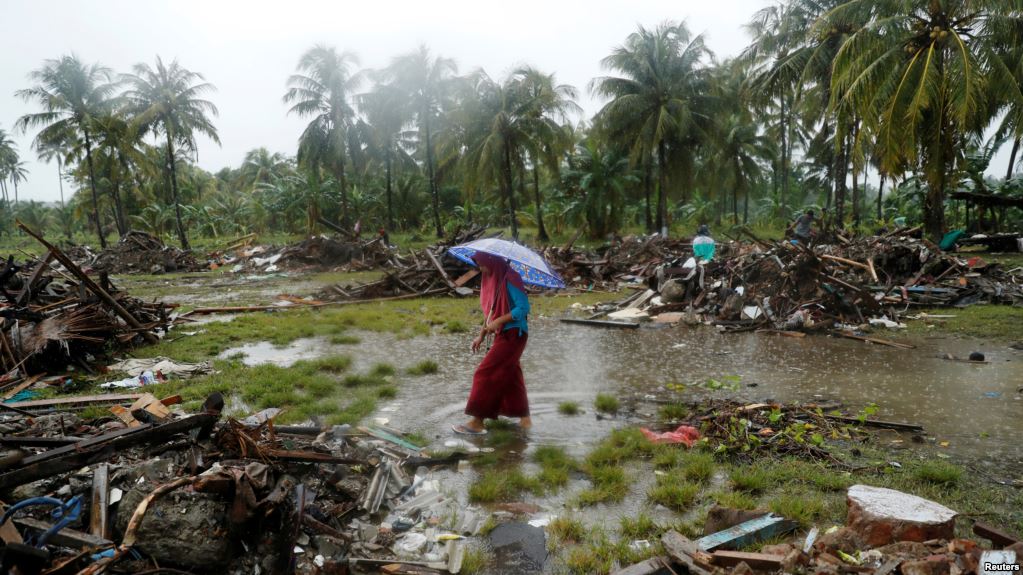
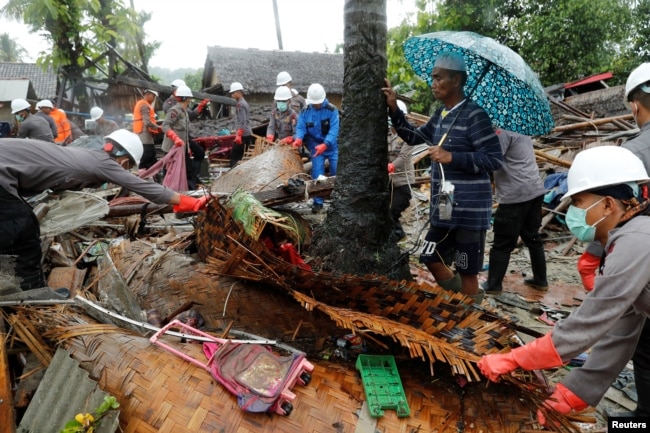
Heavy rains are complicating efforts to provide aid to communities on Indonesia’s remote western islands cut by last week’s massive tsunami that killed 429 people.
The rains have made roads impassible, holding up convoys delivering heavy machinery and relief supplies to isolated areas, forcing disaster officials to send helicopters to drop supplies and evacuate residents.
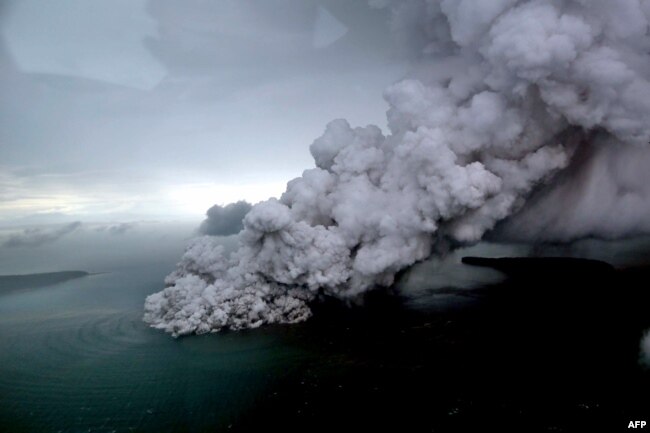
There is speculation that Saturday’s tsunami that slammed into the west coast of Java and southern Sumatra was caused by a massive underwater landslide that followed eruptions by Anak Krakatoa volcano, located in the Sunda Straits, between Java and Sumatra.
The tsunami, which struck without warning, swept over popular beaches, and engulfed tourist hotels and coastal settlements.
Nearly 1,500 people were injured in the disaster, and as many as 150 people remain missing, while thousands more have been displaced.
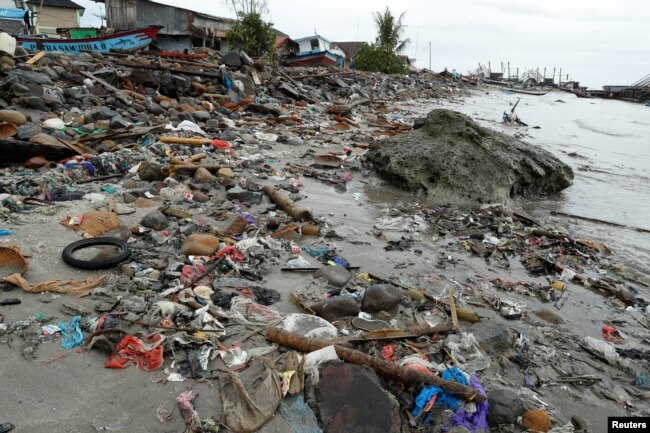
Authorities are urging residents to stay away from the coast, as continued volcanic activity and high tides mean more damaging waves could strike.
The chief of the Indonesian Geological Agency, Rudy Suhendar, told VOA’s Indonesian Service that it is still investigating what caused the tsunami.
The Anak Krakatoa volcano lies on an island that was formed decades after the catastrophic 1883 eruption of the Krakatoa volcano that killed more 30,000 people.
Saturday’s tsunami is the latest in a series of disasters to strike Indonesia, including the September 28 quake and tsunami that struck near the city of Palu, on the island of Sulawesi, killing more than 2,500 and displacing about 70,000.
Wednesday marks the 14th anniversary of the tsunami that killed 226,000 people in 13 countries, including more than 120,000 in Indonesia, triggered by an earthquake in the Indian Ocean.
VOA’s Indonesian Service and Ira Mellman contributed to this report.

