
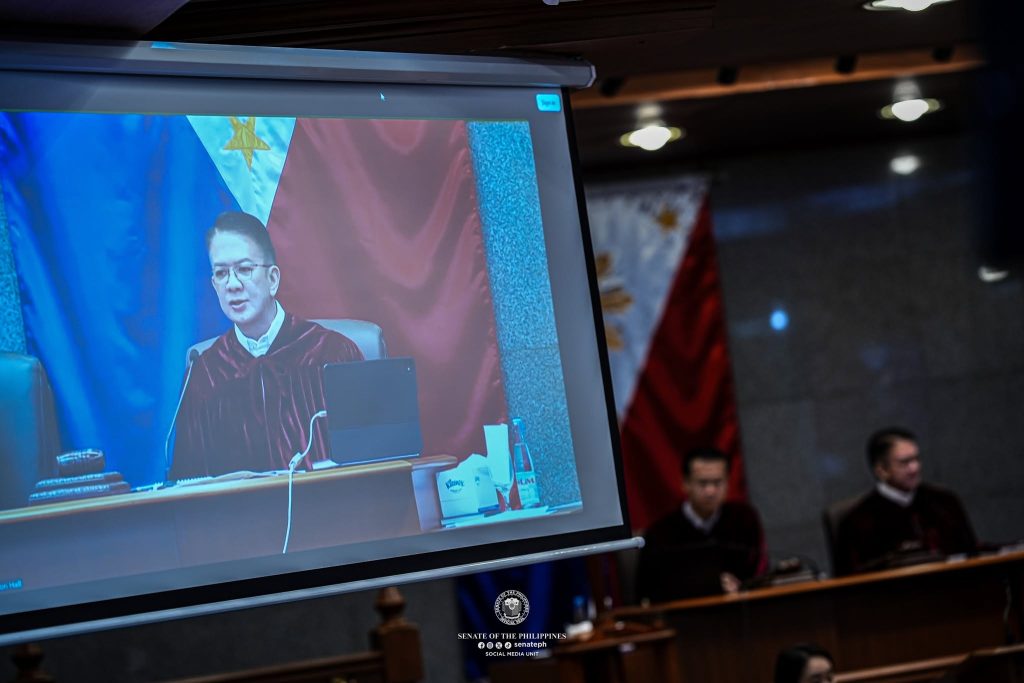
By Brian Campued and Dean Aubrey Caratiquet
Last week, National Bureau of Investigation (NBI) BARMM Regional Director Atty. Jeremy Lotoc was presented by the House prosecution panel to corroborate the earlier testimony of NBI Senior Agent John Mark Calilung and unfold more pieces of evidence in support of Article IV.
The defense team of Vice President Sara Duterte went on to conduct a cross-examination of Dir. Lotoc, with the House prosecution panel conducting a redirect examination on the witness along with the presentation of additional digital evidence.
After OVP Chief of Staff Atty. Zuleika Lopez and House Legislative Security Bureau Executive Director Capt. Belinda Bello were dropped by the House prosecution panel from the witness list, the Senate Impeachment Court held oral arguments on the prosecution’s request for subpoenas covering Duterte’s tax and bank records in support of Article II, which focused on allegations of unexplained wealth.
On July 20, senator-judges decided on the motion of the House prosecution panel to subpoena the bank and tax records of Vice President Duterte and her husband, Atty. Manases Carpio.
Here are the highlights of today’s trial:
- Senator-judge Joel Villanueva sought clarification on how the Impeachment Court will act on the two motions filed by the House prosecution panel to subpoena the tax and bank records of Vice President Duterte.
Presiding Officer Escudero explained that the Court will act on the two motions separately “regardless of the number of issues or sub-issues underneath each motion.”
- Villanueva asked the prosecution and defense whether issuing a subpoena automatically makes the records admissible as evidence.
House Prosecutor Rep. Chel Diokno clarified that the admissibility of the documents is not yet in the pipeline for their panel’s twin requests, citing then-presiding officer Juan Ponce Enrile’s ruling during the impeachment trial of former chief justice Renato Corona.
Diokno: “Ang hiling lang po ng prosekusyon ay mailabas ang ebidensiya, pero wala pa po tayo doon sa punto kung tatanggap ba nitong hukuman ang evidence na iyon kung siya po ay admissible o hindi.”
Atty. Michael Poa said that while they agree with the prosecution’s stance on admissibility, the defense maintains that the subpoena request lacks the basic legal standards of definiteness and relevance.
- Rep. Diokno stressed that requesting for the Vice President’s bank and tax records is necessary to see the “entire picture” with regard to the allegations of unexplained wealth in Article II of the Articles of Impeachment.
He said the subpoena is the least intrusive and most appropriate means of obtaining the information sought, adding that the defense will have sufficient opportunity to object when admissibility is determined later.
Diokno: “Kapag tinitingnan natin ang isyu ng unexplained wealth, hindi lang po pwedeng snapshot ang titingnan natin. Kailangan mula sa unang araw ng [paglilingkod] ng isang lingkod-bayan, yung kaniyang finile na SALN (Statement of Assets, Liabilities, and Net Worth), lahat ng mga kinita niya, ay makita natin.”
- Atty. Poa noted that under Section VIII-A of the Anti-Money Laundering Act, the Anti-Money Laundering Council (AMLC) cannot disclose confidential information, calling it an “absolute prohibition.”
Poa: “If we were to compel and issue a subpoena against these AMLC records, we’re actually compelling the officials to violate this very section of the law.”
- Villanueva asked the defense if there is a legal distinction between the disclosure of information to the general public and the limited production of records to the impeachment court.
Atty. Poa clarified that while they are not against transparency and accountability, this does not mean that rights should be disregarded.
Villanueva: “Indeed, confidentiality is an important legal protection pero hindi din po ito dapat maging dahilan para manatiling mailap ang pananagutan. Ang mabuting batas ay kayang pangalagaan ang privacy nang hindi nasasakrispisyo ang accountability. Our laws must be able to protect both.”
- Senator-judge Pia Cayetano asked both panels to differentiate between a search warrant and a subpoena:
Diokno maintained its position that a search warrant and a subpoena are different from each other, as the former is governed by the Bill of Rights because of its invasiveness while the latter is governed by Rule 21 of the Rules of Civil Procedure and merely requires relevance and definiteness.
Diokno: “‘Pag naglabas ang isang hukuman ng subpoena, itong mga records ay hindi po siya considered yet as evidence. Iyan po ay ipo-produce lang, dadalhin lang po sa korte. And now it is up to both parties to decide which of those documents may be relevant in terms of the evidence that they need to present.
It is not in any way invasive… We are simply having those documents produced, the admissibility of those documents will only be determined after, if offered by the parties.
Kaya po sa aming pananaw, malaking-malaki ang pagkakaiba ng search warrant sa subpoena.”
Poa argued that a search warrant and subpoena are both compulsory requirements in handling a specific case, noting that the latter is intrusive because the prosecution’s request for almost 20 years of records will open up essentially all financial transactions of the Vice President.
Poa: “Katulad ng isang search warrant, the things that we are asking for a subpoena must be particularly described. However… while they took pains to specify each and every document, the truth of the matter is they’re asking for everything.
Kaya namin natawag na fishing expedition ito, kasi lahat ng records hiningi pero hindi naman matukoy which would actually be relevant, which would actually be evidentiary to the accusations they have made under the Articles of Impeachment.”
- Senator-judge Pia Cayetano pressed the counsels to expound their stance on ensuring due process in the twin motions, noting the defense’s claims of a fishing expedition with regards to the request for subpoena to unravel the bank and tax records of VP Duterte and her husband, Atty. Manases Carpio.
Poa said the prosecution’s request for subpoena repeatedly used the word “may”—as in records that “may show context” or “may prove something”—stressing that they do not yet know what evidence they are looking for.
Poa: “Sa aming pananaw, sa dami ng hinihinging dokumento, para po itong nagtatapon po tayo sa dagat ng isang napakalaking lambat, at umaasa tayo na kahit papaano may mahuhuli tayong kahit isang pirasong ebidensya.”
Diokno, on the other hand, rejected the defense’s “fishing expedition” label, explaining that a fishing expedition only occurs when a party is blindly requesting information in hopes it will find evidence.
He recalled that during the hearing of the House Committee on Justice, the AMLC’s executive director testified that P6.7 billion passed through Vice President Duterte’s accounts from 2007 to the present—including over P3 billion from 2007 to 2013, when she served as vice mayor and mayor of Davao City.
Diokno: “So may basehan po tayo para ipalabas ang bank records. We are not just guessing that there is something there because the AMLC itself has confirmed that there were covert and suspicious transaction reports submitted to them.
When it comes to issues of unexplained wealth, it is very clear—to know whether a government official has amassed unexplained wealth, we must look at the entire incumbency of that official starting from Day 1.”
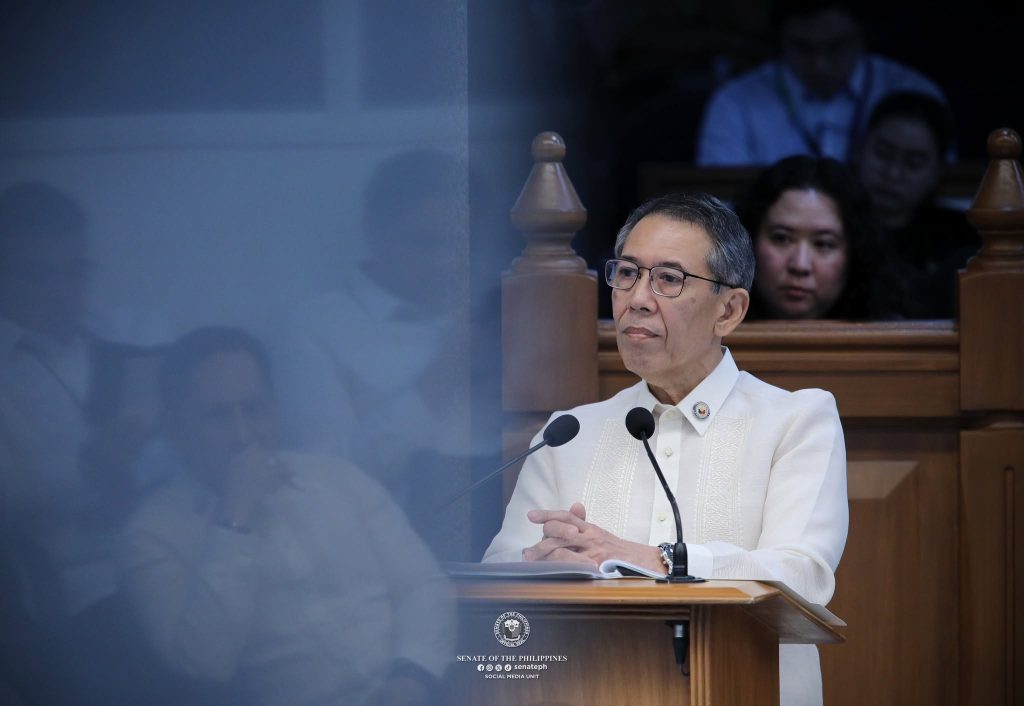
- Cayetano asked the prosecution what the legal basis was for the AMLC to reveal Duterte’s financial information at the House Justice Committee hearings, pointing to the defense’s argument that the law itself declares AMLC records confidential.
Diokno stressed that Section VIII-A of the Anti-Money Laundering Act was meant to prevent leaks by AMLC officials, not to block court subpoenas. He argued that the Sandiganbayan issues subpoenas for AMLC records “almost every week” and these are honored without question.
Diokno: “Ganoon din po itong Impeachment Court. A subpoena issued by this Impeachment Court is for the purpose of determining accountability based on the power that is expressly given by the Constitution.
Ang amin pong paniniwala, confidentiality cannot trump accountability.”
Poa reiterated his earlier point that Section VIII-A of the Anti-Money Laundering Act is an absolute prohibition, and questioned why the prosecution still needs a subpoena if it already has the AMLC records attached to the Articles of Impeachment.
Poa: “We have questioned this all throughout… because to us, unang-una, bawal siya; pangalawa, hindi siya relevant… Transactions do not equate to wealth. Transactions do not equate to net worth.”
- Senator-judge Alan Peter Cayetano references the Duterte vs. House of Representatives case in asking the panels if an impeachable offense should be within the respondent’s term.
Diokno argued that the portions of the case are obiter dictum (side comments) and not binding on the present case, while the defense insisted otherwise, citing a Supreme Court decision saying that impeachment charges must be for acts “committed in relation to their office and during the current term of the impeachable officer.”
- Cayetano to Diokno: “In the absence of an authentic supporting record, what factual basis did the prosecution rely on to say that the allegations were sufficient in form and substance?”
Diokno: “If I recall correctly, there were some attachments to both complaints. And I’m not aware of any rule in the House of Representatives as far as the impeachment case is concerned that limits what may be discussed or investigated by the Committee to only what is contained and attached in the impeachment proceedings.”
- Cayetano asked Diokno whether a gap between income and net worth was enough to impeach “without giving that person a way to explain before you subpoena every single document about their lives.”
“That’s precisely why, your honor, they call it unexplained wealth,” Diokno said, adding that the subpoenaed records would help the Impeachment Court determine the nature of Duterte’s wealth increase.
“Ang gusto lang po namin ay mailatag ang ebidensya sa inyong harap para kayo na mismo ang magsabi.”
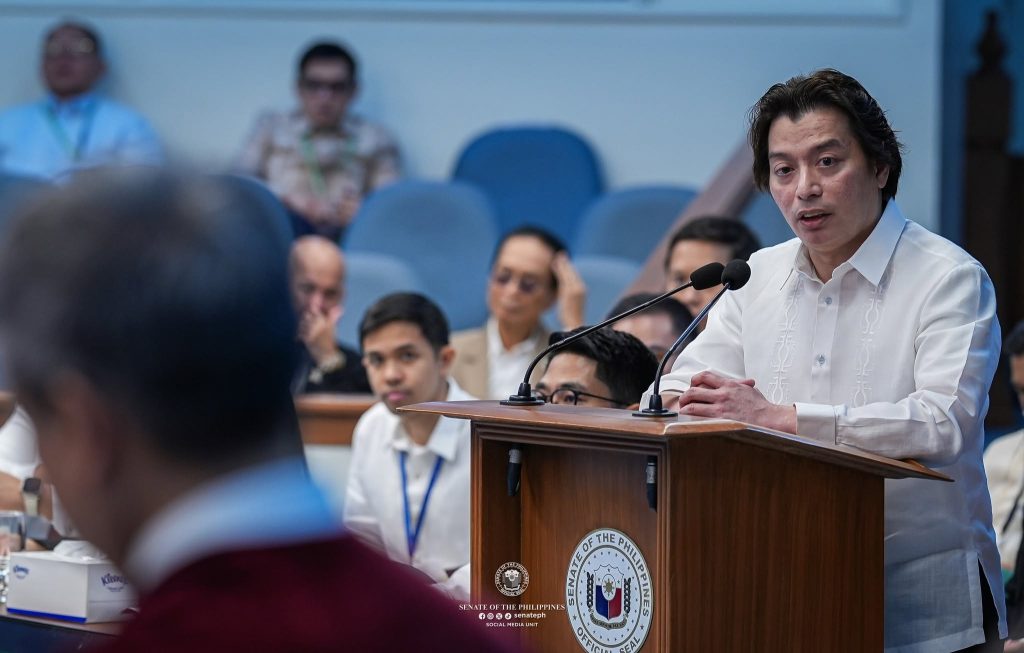
- Cayetano: “If you cannot connect AMLA and the bank accounts, that is precisely what the defense and other people are saying. Aren’t you fishing between the three? ‘Fishing’ means ‘hindi mo pa hawak,’ so you’re trying to get a fish.”
Diokno: “If we bring your honor’s logic to its conclusion, that would mean the Committee on Justice would have to conduct a full blown trial, get all the evidence at that level so that we do not have to fish anymore when we get to this court, when that is not the contemplation of the procedure for impeachment under the Constitution.”
Poa: “Fishing expedition ito, kasi hindi mo man lang mapinpoint eh kung anong transaction yung sinasabi mong nag-amass yung Vice President natin, kung anong taon nag-amass yung Vice President natin ng ill-gotten wealth or unexplained wealth.”
- The Senate Impeachment Court granted the House prosecution’s requests to subpoena bank records, tax documents, and Anti-Money Laundering Council (AMLC) records involving Vice President Duterte.
Escudero: “Court finds that the requested documents meet the requirements set forth above—they are reasonably described, readily identifiable, prima facie relevant and material to the allegations under Article II.”
The court also granted the prosecution’s motion to issue a subpoena for the bank accounts of 19 corporate entities linked to VP Duterte—but this would apply only to peso-dominated accounts as “foreign-currency deposits are excluded, absent the written consent of the respective depositors.”
Escudero: “The request for subpoenas directed to the concerned banking institutions covering the accounts of respondent, Atty. Manases Carpio, separately or jointly, the partnership of Carpio lawyers and 19 listed corporate entities is granted. The banks are ordered to submit to the clerk of court the documents on July 30, 2026 at 9:00 a.m.”
Subpoenas for Carpio Lawyers’ financial records were partially granted, subject to attorney-client privilege, while AMLC disclosures must be submitted in camera to safeguard sensitive methodologies.
The court, on the other hand, denied the prosecution’s request to subpoena the financial records of JTC Group of Companies and Pikimong Pikimong Philippines Corporation “for failing to establish prima facie relevance.”
The impeachment court likewise granted the prosecution’s request to subpoena the BIR for Duterte’s tax records, allowing documents from 2007 to 2021 solely to establish a financial baseline for assessing her assets, financial transactions, and business interests during her present term and not to introduce new impeachable offenses.
The Senate impeachment trial court is adjourned and will resume on Tuesday, July 21, 2:00 p.m., where NBI Director Melvin Matibag will be presented as the prosecution’s last witness under Article IV or alleged grave threats.
-av

