
By Brian Campued
“Smarter. Cleaner. Stronger.”
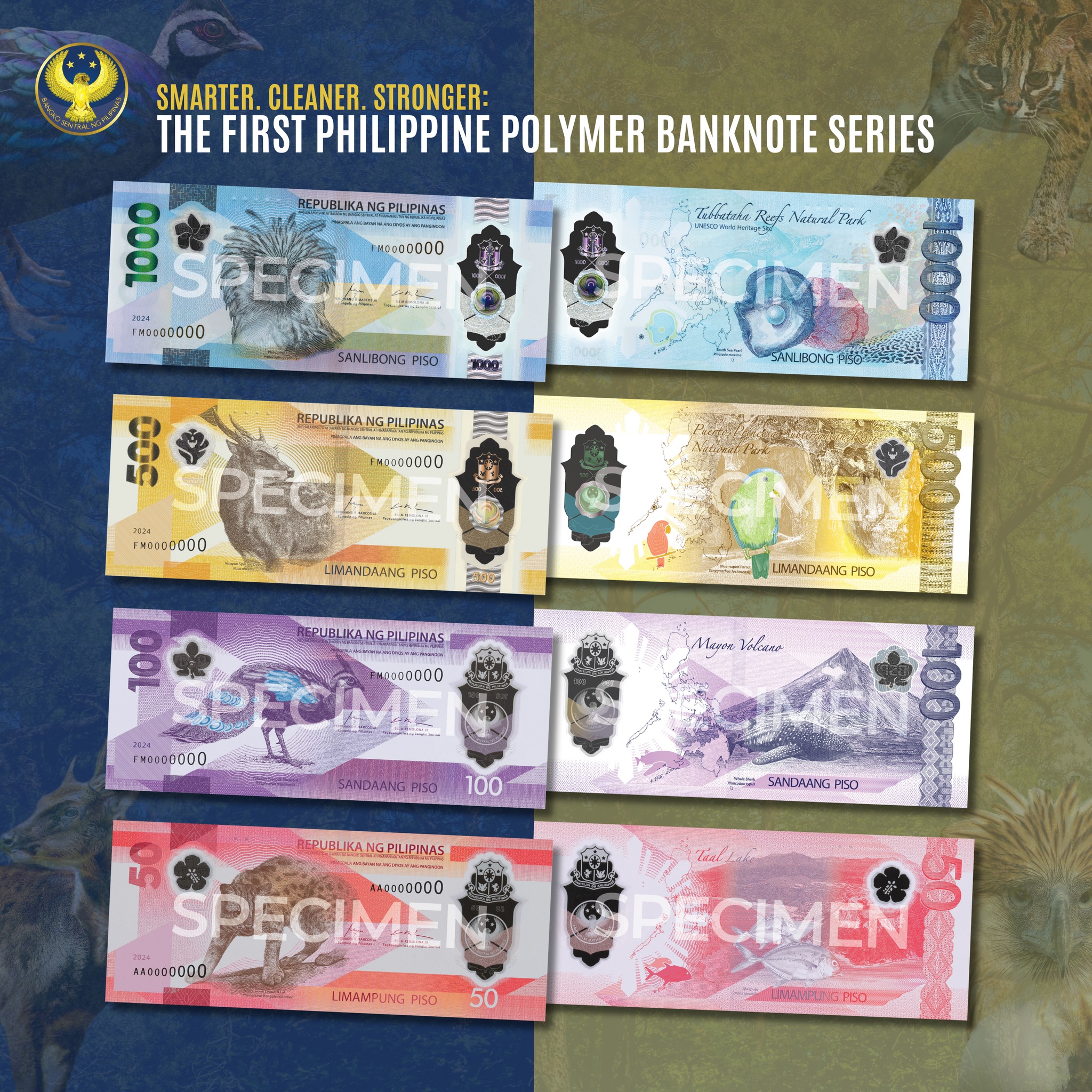
The Bangko Sentral ng Pilipinas (BSP) on Thursday unveiled the first Philippine polymer banknote series, showcasing the country’s rich biodiversity and cultural heritage while incorporating advanced anti-counterfeiting and accessibility features, germ- and dirt-resistant surface, as well as improved durability.
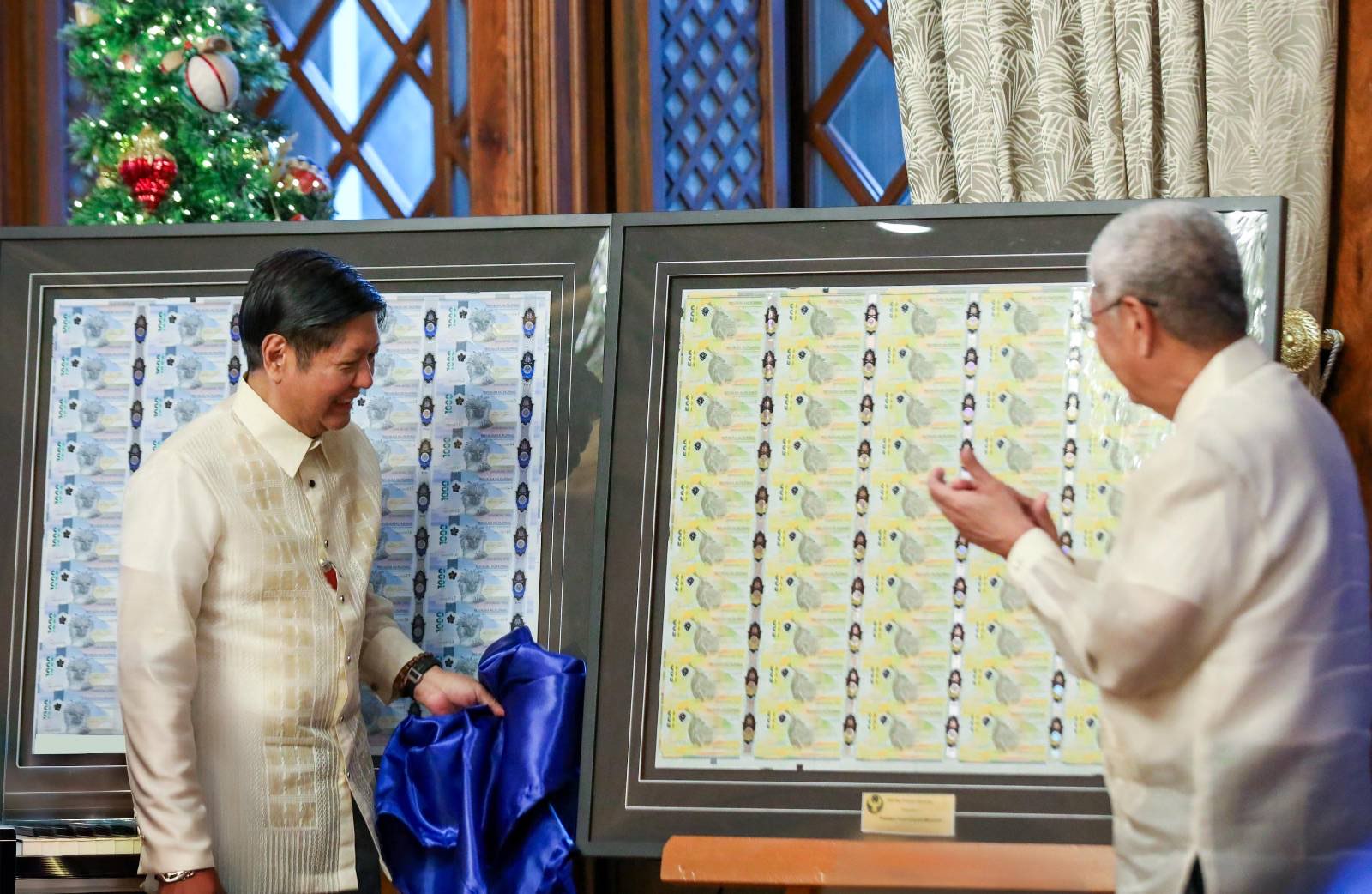
BSP Gov. Eli Remolona Jr. presented the new 500-, 100-, and 50-piso polymer banknotes to President Ferdinand R. Marcos Jr. in a ceremony in Malacañang, underscoring that the banknotes “raises awareness of the country’s threatened species, serves as a symbol of Filipino identity, and fosters national pride.”
Like the 1000-piso polymer banknote which was introduced in April 2022, the new denominations feature images of endemic flora and fauna while preserving the elements from their paper counterparts, such as traditional local weave designs, native species, and protected areas.
The 500-piso banknote features the Visayan spotted deer and Acanthephippium mantinianum (orchid species); the 100-piso has the Palawan peacock-pheasant and Ceratocentron fesselii (orchid species); while the 50-piso depicts the Visayan leopard cat and Vidal’s lanutan (flower species).
“The first Philippine polymer banknote series, which includes the 1000-, 500-, 100-, and 50-peso denominations, marks a historic moment for our country,” the President said in his speech.
“The introduction of the first Philippine polymer banknote series reflects the progress we are making as a Bagong Pilipinas—practical, innovative, and deeply meaningful,” he added.
Building on the success of the 1,000-piso polymer banknote, Marcos noted that the rollout of the polymer banknote series “aligns with the global best practice of updating currency features every 10 years” to ensure that Philippine currency remains “secure, durable, and sustainable.”
“Polymer banknotes are designed to keep up with the demands of everyday life. Unlike paper bills, which wear out after about a year, a year and a half, polymer banknotes can last up to seven and a half years—five times longer,” the Chief Executive stressed.
“And that means that we no longer need to replace them as often, saving money, cutting down on waste, and making a meaningful contribution to protecting the environment,” he added.
The President also emphasized the BSP’s commitment to safeguarding the integrity of Philippine currency by periodically updating the banknotes to avoid counterfeiting.
“By upgrading our currency, we are making sure that every hard-earned peso stays safe, whether it is saved, whether it is spent, or whether it is invested,” Marcos said.
The polymer banknotes would also be still accepted for payment despite folds, the President assured.
The new polymer series will be available in limited quantities in the Greater Manila Area starting Dec. 23 and the rest of the country in 2025—just in time for Christmas and giving of “aginaldo” to kids.
The central bank, however, clarified that these banknotes may be initially withdrawn over-the-counter in banks and would later be accessible via automated teller machines (ATMs).
Moreover, paper banknotes would still continue in circulation and remain valid.
“So, there is no need to worry about that, the cash in your wallet is—still has its value. The polymer banknotes are simply a step forward—stronger, more durable, better suited to today’s demands, while still preserving the essence of what makes our currency truly Filipino,” Marcos said.
-iro

