
Agence France-Presse
Snatched by grave robbers or traded by settlers as macabre curiosities, the remains of New Zealand’s Indigenous People are slowly being brought home after centuries overseas.
After British explorer Captain James Cook arrived in New Zealand in 1769, some European settlers developed a grim fascination with the remains of Indigenous Maori people and Morioris, who are native to the Chatham Islands.
To colonial traders, the biggest trophies to be had were the tattooed heads of Indigenous warriors and leaders.
In the name of crude scientific research, grave robbers also plundered Indigenous human remains from burial sites across the country, mostly during the 19th century, which is still a source of anger and grief for many New Zealanders.
Since 2003, experts from New Zealand’s Te Papa national museum in Wellington have scoured the globe to locate them.
“It’s important for all Indigenous People, whose ancestors were either traded or collected and taken overseas, that the remains come home,” Te Herekiekie Herewini, who manages the museum’s repatriation programme, told AFP.
He said the programme has retrieved the remains of nearly 900 Indigenous People, and estimates the remains of between 300 to 400 more are still housed in institutions around the world.
“We are working hard to bring them home,” he said.
‘Like a crime ring’
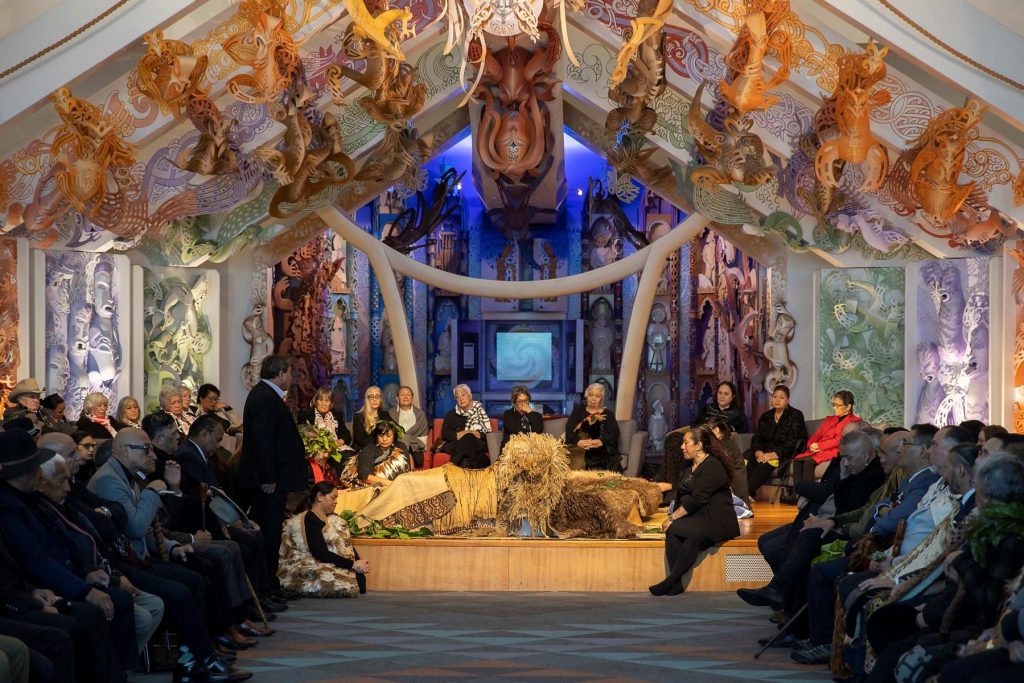
Last week, the remains of 95 ancient New Zealanders, along with six mummified tattooed heads, arrived home from seven institutions in Germany.
In Maori culture, the skulls, bones and other body parts are referred to as tupuna, or ancestral remains.
Getting the remains home is more than a matter of logistics.
Copenhagen-based Te Arikirangi Mamaku-Ironside, head of repatriation for Te Papa, works to find out which museums still have Indigenous remains and negotiate their release.
“It’s a massive jigsaw puzzle trying to work out where New Zealand’s ancestral remains are now kept — whether in state museums or private collections,” he told AFP.
“A grave robber may have taken from one location, but their collection could have been distributed to several museums in several countries or continents.
“As the programme goes on, the picture becomes a lot clearer.”
Mamaku-Ironside explained that New Zealand’s early colonial museums often exchanged artifacts with overseas collectors, with remains ending up in foreign museums.
“There was a network of exchange,” he said. “It was kind of like a crime ring — except it wasn’t actually considered illegal because it wasn’t considered unethical back then to trade in human remains. They were viewed as specimens.”
Mamaku-Ironside says his initial approach involves contacting institutions to ascertain what remains are stored in their collections.
Part of his role is to “establish and confirm” which items “were actually illicitly collected and traded from New Zealand.”
‘Healing the trauma’
“It’s very important not to approach as an angry Maori, but to say that in the spirit of friendship we are going to work together, so we understand each other,” Mamaku-Ironside said.
The government-backed programme, which covers the logistics and costs of repatriation, is a delicate process with a spiritual aspect.
Before their release, Mamaku-Ironside will request time alone with the ancestral remains.
“We introduce ourselves — just so they know who we are — then we lay down our purpose, to help create a pathway for them to return home. It’s very spiritual, very emotional,” he said.
After they arrive in Wellington, the remains are returned to their iwi, or tribe, after a powhiri ceremony to mark their return.
That’s when Mamaku-Ironside feels his job is done.
“It’s about healing the trauma,” he said, “having had ancestors stolen — ripped away from their homes.
“Even after they have passed away, their journey continues. It doesn’t finish until they are returned to their communities.” – gb

