
By Brian Campued
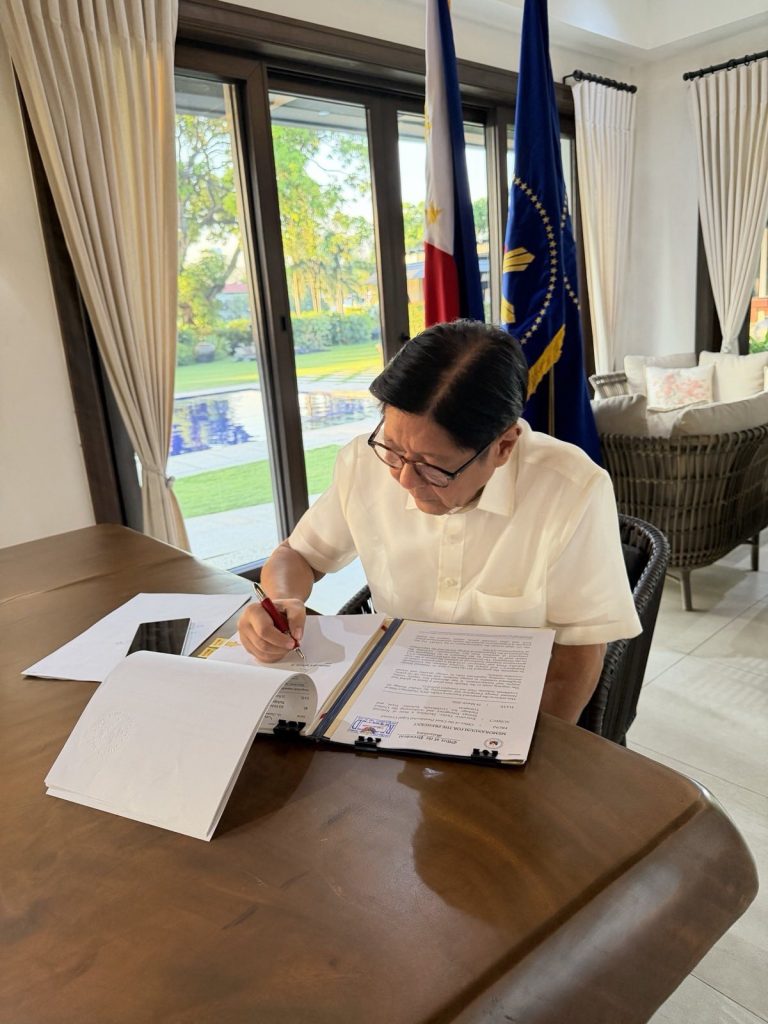
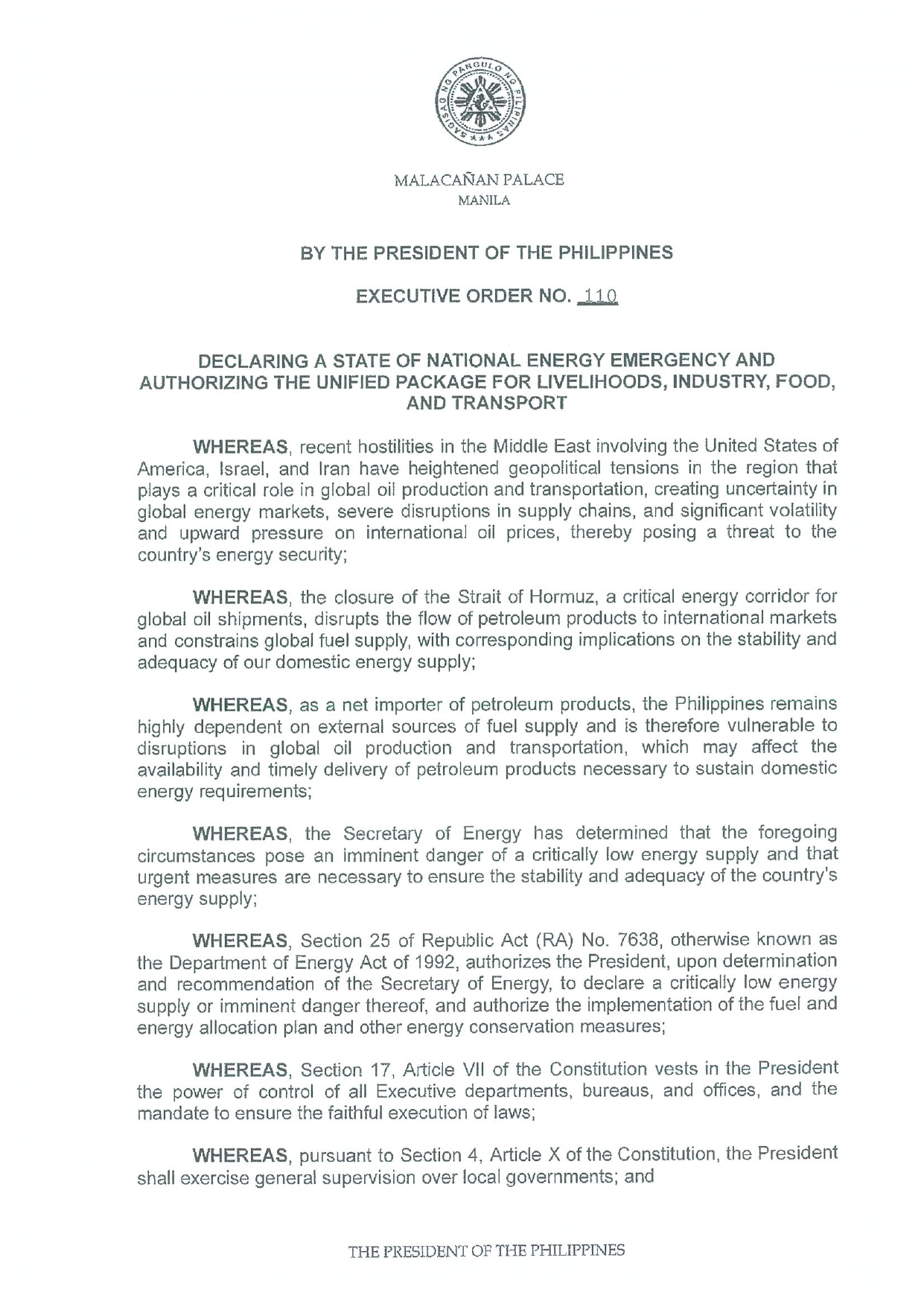
President Ferdinand R. Marcos Jr. on Tuesday declared a state of national energy emergency in light of the ongoing conflict in the Middle East that has affected the supply and prices of fuel and energy in the country.
In signing the Executive Order (EO) No. 110, the President noted that the Philippines remains highly dependent on oil imports, citing the major disruption of global petroleum shipments due to the closure of the Strait of Hormuz.
“The declaration of a state of national energy emergency will enable the government, through the DOE (Department of Energy) and other concerned agencies, to implement responsive and coordinated measures under existing laws to address the risks posed by disruptions in the global energy supply and the domestic economy,” Marcos said.
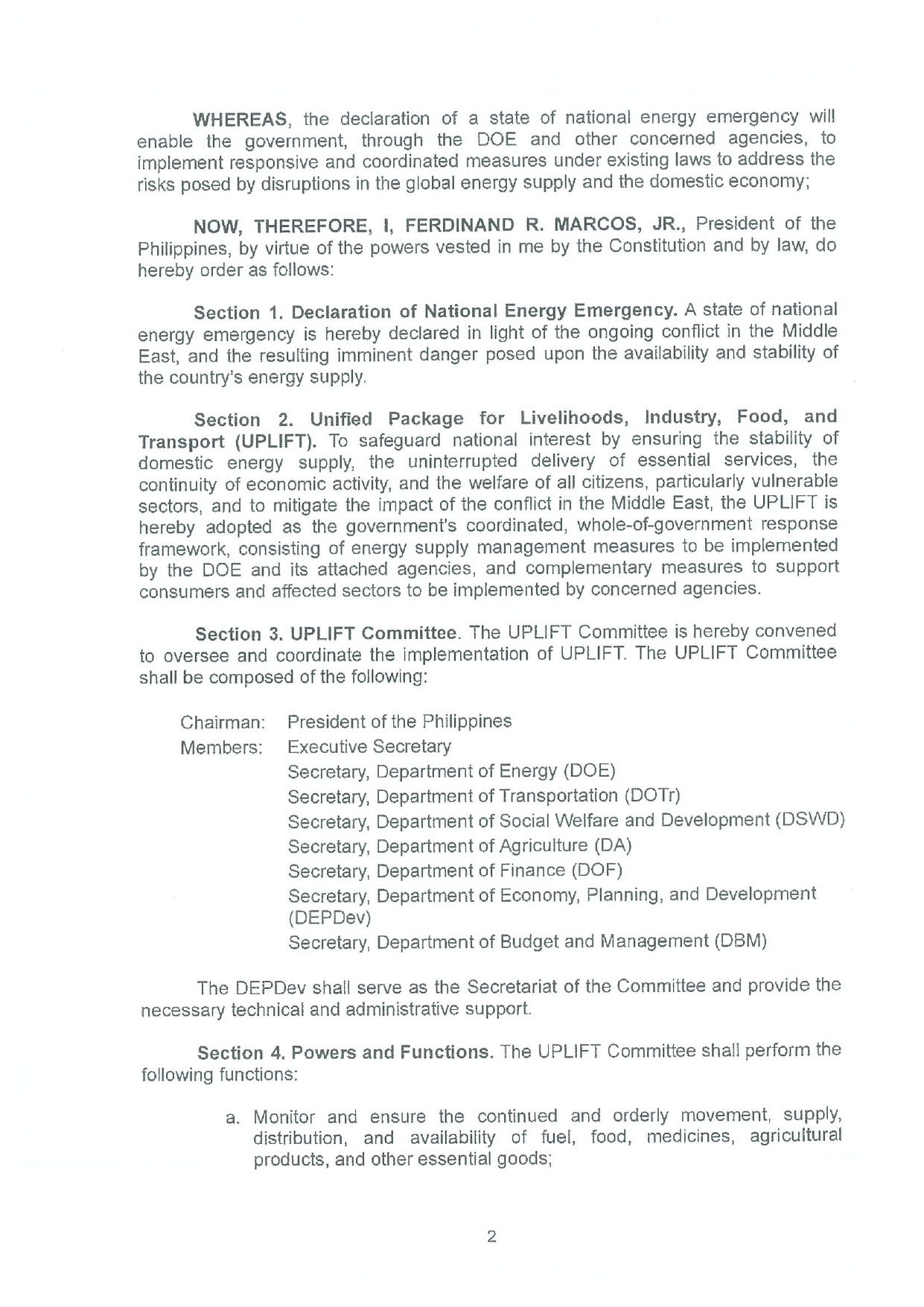
EO 110 likewise ordered the creation of the Unified Package for Livelihoods, Industry, Food, and Transport (UPLIFT) Committee to ensure a coordinated and whole-of-government response in mitigating the impact of the Middle East crisis, including management of domestic energy supply and other complementary measures to support consumers and affected sectors.
The UPLIFT Committee, chaired by the President, will be composed of the Executive Secretary and the secretaries of the Departments of Energy (DOE); Transportation (DOTr); Social Welfare and Development (DSWD); Agriculture (DA); Finance (DOF); Economy, Planning, and Development (DEPDev); and Budget and Management (DBM).
The DEPDev will likewise serve as the secretariat and provide the necessary technical and administrative support to the committee.
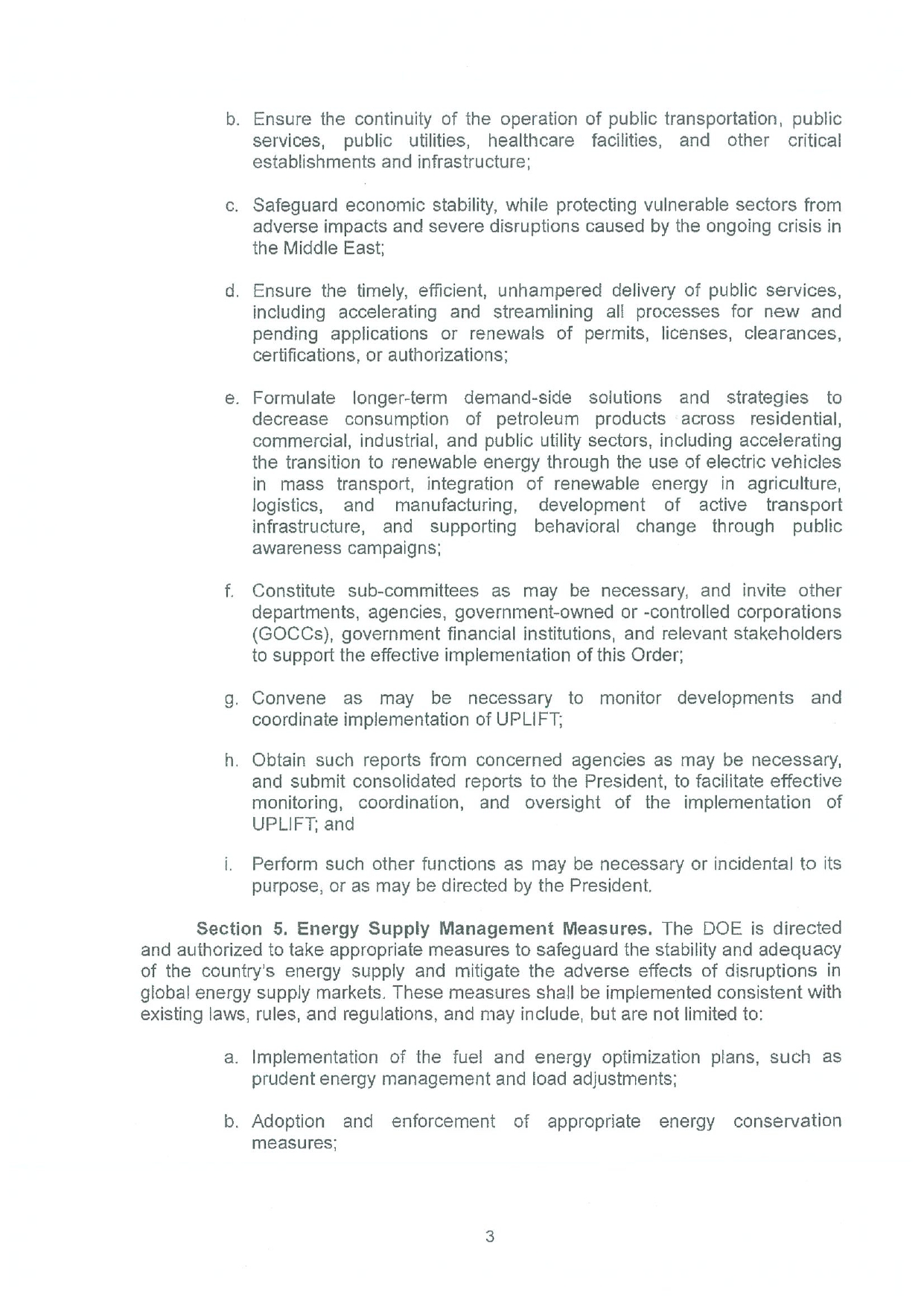
The UPLIFT Committee is tasked to ensure the uninterrupted flow of fuel and other essential goods, operation of public transportation and other critical infrastructure and services, and the continuity of economic activity, among others.
The DOE, in particular, is instructed “to take appropriate measures to safeguard the stability and adequacy of the country’s energy supply and mitigate the adverse effects of disruptions in global energy supply markets.”
These include energy conservation measures; acting against hoarding, profiteering, and supply manipulation; as well as procuring fuel and petroleum products to ensure sufficient supply.
The EO also reiterated the President’s directives to relevant government agencies to implement the necessary response measures to cushion the impact of the regional tension on key sectors such as transport, agriculture, micro, small, and medium enterprises (MSMEs), and overseas Filipino workers (OFWs).
The state of national energy emergency will remain in effect for one year, unless otherwise extended or lifted by the Chief Executive. (with report from Kenneth Paciente / PTV News)
-av
 President Ferdinand R. Marcos Jr. signs Executive Order No. 110, declaring a state of national energy emergency and authorizing a unified package for livelihoods, industry, food, and transport. (Courtesy: PCO via Kenneth Paciente/PTV News)
 President Ferdinand R. Marcos Jr. signs Executive Order No. 110, declaring a state of national energy emergency and authorizing a unified package for livelihoods, industry, food, and transport. (Courtesy: PCO via Kenneth Paciente/PTV News)
 President Ferdinand R. Marcos Jr. signs Executive Order No. 110, declaring a state of national energy emergency and authorizing a unified package for livelihoods, industry, food, and transport. (Courtesy: PCO via Kenneth Paciente/PTV News)
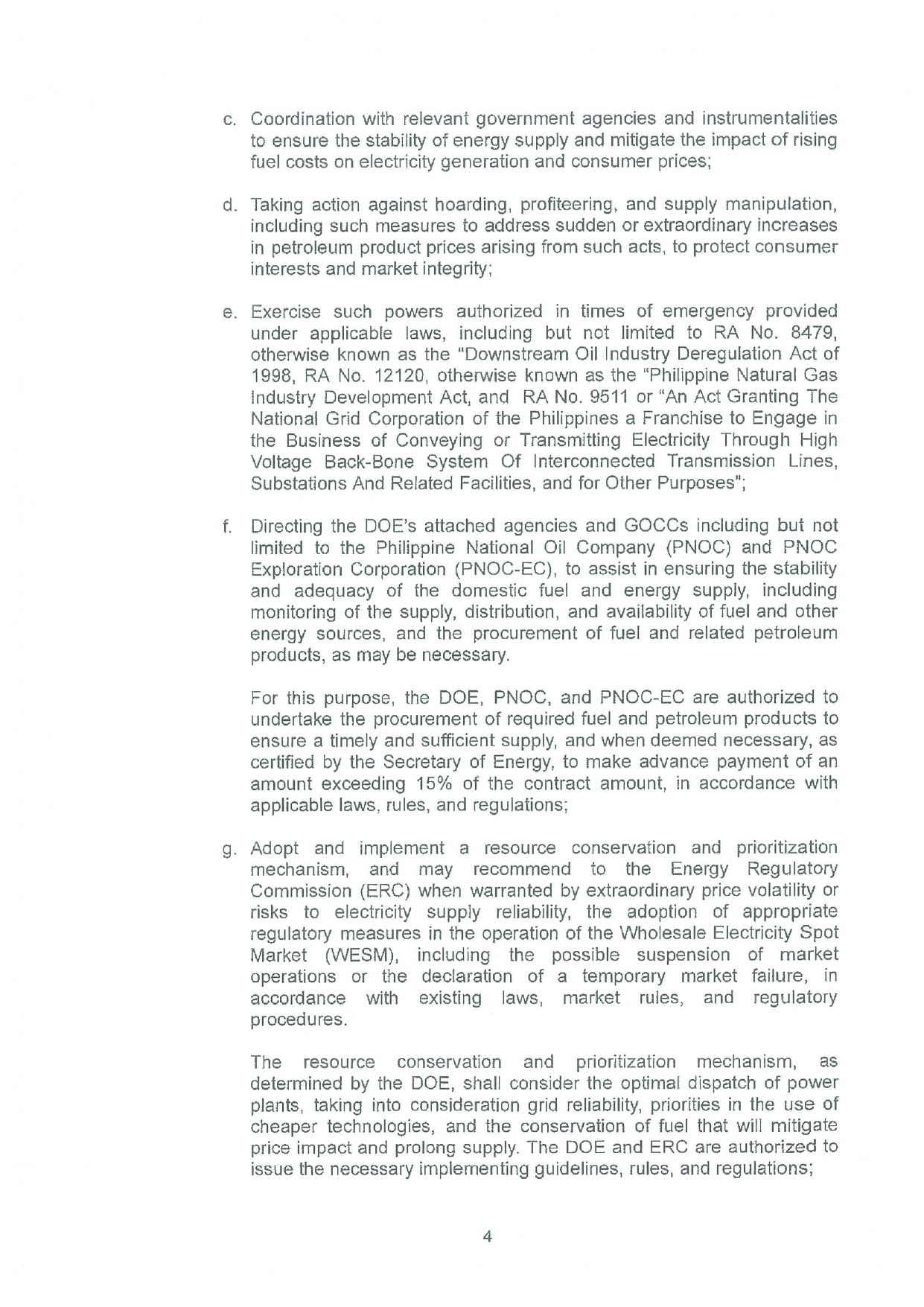 President Ferdinand R. Marcos Jr. signs Executive Order No. 110, declaring a state of national energy emergency and authorizing a unified package for livelihoods, industry, food, and transport. (Courtesy: PCO via Kenneth Paciente/PTV News)
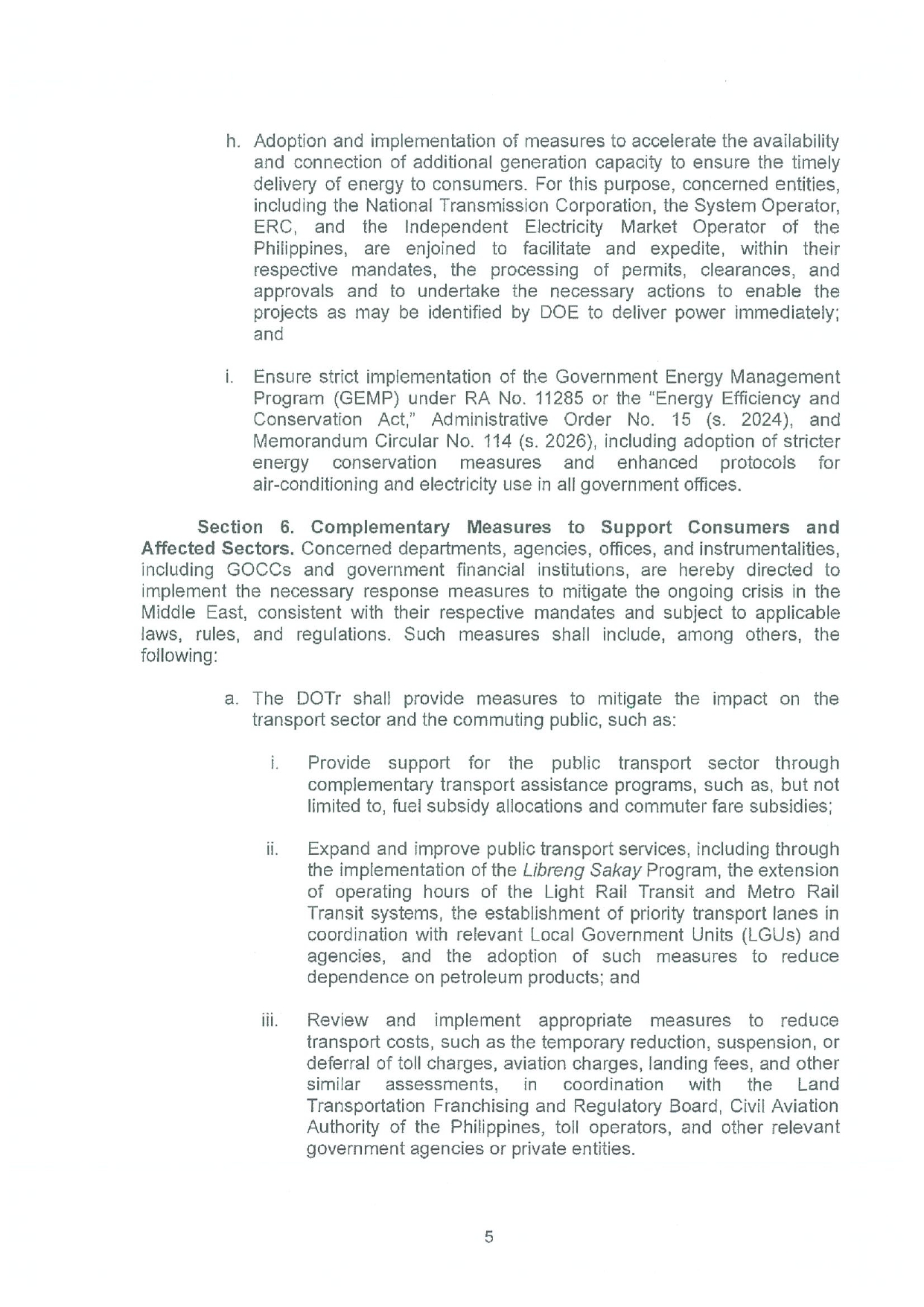 President Ferdinand R. Marcos Jr. signs Executive Order No. 110, declaring a state of national energy emergency and authorizing a unified package for livelihoods, industry, food, and transport. (Courtesy: PCO via Kenneth Paciente/PTV News)
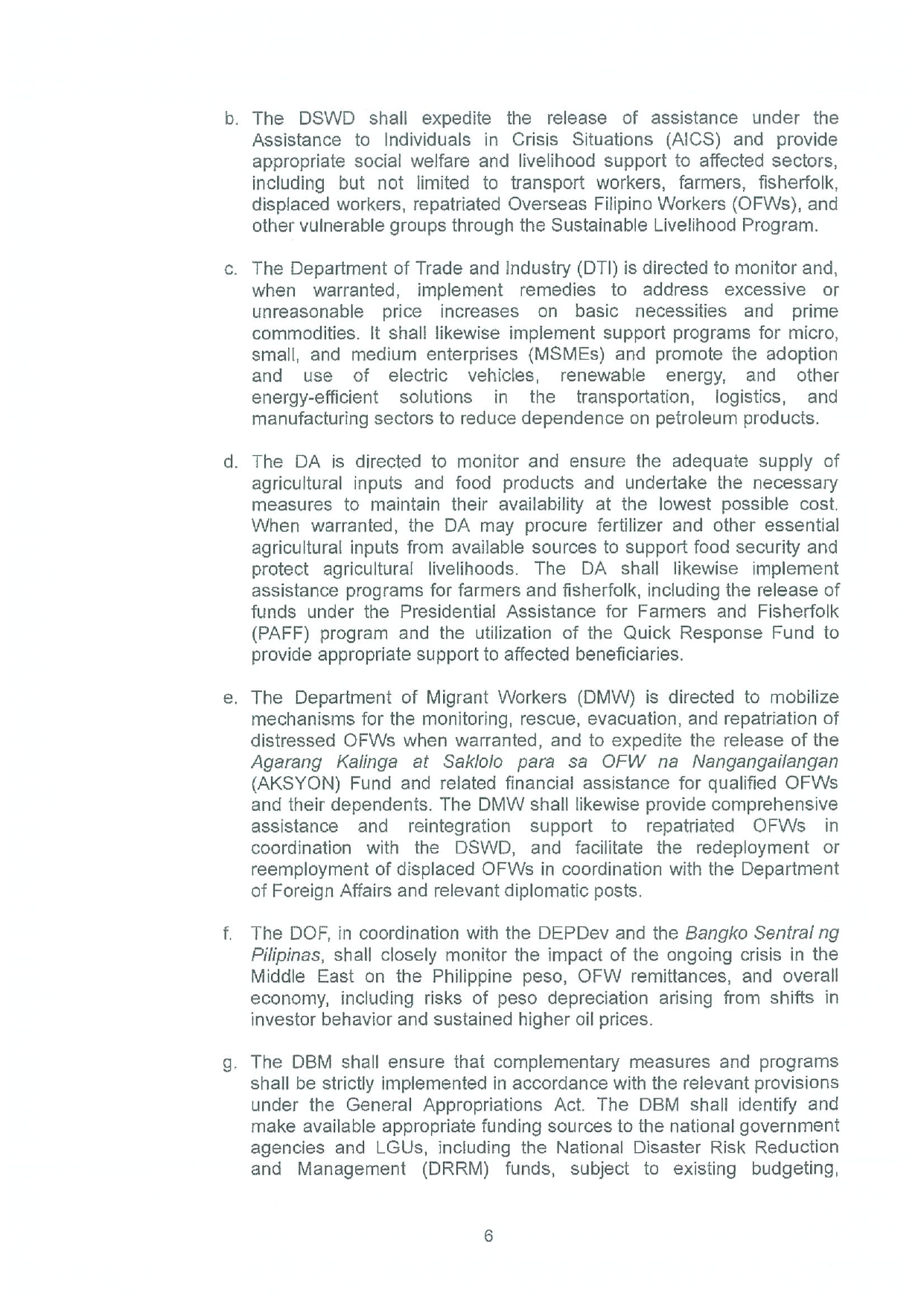 President Ferdinand R. Marcos Jr. signs Executive Order No. 110, declaring a state of national energy emergency and authorizing a unified package for livelihoods, industry, food, and transport. (Courtesy: PCO via Kenneth Paciente/PTV News)
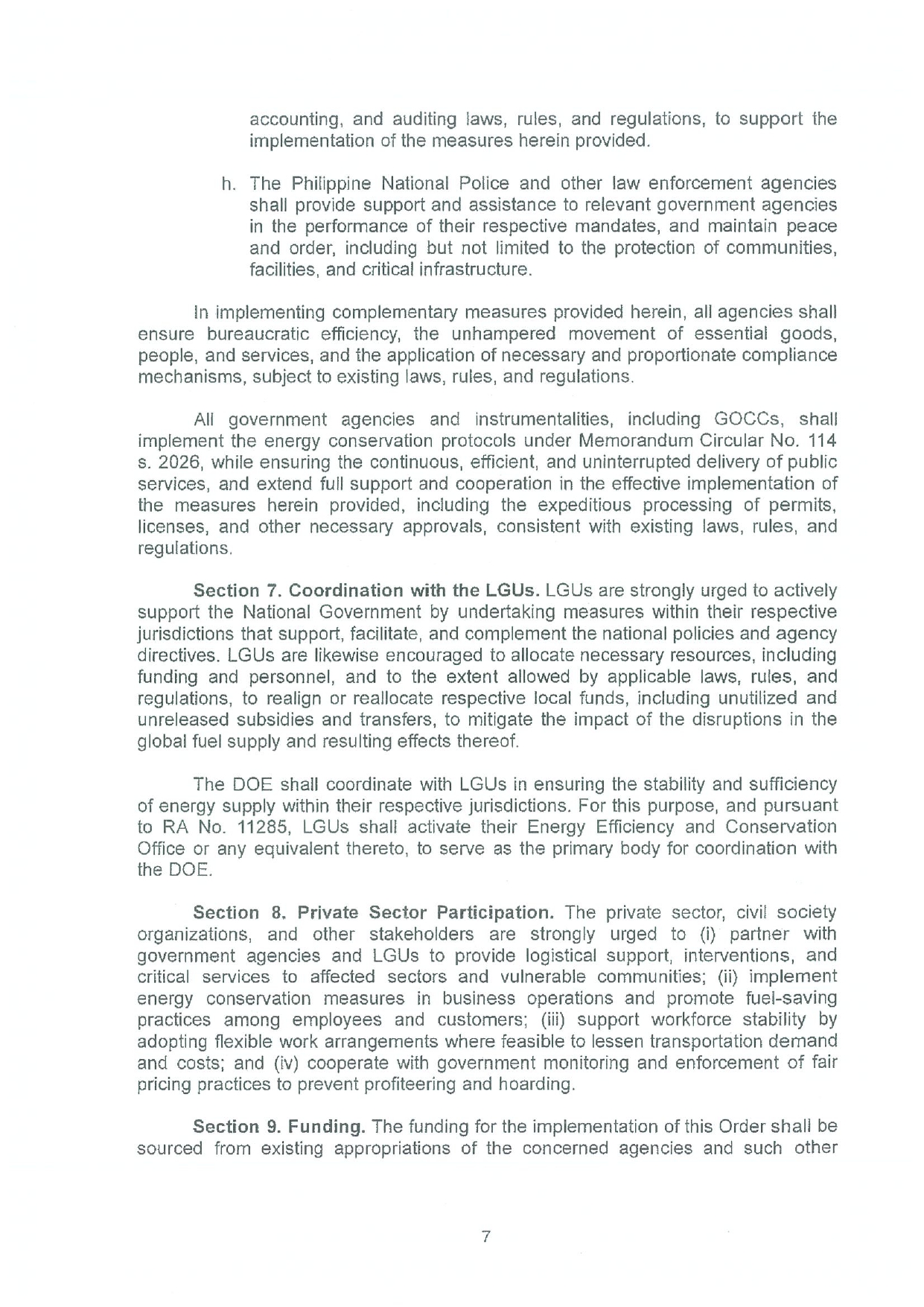 President Ferdinand R. Marcos Jr. signs Executive Order No. 110, declaring a state of national energy emergency and authorizing a unified package for livelihoods, industry, food, and transport. (Courtesy: PCO via Kenneth Paciente/PTV News)
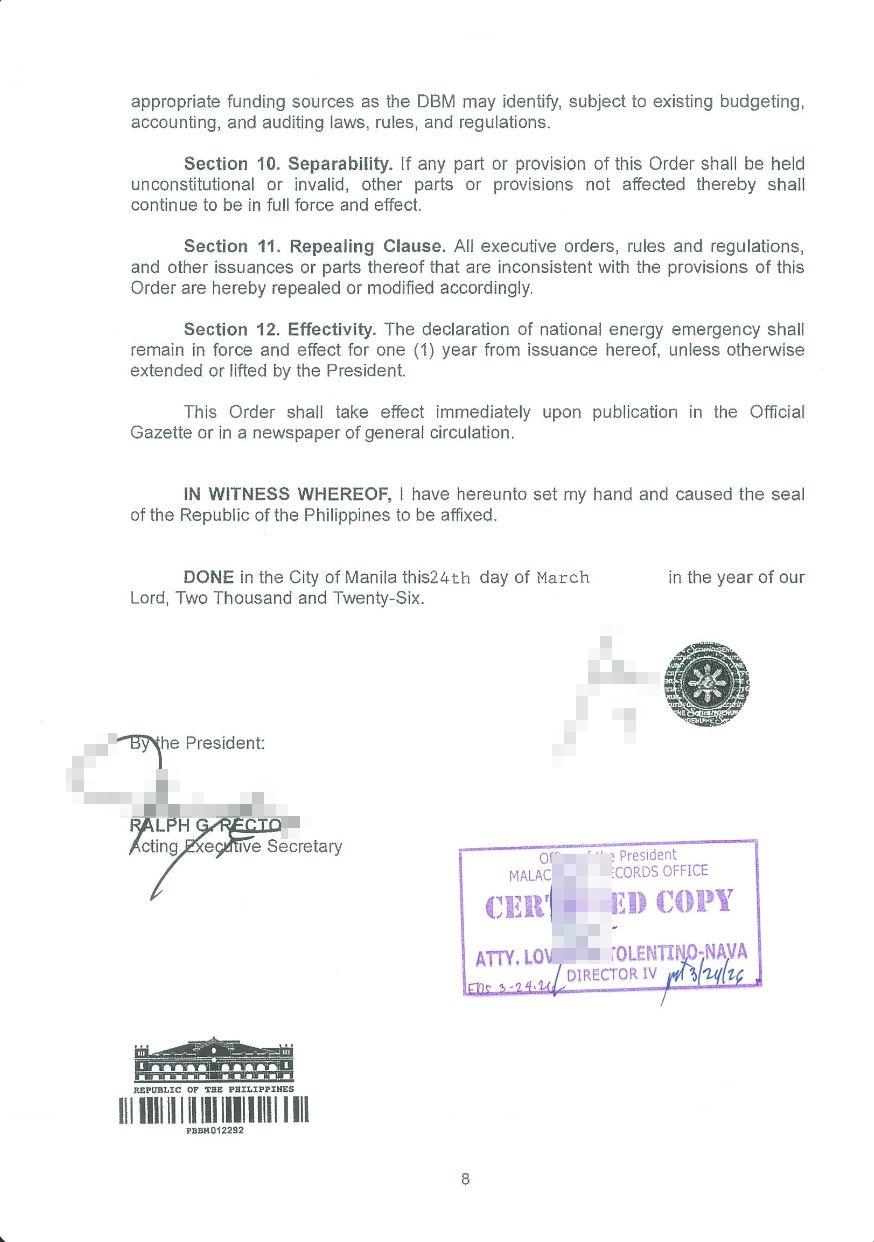 President Ferdinand R. Marcos Jr. signs Executive Order No. 110, declaring a state of national energy emergency and authorizing a unified package for livelihoods, industry, food, and transport. (Courtesy: PCO via Kenneth Paciente/PTV News)
