
By Brian Campued
“Iisa ang ating misyon: UPLIFT—ang iahon ang ating nahihirapang mga mamamayan.”
President Ferdinand R. Marcos Jr. on Monday highlighted the administration’s continuing efforts to cushion Filipinos from the impacts of high fuel prices brought about by the Middle East crisis.
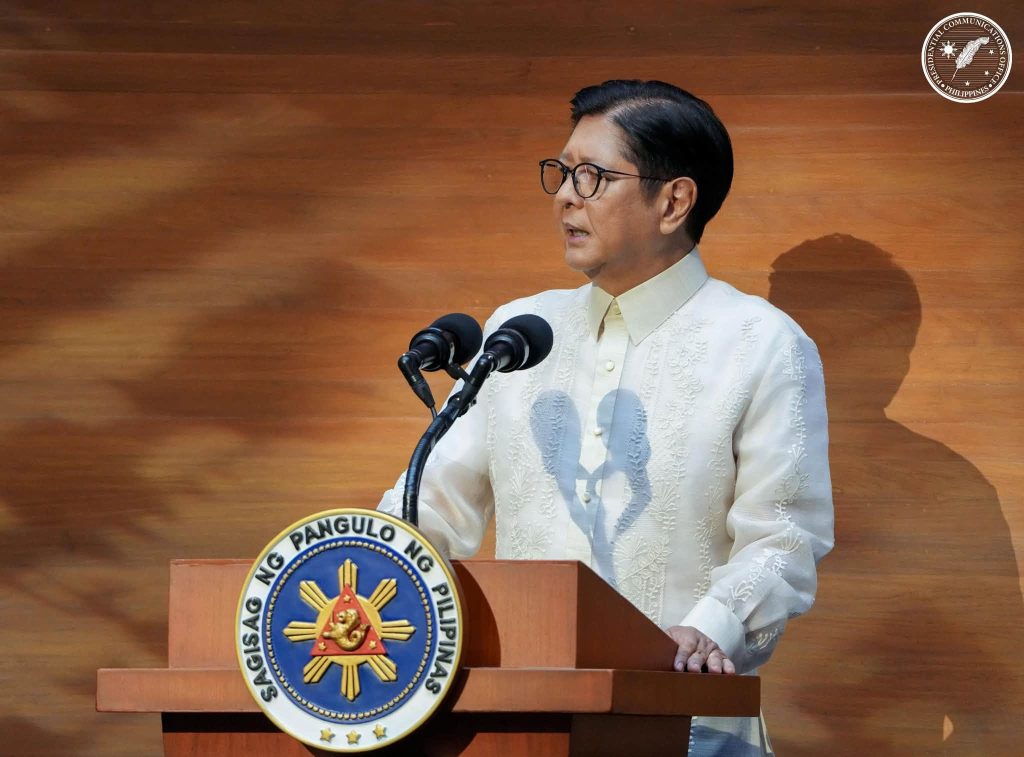
In his 5th State of the Nation Address (SONA) at the Batasang Pambansa Complex, President Marcos Jr. outlined various government assistance programs aimed at providing relief for transport workers, overseas Filipino workers (OFWs), commuters, farmers, and the vulnerable sector, as well as the middle-income families.
As soon as the conflict in the Middle East erupted in late February, the President declared a State of Energy Emergency and mobilized his Cabinet to ensure affected Filipinos were assisted through the Unified Package for Livelihoods, Industry, Food, and Transport (UPLIFT) program.
“Mga kababayan, sa ating pagbalik-tanaw, kaya ko kayong harapin, at sabihin na ginawa natin ang lahat ng nararapat upang malunasan ang mga epekto ng krisis,” he said.
Welfare of OFWs
Chief among the priority concerns of the Marcos Jr. administration was the safety of around 2.5 million OFWs in the Middle East.
According to the President, more than 12,000 OFWs have already been repatriated from conflict-affected areas, while over 140,000 OFWs were provided with various forms of assistance, including food, financial aid, medical care, and shelter.
Under the government’s repatriation and reintegration programs, returning OFWs, including teachers, were assisted through the Department of Migrant Workers’ (DMW) AKSYON Fund and the Overseas Workers Welfare Administration’s (OWWA) Kabuhayan program.
“Ang iba naman ay nilapit natin sa Public Employment Service Office (PESO), o kaya’y sinama natin sa Bayanihan para sa Balikbayang Manggagawa job fairs. Samantalang ang iba ay tinulungan nating makapag-hanapbuhay muli sa ibang bansa,” President Marcos said.
Ensuring adequate local oil supply
As Middle East oil drives global energy markets, the war has caused major disruptions in supply due to blockages in the Strait of Hormuz—resulting in higher crude prices.
To allay public concerns on possible shortage of local fuel supplies, the government, through the Department of Energy (DOE), coordinated with non-traditional suppliers including Japan, South Korea, Oman, India, Russia, and China to secure oil shipments and safeguard the country’s inventory.
“Dahil sa mga ito, natiyak natin na sapat ang supply ng bansa na tatagal hanggang halos dalawang buwan,” President Marcos Jr. said.
The DOE, in coordination with oil companies, also implemented successive rollbacks and staggered oil price hikes to spread out massive double-digit pump price hikes—helping soften the impact on motorists, transport workers, and businesses.
The government likewise suspended for three months the imposition of excise tax on liquefied petroleum gas (LPG) and kerosene, put a price cap on imported rice, and cracked down on oil pilferage.
Subsidies for affected sectors
Noting that the transport sector was among the hardest hit by the fuel price surge, President Marcos underscored various interventions undertaken by the government to ease the burden on both motorists and commuters.
“Ang sektor ng transportasyon ang pinakamatinding tinamaan ng epekto ng krisis. Tsuper, operator, pasahero, manggagawa, o negosyo man—lahat ay umaray sa matarik na pagtaas ng presyo ng produktong petrolyo,” the President said. “Ngunit hindi natin kayang hayaang tumigil o maantala ito, dahil ito’y nagsisilbing piston ng ating ekonomiya.”
Among the measures implemented by the administration were cash relief assistance for over 1.8 million public utility vehicle (PUV) drivers through the Assistance to Individuals in Crisis Situation (AICS) program, P10-per-liter diesel subsidy for public utility jeepneys and UV Express vehicles, and TUPAD Tuloy-Pasada program.
The government also launched Libreng Sakay services and revived the Service Contracting Program for jeepneys and buses, which provided additional income to qualified operators and drivers and up to 40% fare discount on commuters.
The administration also temporarily reduced or waived various fees in airports and seaports, including terminal, landing, takeoff, harbor, anchorage, berthing, and storage fees, to lower transport and logistics costs.
Toll discounts on expressways and reduced terminal fees for agricultural products transported via roll-on/roll-off (Ro-Ro) vessels w
ere likewise rolled out while trucks accredited by the Department of Agriculture were granted toll-free passage.
Nearly 2 million farmers and fisherfolk also received assistance from the government under the Presidential Assistance to Farmers, Fisherfolk, and Families (PAFFF). Over 26,000 tons of rice bought by the government from local farmers were also distributed to more than 2.5 million families.
“Sa mga programang ito pa lang, milyong-milyong Pilipino —drayber man o pasahero—ang nakaramdam ng kaunting ginhawa sa kanilang mga biyahe araw-araw mula nang ito’y nailunsad. Hindi lamang dito sa Metro Manila, kundi sa buong bansa,” the President said.
“Hanggang kailangan, asahan ninyo na hindi titigil ang pagsuporta ng pamahalaan,” he added, noting that P60 billion has been allocated to sustain UPLIFT programs until the end of the year.
Tax relief
Responding to the public clamor for assistance to middle-income families, President Marcos Jr. called on Congress to pass a package of tax relief measures aimed at easing the financial burden on workers, particularly the middle class, and supporting small businesses amid the lingering effects of recent economic crises.
“So, to ensure the continued progress of the middle class amidst the lingering effects of the crisis, we will pursue tax relief measures that promote growth, that generate revenue, and advance equity toward socio-economic sustainability,” he said.
Under the proposed tax package, the government will expand the income tax exemption by increasing the threshold for tax-free annual income from the current P250,000 to P350,000 and reduce income tax rates for other workers who will remain subject to taxation.
To support micro, small, and medium enterprises (MSMEs), smaller businesses would no longer be required to pay the minimum corporate income tax.
The proposed package also includes a tax amnesty covering unpaid income taxes, estate taxes, donor’s taxes, and value-added taxes (VAT), including the corresponding penalties and surcharges.
-av

