
By Joann Villanueva | Philippine News Agency
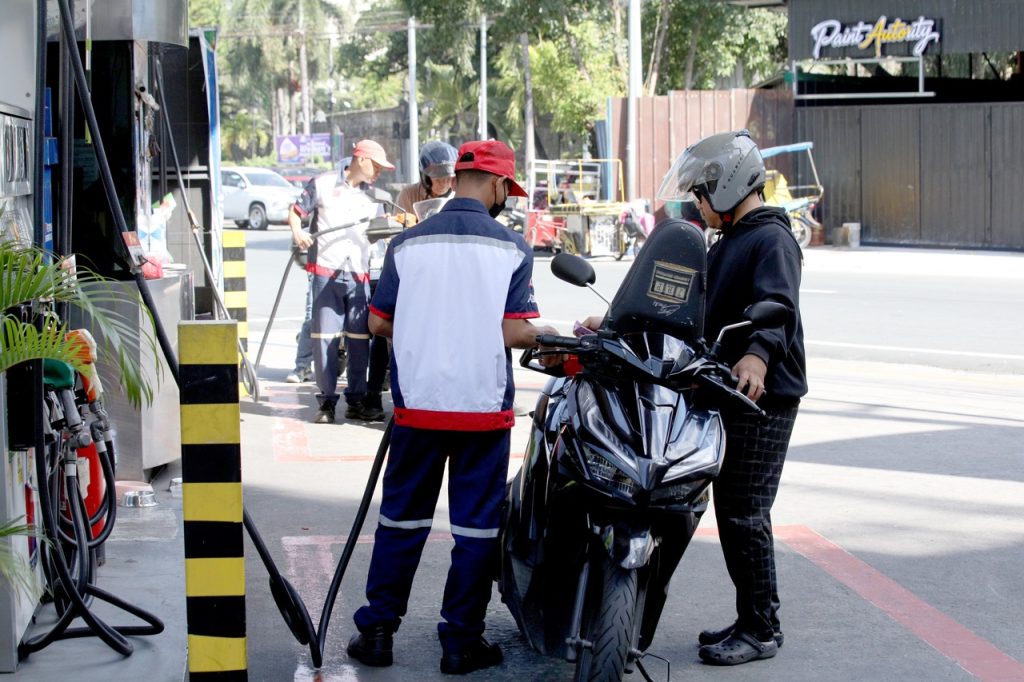
The Philippines continues to have adequate fuel supply until the second week of May, Energy Secretary Sharon Garin said Tuesday.
In an online briefing, Garin said that on average, there is around 45 days’ worth of supply for the whole country to date, based on their talks with fuel companies.
In particular, current domestic supply of gasoline is expected to last for the next 53.14 days; diesel, 45.82 days; kerosene, 97.93 days; jet fuel, 38.62 days; fuel oil, 61.49 days; and liquified petroleum gas, 23.51 days.
She said supply continues to come in since the government has even talked with governments from supplier countries like South Korea, Japan, and China.
She said the Philippine National Oil Company (PNOC) has also already contracted around 400 barrels, and the government is set to order around 600 barrels more this week, worth a total of around P10 billion, from different sources, as buffer for around a week’s requirement.
“We are building our buffer despite our limitations. Our team is hard at work in trying to make sure that, kahit na isa or dalawang araw ‘yan, that’s an important addition para lang sigurado po na our country does not run dry,” she said.
Garin also appealed to the public to not engage in hoarding and profiteering “because that will really affect the supply of the entire country.”
Fuel prices
During the same briefing, Garin said fuel price increases this week are smaller compared to the past weeks.
For gasoline, the increases are between P8 to P12 per liter; for diesel, between P15 to P18 per liter; and for kerosene, between P12 to P22 per liter.
Last week, the price of gasoline products ranged between P79.68 to P90.60 per liter; diesel, between P92 to P126.20 per liter; and kerosene, between P99.99 to P143.79.
Garin said these weeks’ increases remain significant and will greatly impact the transport industry, the manufacturing sector, and the buying power of the households due to the developments in the Middle East.
She, however, cited that several government agencies are now implementing measures to their focused clients to cushion the impact of surging oil prices.
For the DOE, she said its task is to ensure the availability of supply.
“Supply is still sufficient. It has not arrived at an alarming level because our regulations require 15 days but so far, we have not gone down to 15 days. We are still at a comfortable level,” she said.
Energy conservation program
DOE Energy Utilization Management Bureau director Patrick Aquino, during the same briefing, said the energy audit teams from the agency have checked around 400 government offices nationwide, and these have registered 87% compliance.
For DOE alone, the compressed workweek, in line with Malacanang’s directive, has resulted in a 40% drop in energy consumption since the work-from-home arrangement was put in place last March 9.

