
By Brian Jules Campued
The Philippines aims to become a space-capable, spacefaring nation within the next decade as it also hopes to contribute to scientific advancements worldwide, Philippine Space Agency (PhilSA) Director General Joel Joseph Marciano Jr. said Monday.
In an interview with Malacañang Insider, Marciano said the agency has been concentrating on developing and operating various satellites to achieve that goal. He also stressed the importance of using satellite data through earth observation to be able to further connect the Philippine archipelago.
“In the Philippine space policy, it is written that we have a central goal of becoming a space-capable, spacefaring nation within the next decade. So, being spacefaring means you have people think of astronauts, right? But satellites are kind of a proxy for astronauts,” he said.
“It could also mean you have rockets to bring things to space, but at the very least, it means you have infrastructure that you operate and control in space, like satellites—that makes us spacefaring. So, we are spacefaring by that definition already because we operate and control our own satellites going around the Earth,” he added.
According to Marciano, the PhilSA has a satellite roadmap—while trying to engage local companies, possibly through public-private partnerships—to increase local satellite content for domestic production.
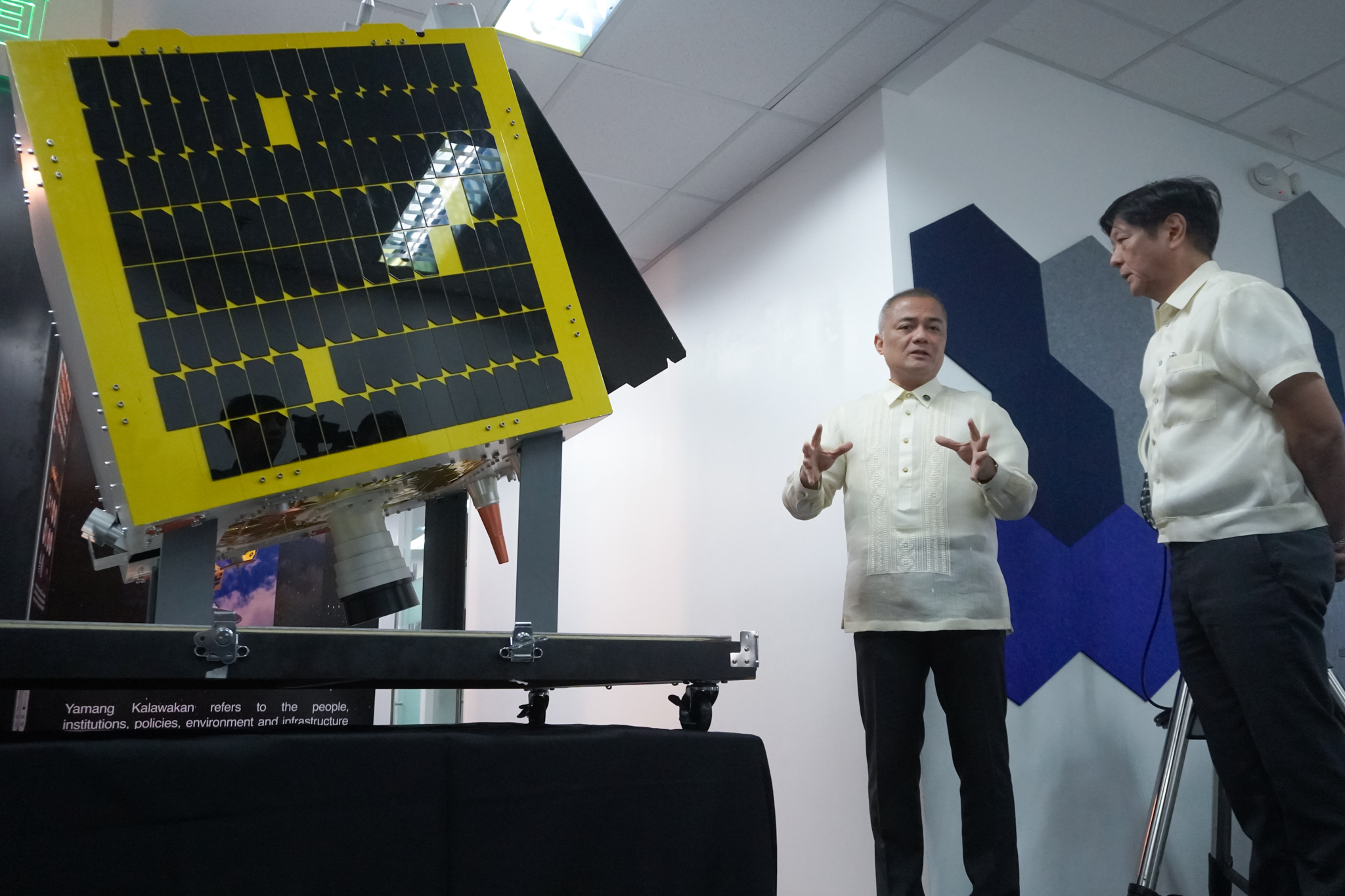
One of the satellite projects in the agency’s pipeline is the Multispectral Unit for Land Assessment (MULA) satellite, which is expected to be launched in 2026. The MULA satellite is an Earth observation satellite capable of producing data to be used by government agencies, as well as the public and private sector.
“And the pictures that it takes, well, that is for agriculture monitoring primarily but also for looking at water, the seas, and also for responding to emergencies and disasters,” Marciano said.
Other satellite projects of the PhilSA are the Maya-7 cube satellite, Diwata-2, Diwata-3, and the NovaSAR satellite.
Bringing space tech closer to youth
Marciano also said that President Ferdinand R. Marcos Jr. has also directed PhilSA, the Department of National Defense, and the Department of Science and Technology to bring space technology closer to Filipinos, especially the youth. Marcos issued the order to these government agencies during the 8th Philippine Space Council Meeting last week.
This is in line with the President’s mandate of optimizing the utilization of space science for national development, including disaster risk reduction and management, environmental protection and monitoring, maritime domain awareness, and agriculture.
“By bringing it to the public, we can communicate the benefits of space technology better in addressing the many programs of the government. We’re there with the other government agencies in trying to achieve better synergy for using space technology,” the PhilSA chief said.
Following the President’s directive, Marciano said, the agency has signed partnerships and collaborations with its counterparts from several countries, including Japan, the United Kingdom, France, South Korea, and the United States.
“We continue to cooperate with other countries. Space is a domain where it’s inherent to have international cooperation,” he continued. – iro

