
By Darryl John Esguerra | Philippine News Agency
The Private Sector Advisory Council (PSAC) has recommended the creation of a National AI Implementation Task Force to accelerate the country’s preparations for the opportunities and challenges posed by artificial intelligence (AI), as President Ferdinand R. Marcos Jr. pushes to equip Filipinos with future-ready skills.
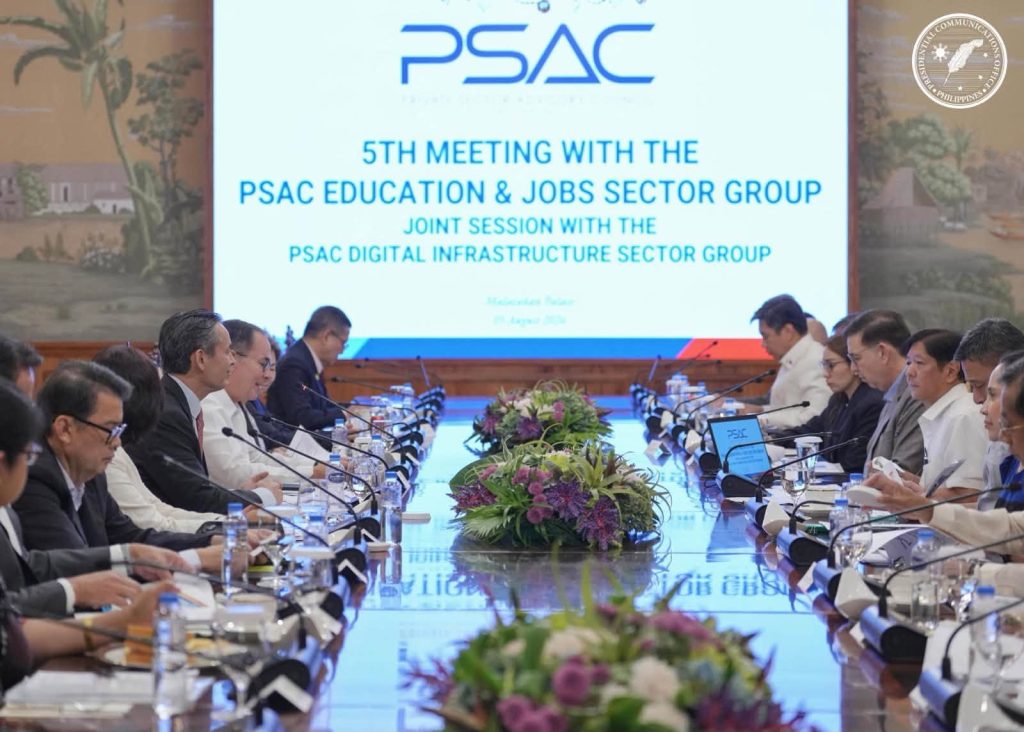
The proposal was presented during the fifth meeting of the PSAC Education and Jobs Sector, held jointly with the Digital Infrastructure Sector in Malacañang on Wednesday.
The meeting focused on translating the country’s National AI Strategy into concrete actions that would improve education and workforce upskilling, create quality jobs and strengthen the Philippines’ global competitiveness.
PSAC Strategic Convenor and Aboitiz Group President and Chief Executive Officer Sabin Aboitiz said the country already has a National AI Strategy and should now focus on its effective implementation.
“Artificial intelligence is no longer a technology of the future—it is already changing the way people work, learn, and do business today. Our priority is to make sure every Filipino has the opportunity to benefit from AI by creating better jobs, developing new skills, and strengthening industries that will drive long-term economic growth,” Aboitiz said.
The proposed task force seeks to address fragmented implementation of AI initiatives by providing a single coordinating body that will bring together government agencies, the private sector, academe, and other stakeholders under a whole-of-nation approach.
PSAC said the body would focus on education and workforce development, technology and research, and policy and governance to accelerate AI adoption while promoting responsible innovation and generating high-quality jobs.
The council also proposed releasing P650 million from the Higher Education Development Fund to the Commission on Higher Education to support AI upskilling programs in colleges and universities beginning next year.
During the meeting, the President and PSAC members also discussed the implementation of the semiconductor and electronics industry roadmap, digital upskilling initiatives, and measures to strengthen coordination among government, industry and academic institutions to address the country’s jobs-skills mismatch.
The Palace said the discussions are part of the administration’s efforts to prepare more Filipinos for emerging industries, enhance the country’s innovation capacity and global competitiveness and create more quality employment opportunities.
PSAC, established by President Marcos Jr. in 2022, is composed of business leaders and industry experts who provide policy recommendations to help achieve the administration’s economic priorities.

