
By Brian Campued
Seeking medical care is often stressful enough on its own, but for many Filipinos who are part of the LGBTQIA+ community, it also comes with the fear that when they walk into the hospital, they will not just be diagnosed or treated, but judged, misgendered, or completely invalidated.
Three years after Quezon City became the first local government unit (LGU) in the Philippines to pass a gender-inclusive healthcare proxy policy, queer couples have been empowered to make medical decisions on behalf of their partners in times of incapacity through the Right to Care (RTC) Card.
For couples of diverse sexual orientation and gender identity and expression and sexual characteristics (SOGIESC), designating their partners as their respective “healthcare agents” means hospitals no longer need to wait for the legal spouse or blood relatives of a sick person, just so that they can find someone to make critical decisions.
The RTC Card operates through a Special Power of Attorney (SPA) and recognizes the decision of the cardholders to agree, refuse, or withdraw consent for any type of medical care for their partners, including treatment, procedures, tests, and prescriptions.
Partners of RTC cardholders are also authorized to choose a particular physician or healthcare provider on their behalf, including admission or discharge from any hospital, nursing home, or residential care facility.
They are also allowed to receive, process, and/or disclose their partner’s personal information including medical records as well as process documents and waivers, and pursue dispute resolution processes.
After the RTC program was launched in Quezon City in June 2023, no less than the Commission on Human Rights (CHR) welcomed the move, commending the LGU for honoring the autonomy and personal choice of LGBTQIA+ couples as well as their unique and intimate knowledge of their partner’s preferences, needs, and medical history among others.
“No less than President Ferdinand Marcos Jr. stated that members of the [LGBTQIA+] community must be supported, respected, and freed from all forms of discrimination,” the commission said in a statement.
It also expressed hope that Quezon City’s actions would serve as an inspiration to other cities to pursue projects and policies that will protect and empower the community.
“Through proactive efforts both at the local and national levels, we can truly build a society that embodies genuine equality and empowerment for all,” the CHR said.
To date, there are five cities and two provinces that have since passed similar RTC ordinances following in the footsteps of Quezon City. These LGUs are the cities of San Juan, Parañaque, Mandaluyong, Iloilo, and Dasmariñas as well as the provinces of Cavite and Cebu.
Several legislations aimed at institutionalizing RTC nationwide have also been filed in both the House of Representatives and the Senate to ensure that the Philippine healthcare system becomes more inclusive and accessible to all regardless of civil status or SOGIESC.
Those who have filed similar measures in the 20th Congress include Sen. Risa Hontiveros as well as Akbayan Party-list Representatives Perci Cendaña, Chel Diokno, and Dadah Kiram Ismula; Mamamayang Liberal Party-list Rep. Leila de Lima; Dinagat Islands Rep. Arlene Bag-ao and Negros Occidental Rep. Javier Miguel Benitez.
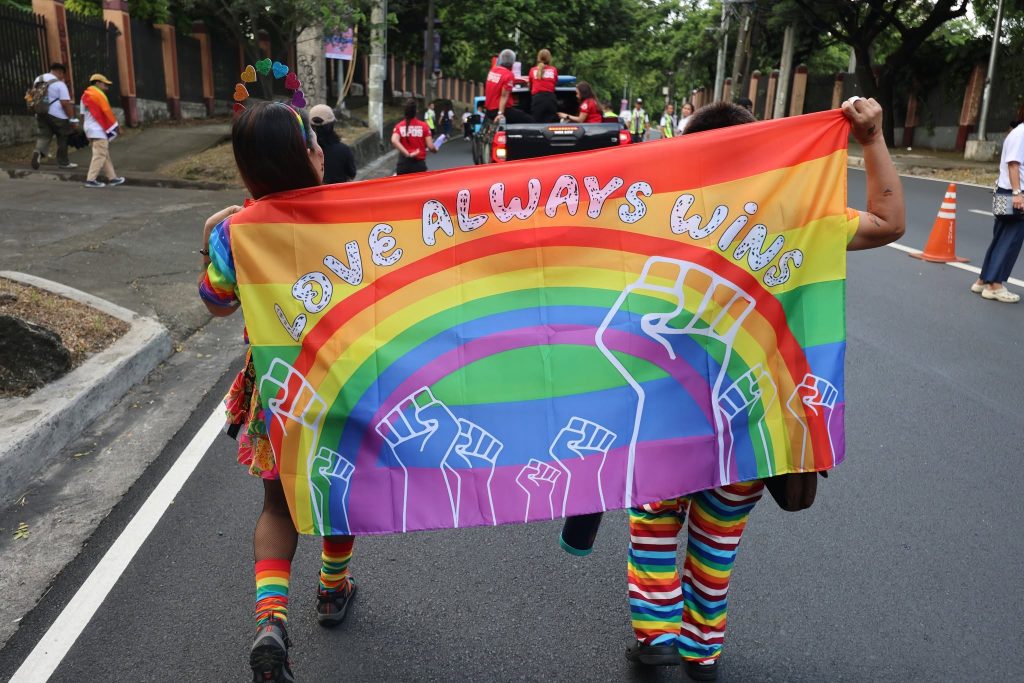
Whatever your age, appearance, and preferences in life, beneath the colors of the rainbow beats a singular purpose—equality and a nation that embraces all of hue.
-jpv

