
By Brian Jules Campued
A potent herbal lotion against highly contagious skin fungal infections using the Akapulco plant has been developed by the National Integrated Research Program on Medicinal Plants (NIRPROMP) of the University of the Philippines Manila.
NIRPROMP created the herbal solution to solve the prevalence of skin infections among Filipinos caused by environmental factors like heat and humidity, as well as socioeconomic conditions such as overcrowding, poverty, and poor hygiene.
According to the Institute of Herbal Medicine – National Institutes of Health (IHM-NIH) Director Dr. Cecilia Maramba-Lazarte, azole antifungals effectively treat these infections, but they can be costly and often require prolonged application.
“One solution to this problem is the use of Senna alata, more commonly known as Akapulco,” Lazarte said in a statement on June 7.
“Traditional healers and those of other cultures have used this to treat skin diseases. The antifungal activity of Akapulco has been well-documented in various studies,” she added.
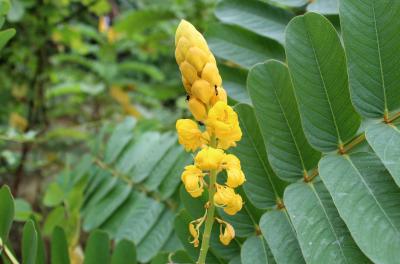
Also referred to as Candlestick Bush, Akapulco is a perennial shrub widely distributed in the Philippines — notable for its erect stalks that bear candle-like yellow flowers at their tips and leaves composed of eight to 20 oblong-elliptical leaflets.
UP Manila said that Akapulco contains several phytochemicals, including chrysophanic acid and anthraquinones, which exhibit strong antifungal activity against Epidermophyton, Microsporum, Trichophyton, and Penicillium.
The effectiveness of Akapulco preparations had been measured by the results of seven randomized controlled trials involving 726 patients, according to Lazarte.
Four trials were performed using NIRPROMP-IHM formulation, which enrolled 461 patients.
Trials showed that preparations containing Akapulco “are as efficacious as synthetic antifungal treatments containing 25% sodium thiosulfate, ketoconazole, or terbinafine cream”.
Researchers also noted minimal adverse effects from Akapulco lotion compared to conventional treatments.
“Randomized controlled trials are crucial to establish the efficacy and safety of treatments. Our findings indicate that Akapulco lotion offers a cost-effective alternative to imported antifungal medications,” Lazarte said.
She said potential investors could capitalize on the global antifungal drug market, which was valued at US$15.8 billion in 2023 and is expected to expand further.
Lazarte added that researchers’ goal is to diminish the country’s dependence on imported drugs, as the development of Akapulco lotion also promotes local agriculture and Filipino self-reliance. – av

