

WASHINGTON — The United States blacklisted seven North Korean officials and three government entities on Thursday, saying they engaged in human rights abuses that are “among the worst in the world.”
The U.S. State Department and Treasury imposed economic sanctions on officials in Pyongyang’s military security, labor and diplomatic outposts, as well as forced labor operations in foreign countries where North Korean soldiers are required to work for free while their wages are sent back to the financially beleaguered government.
Scott Busby, deputy assistant secretary of State for democracy, human rights and labor, told reporters on Thursday that North Korean defectors indicated they have seen policy changes, and in some cases, “the harshness of their treatment has been lessened” as a consequence of U.S. sanctions.
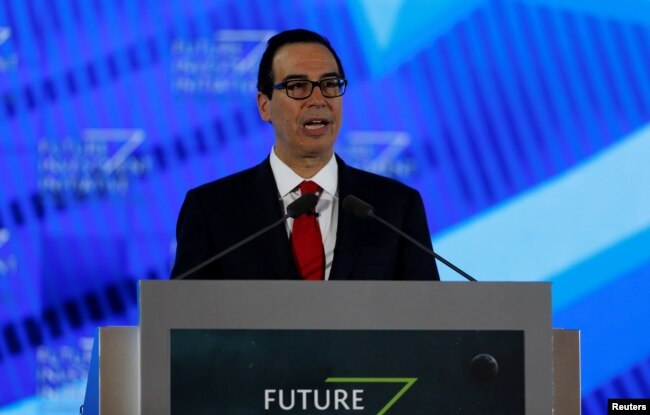
U.S. Treasury Secretary Steven Mnuchin said the “sanctions target the North Korean military and regime officials engaged in flagrant abuses of human rights. We also are targeting North Korean financial facilitators who attempt to keep the regime afloat with foreign currency earned through forced labor operations.”
One of the individuals on the blacklist is a mid-level North Korean official, Ku Sung Sub, who is North Korean Consul General in Shenyang, China.
“This individual was included in the report because of his responsibility for facilitating the return of North Korean asylum-seekers to North Korea. His case has been raised with China,” Busby said.
Busby indicated that while expelling Ku from China is one of the options, he does not know if Beijing will take such action.
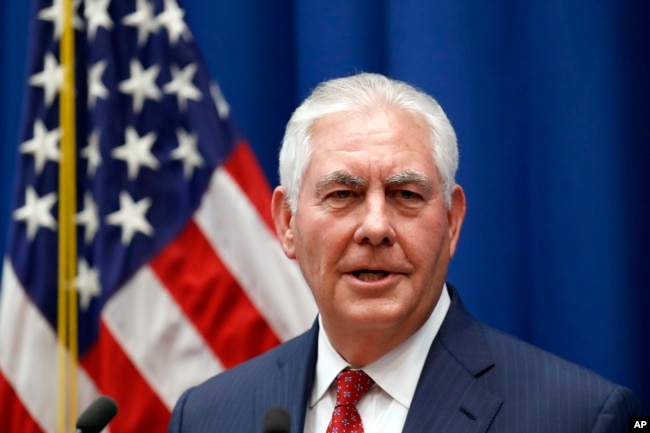
Secretary of State Rex Tillerson signaled growing U.S. impatience with China including issues on North Korea, according to a recent interview with Bloomberg news.
Human rights abuses
State Department spokeswoman Heather Nauert said the human rights abuses also include extrajudicial killings, torture, prolonged arbitrary detention, as well as rape, forced abortions, and other sexual violence inside the country.
“Many of the country’s human rights abuses underwrite the regime’s weapons program,” she said, “including forced labor in the form of mass mobilizations, reeducation through labor camps, and overseas labor contracts. Thousands of North Koreans are sent abroad every year to work in slave-like conditions, earning revenue for the regime.”
Nauert also said “the regime’s efforts to restrict North Koreans’ freedom of movement, right to leave their country, and access to information reach far beyond its sovereign boundaries. The government deploys security officials on assignments overseas to monitor the activities of North Koreans abroad and to forcibly repatriate individuals seeking asylum abroad.”
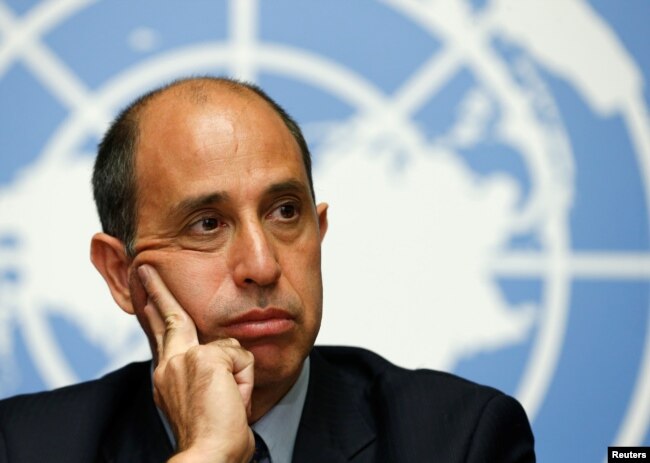
The U.S. report came as Tomas Ojea Quintana, the United Nations’ special human rights rapporteur for North Korea, released a similar report concluding that there are “patterns of grave violations” of human rights in the reclusive communist country. Pyongyang has kept him from personal observation of human rights in the country, but he said he had spoken with people who have witnessed abuses there.
However, the U.N. official cautioned that the world body’s repeated imposition of sanctions against North Korea aiming at blocking its nuclear weapons development “can have devastating impact on the civilian population.”
He called for the world to have “constructive engagement” with North Korea, even while acknowledging such advice “may not be welcomed with open arms.”
The latest U.S. condemnation of the regime of North Korean leader Kim Jong Un comes as President Donald Trump nears the start of a five-nation Asia trip in early November, including visits to South Korea, China and Japan. Trump is planning wide-ranging talks with leaders in the region about North Korea’s continued defiance of the U.N. dictates against further nuclear and ballistic missile tests. | via VOANews

