
By John Rey Saavedra/PNA
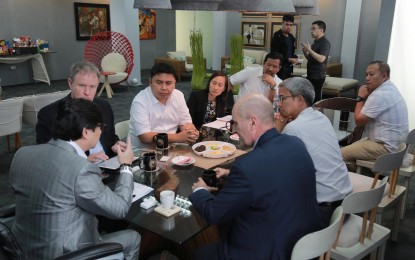
CEBU CITY — World Bank (WB) experts visited this city recently to assure its assistance to the Philippine government’s integrated inter-modal transport system (IITS) in Metro Cebu, an official said Friday.
Assistant Secretary Anthony Gerard Gonzales of the Office of the Presidential Assistant for Visayas (OPAV) said WB delegates headed by Franz Drees-Gross expressed their “willingness to work with the government in solving traffic woes in Cebu” in meeting with Secretary Michael Lloyd Dino and Department of Transportation (DOTr) Undersecretary for Road Transport and Infrastructure Mark de Leon.
Gonzales said Drees-Gross and company were aware of the traffic problem in Metro Cebu, which needs immediate solution through inter-modal system of transporting commuters.
“He (Drees-Gross) was suggesting during the meeting that what Metro Cebu needs now is ‘multi-modal’ transport system that adopts an integrated fare system,” Gonzales said in an interview with the Philippine News Agency (PNA).
Under the integrated fare system, a commuter will only use an electronic card to pay for the fare in jeepney, bus, or rail rides, said Drees-Gross, who was with senior urban transport specialist David John Ingham, senior infrastructure specialist Victor Dato, and Fang Xu, senior evaluation officer in their visit to OPAV.
The opinion of WB experts is in congruence with the DOTr plan to roll out IITS component projects, expected to become operational in year 2020, Drees-Gross added.
He said IITS components will include the Light Rail Transit (LRT), Bus Rapid Transit (BRT), P2P (point-to-point) bus system, monorail, and intelligence traffic management system.
“It was pointed out by another official from World Bank that through the inter-modal, we will address our concern of narrow roads” Gonzales said, adding that “realignment of BRT routes will skip narrow roads in order for it to become compatible with the LRT.”
He said the DOTr intends to make BRT a feeder line for the LRT, which will serve as the backbone of Metro Cebu’s mass transport system under the IITS.
Drees-Gross said the daily economic losses of PHP1.1 billion annually due to traffic congestion in Metro Cebu, as reported by the Japan International Cooperation Agency (JICA) in 2018, will persist if the problem is not addressed.

