
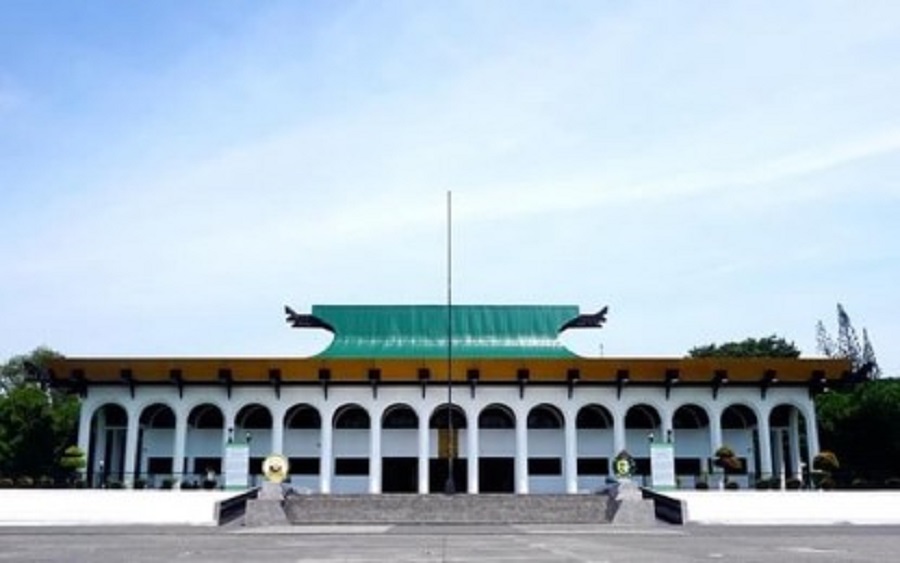
By Dean Aubrey Caratiquet
As the Bangsamoro Autonomous Region in Muslim Mindanao (BARMM) is set to host its first parliamentary elections after several postponements, one may be wondering about how the polls will shape the future of the Muslim-majority region and its constituents.
The answer to this inquiry necessitates a deep dive into the history of the BARMM and the legislative processes that led to its creation as a self-governed political entity under the national government.
BARMM was established following the ratification of Republic Act No. 11054 (Bangsamoro Organic Law), which in turn repealed Republic Act No. 6734 (Organic Act for the Autonomous Region in Muslim Mindanao) and Republic Act No. 9054 (An Act to Strengthen and Expand the Organic Act for the Autonomous Region in Muslim Mindanao).
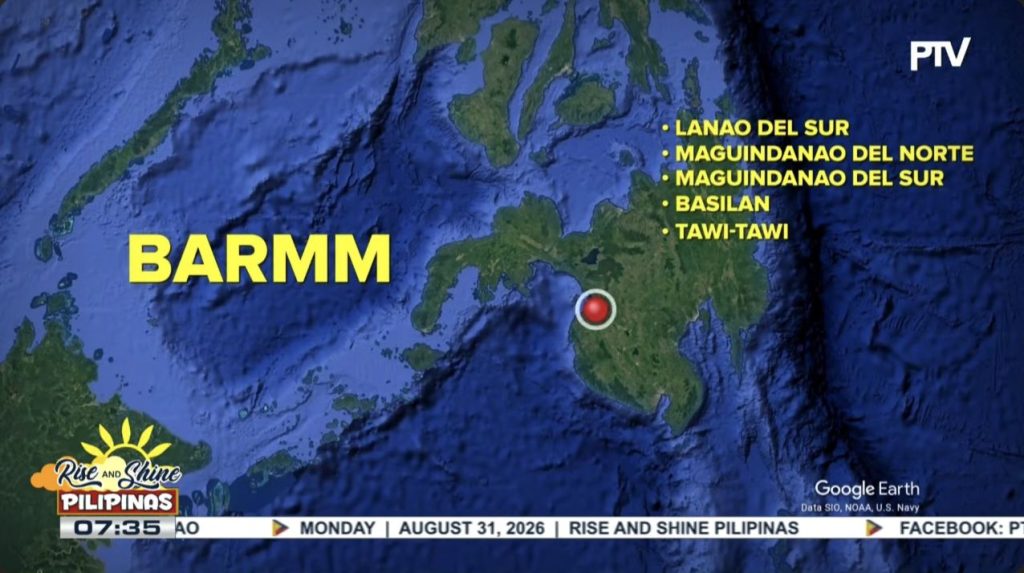
R.A. 11054 was signed into law in July 2018, which eventually led to the formation of the new autonomous region comprised of the provinces of Basilan, Lanao del Sur, Maguindanao del Norte, Maguindanao del Sur, and Tawi-Tawi, as well as Cotabato City and 63 barangays designated as part of the Special Geographic Area (SGA).
Bangsamoro Organic Law in focus
BARMM’s establishment as a self-governing body was the key towards ending decades-and-generations-long conflicts that have rocked Mindanao and continued to disrupt peace and order in the area.
The Organic Law achieved this by honoring the cultural diversity of the Bansamoro people and respecting the ideals of the Muslim-majority population that inhabited Mindanao and the Sulu archipelago, including its adjacent islands, at the advent of the Spanish colonization.
R.A. 11054 likewise established an official flag, emblem, and hymn for the autonomous region, all while being considered an integral, inseparable, and indivisible part of the Philippine territory that exercises democracy, adherence to the Constitution, and an electoral system consistent with national processes.
Moreover, the legislation also outlines the territorial jurisdiction of the five provinces and selected areas that form parts of the BARMM’s landmass.
Section 3, Article III expounded, “All inland waters such as lakes, rivers, river systems, and streams within its territorial jurisdiction shall form part of the Bangsamoro Autonomous Region inland waters shall be under the Bangsamoro Government as provided for in Section 22, Article XIII of this Organic Law.”
The Bangsamoro Parliament
Unlike the bicameral Congress of the national government, the Bangsamoro Parliament is a unicameral legislature under BARMM’s parliamentary form of government, in which executive authority is exercised by the Cabinet headed by the Chief Minister.
In the meantime, a transitional structure was put in place by the Bangsamoro Transition Authority (BTA) to facilitate the seamless transfer of functions as the region transitions towards a parliamentary system of government.
However, once the parliamentary elections take place, a voter will cast ballots for a regional political party and a parliamentary district representative.
In turn, the elected figures will form the 80 members of Parliament, comprised of 40 representatives from regional political parties, 32 representatives from parliamentary districts, and 8 other representatives on behalf of sectors such as youth, women, settler communities, traditional leaders, Non-Moro Indigenous Peoples (NMIP), and Ulama.
For the latter, sectoral representatives will be nominated by their respective component groups. The members elected in the first BARMM parliamentary elections will assume office at noon on Oct. 30, 2026, and serve until June 30, 2031. Thereafter, members of Parliament will serve regular three-year terms, subject to the term limits prescribed under the Bangsamoro Organic Law.
Once completed, the Parliament will eventually elect the next Chief Minister, who shall concurrently serve as the top official of the Executive branch and the primary figure overseeing various developments in the self-governed political entity.
av

