
By Brian Campued
The member-states of the Association of Southeast Asian Nations (ASEAN) have agreed to bolster cooperation not only amid the economic impact of the ongoing tensions in the Middle East, but also to better withstand future crises.
Speaking at the 48th ASEAN Summit Retreat in Cebu on Friday, President Marcos Jr. said no country can insulate itself from the “ripple effects” of geopolitical conflicts, citing how oil supply disruptions affect supply chains, financial markets, and even the daily lives of citizens across the world.
“We gather at a time of uncertainty—a time when events far beyond our region remind us once again of how deeply interconnected we are,” he said.
“And while the impact may differ from country to country in ASEAN at present, there is no denying that this disruption will have an impact on the future,” he added, warning that even if tensions eventually ease, its long-term effects would continue to be felt “for years to come.”
Under the Philippines’ chairship, ASEAN has adopted the “LEAD-SAIL-RISE” framework, aimed at aligning the Political-Security, Economic, and Socio-Cultural pillars into a coherent strategy, strengthening rules-based cooperation, integrated and innovation-led economies, and people-centered development.
“Together, the framework translates ASEAN’s long-term vision into mutually reinforcing actions on peace, prosperity, and people empowerment,” he said.
At the same time, the President highlighted the ASEAN Community Vision 2045, which recognized major power rivalries, supply chain disruptions, and resource security concerns as issues that will test the region.
He likewise urged fellow leaders to ensure that effective and innovative responses are implemented across the region.
“The recent crisis is a stark reminder of how vulnerable our economies remain to sudden shifts in the international order and, consequently, the global economy,” Marcos Jr. said. “A few weeks’ worth of disruptions will take years to be corrected, testing not just our governments, but also our communities.”
Building on the productive exchange made during the earlier plenary session, retreat discussions focused on ASEAN’s capacity to manage oil supply disruptions as well as mitigate its impacts, and the lessons learned from recent geopolitical crises.
“May this afternoon’s exchange give us an opportunity to reflect on how we can move forward—not only in how we respond to immediate disruptions, but in how we can strengthen our institutions, maximize existing mechanisms, and effectively implement action plans so that future shocks do not become future crises,” Marcos said.
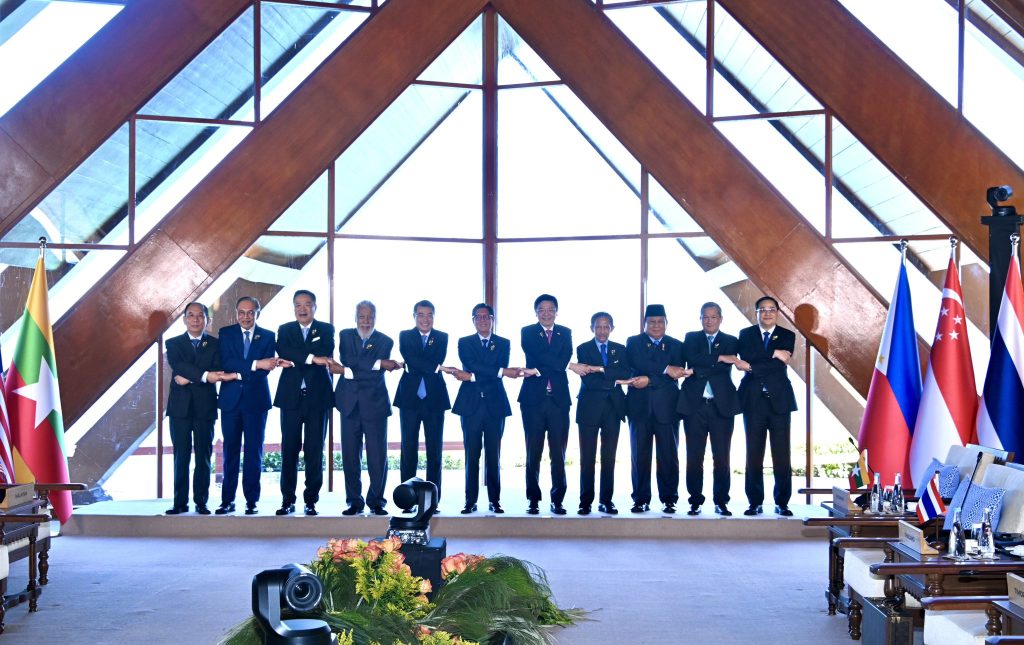
During the retreat, ASEAN leaders also gathered for the traditional family photo and listened to the speech of Singapore’s Prime Minister Lawrence Wong, as incoming chair of ASEAN 2027.
-jpv

