
By Dean Aubrey Caratiquet
“Gamit na mantika, may pakinabang pa.”
The days of haphazardly disposing of used cooking oil after multiple uses may be numbered, as the Department of Science and Technology (DOST) has developed a facility that makes use of this waste product as a resource that can be converted into commercial fuel.
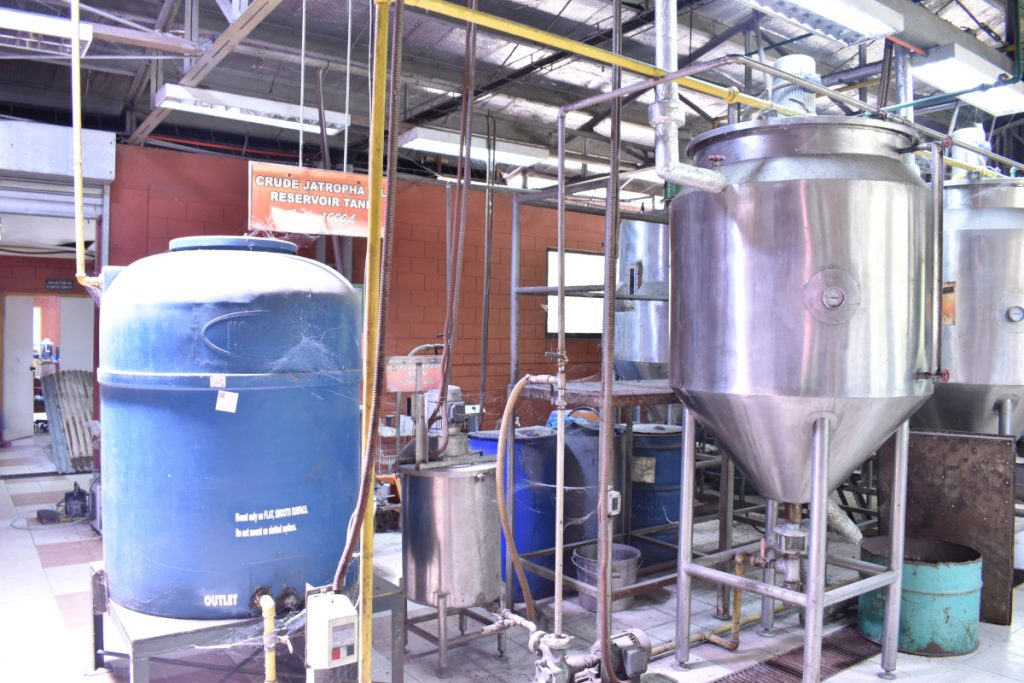
This, as the agency’s Industrial Technology Development Institute (ITDI) launched its Biodiesel Reactor, which works by blending the used cooking oil with methanol and catalytic agents.
The latter two ingredients are used to alter the chemical composition of oil to achieve qualities that are comparable with the fuel dispensed at local pumps.
In an interview on Rise and Shine Pilipinas, DOST-ITDI Chemicals and Energy Division Specialist II Engineer Reno Bia said that the biodiesel produced by the facility can benefit the fisheries and agriculture sectors.
Engr. Bia noted that the byproduct of the biodiesel reactor may be used to power tractors, generators, outboard motors, and other diesel-fed farming implements.
The project’s reliance on used cooking oil as its primary ingredient opens the doors for a cleaner and more cost-efficient alternative to fossil fuels, while also reducing liquid waste that clogs drainages and contaminates waterways.
“Less costly siya, renewable, and nakakatulong na rin po siya sa environmental factors. Usually po kasi, sa mga household, yung nagiging disposal po natin ng cooking oil, parang tinatapon lang sa mga drainage or minsan bumabara pa.”
The biodiesel reactor can produce up to 800 liters of sustainable fuel per batch, with the DOST-ITDI hard at work in expanding the scalability of this facility to benefit rural communities as well.
As of press time, the Institute is in talks with local government units (LGUs) to iron out the kinks in the process of collecting used oil, thus helping to boost this initiative geared towards ensuring sufficient domestic fuel supply amid volatile oil prices brought about by tensions in the Middle East.
Engr. Bia added that once trial production proves successful, the biodiesel generated by the facility may also be tapped as a resource for the transportation sector, thus complementing the government’s efforts to ensure that vehicles plying Philippine roads run on cleaner fuel that helps in reducing tailpipe emissions and improving air quality.
Through this initiative, the Philippines is poised to follow in the footsteps of Southeast Asian neighbors such as Indonesia, who are already using a 40% biodiesel blend in its fuel stations, but with palm oil as the primary ingredient for its eco-friendly diesel.
jpv

