
By Brian Campued
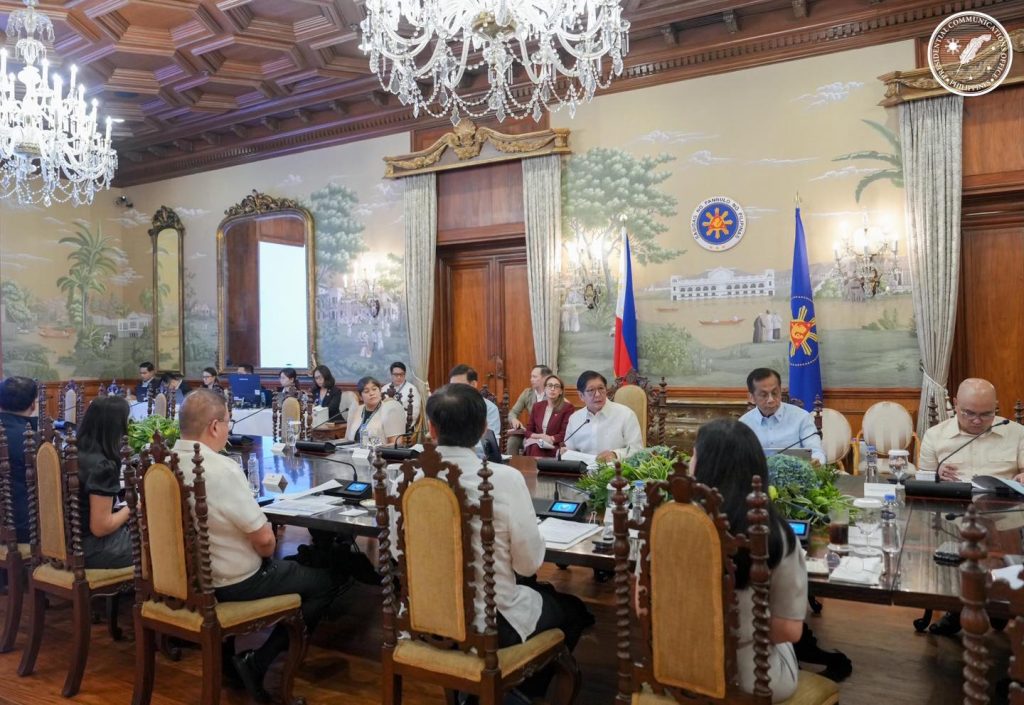
As part of the continuous whole-of-government efforts to protect Filipinos from the impact of Middle East tensions on energy, transport, and food security, President Ferdinand R. Marcos Jr. convened the 7th Unified Package for Livelihoods, Industry, Food, and Transport (UPLIFT) Committee meeting in Malacañang on Tuesday.
In a Facebook post, the Presidential Communications Office (PCO) said the committee discussed measures across four priority areas under UPLIFT—repatriation and reintegration of overseas Filipino workers, fuel supply assurance, cash assistance to poor and low-income households, and keeping food prices and basic commodities affordable.
Among the programs tackled during the meeting were the Department of Social Welfare and Development’s (DSWD) rollout of “updated cash assistance” for poor and low-income households as well as a “Recalibrated Transport Support Package” of the Department of Transportation (DOTr), which covers 151,605 public utility vehicle (PUV) units from June to December 2026.
As of May 18, the DSWD has distributed over P7.3 billion in cash relief assistance to more than 1.4 million PUV drivers nationwide.
Payout for all registered and legitimate drivers included in the validated lists submitted by the Transport Network Companies (TNCs) and jeepney and tricycle drivers outside the National Capital Region (NCR) is still ongoing.
Meanwhile, the PCO said the Department of Budget and Management (DBM) gave assurance that “funding resources are in place to sustain UPLIFT programs for the rest of the year.”
On March 24, Marcos Jr. created the UPLIFT through Executive Order 110, which also declared a state of national energy emergency in the country.
The President earlier expressed confidence that the Philippine economy will rebound through the government’s implementation of various measures despite global headwinds.
Speaking to Japanese media at Malacañan Palace on Monday, Marcos Jr. stressed the importance of sustaining public spending to support economic growth, noting that government expenditures are being accelerated and redirected toward direct support for citizens.
“Luckily, I suppose, or at least we are still continuing to see marked interest in investment in the Philippines,” the President said. “And perhaps this is because of the policies that we adopted, the incentives that we have put out for investors. So slowly, we can see the way through this, where we will recover through this.”
-jpv

