
By Raymond Carl Dela Cruz | Philippine News Agency
Improved connectivity is now available to hundreds of key government offices in Mindanao as part of the Mindanao Integrated Government Network (MIGN) under the Marcos Jr. administration’s National Fiber Backbone Project (NFBP).
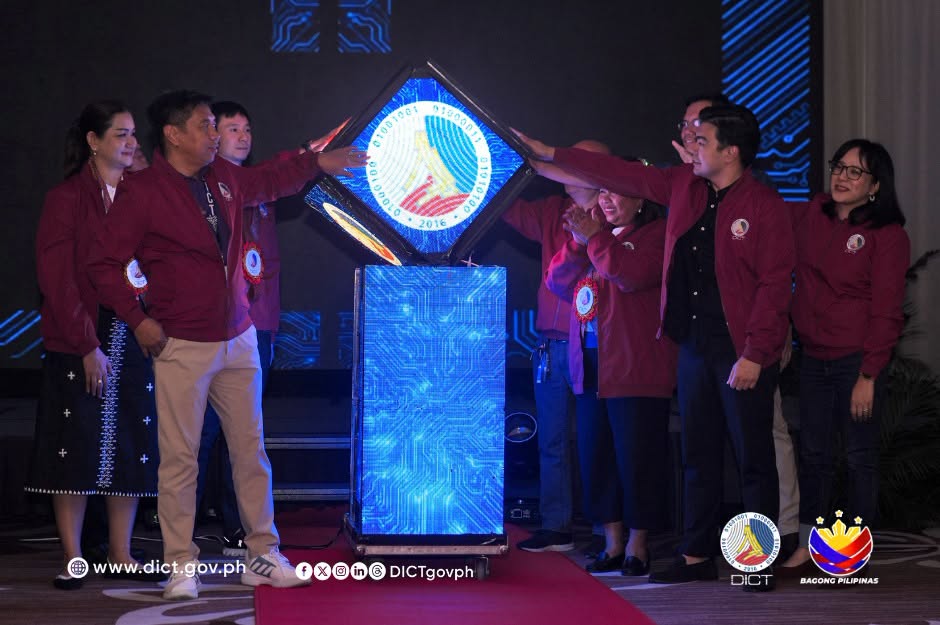
In a statement on Friday, the Department of Information and Communications Technology (DICT) announced the official launch of Phase 1 of the MIGN, with 500 government agencies and facilities connected across several cities and municipalities.
These include Cagayan de Oro, Butuan, Davao City, Koronadal, and Pagadian.
“The launch marks a major milestone in fulfilling President Ferdinand R. Marcos Jr.’s vision of seamlessly connecting Luzon, Visayas, and Mindanao through a unified digital infrastructure that enables faster government services, stronger disaster resilience, and greater economic opportunities for Filipinos nationwide,” the DICT said.
To date, the agencies connected to the MIGN are the Department of Education (DepEd), Technical Education and Skills Development Authority (TESDA), Department of Labor and Employment (DOLE), Department of Public Works and Highways (DPWH), Department of Environment and Natural Resources (DENR), and Office of Civil Defense (OCD), among others.
“The impact of this connectivity extends far beyond government offices. By strengthening digital links across Mindanao, the project is expected to benefit approximately 5.3 million Filipinos through faster, more reliable, and more responsive public services,” the statement read.
In particular, the MIGN is expected to also benefit the public through faster access to education, employment, and government services, while allowing government agencies and local governments to coordinate and respond more efficiently through real-time data sharing.
“During earthquakes, typhoons, floods, and other emergencies, government agencies can coordinate more effectively, share critical information in real time, and respond faster to communities in need,” it said.
The MIGN forms part of the NFBP, a big-ticket telecommunications project that aims to create a secure high-speed digital highway that links all government offices in the country into a single, integrated ecosystem.
“By connecting government institutions across islands and regions, the DICT continues to build the digital foundations of a Bagong Pilipinas, one where no community is left behind, distance is no longer a barrier, and every Filipino can benefit from a more connected future,” it said.
In May, the DICT announced it was on track to connect the NFBP’s phases 1 to 3 to Mindanao by July, with the project’s phases 4 and 5 at around 60% complete.

