
By Dean Aubrey Caratiquet and Brian Campued
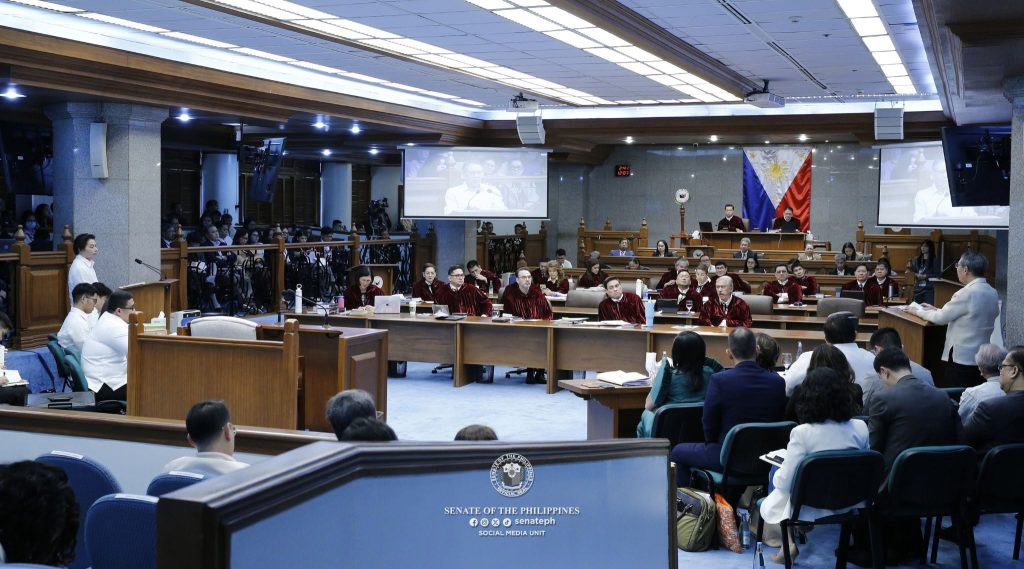
On Tuesday, July 14, the defense team of Vice President Sara Duterte continued its cross-examination of National Bureau of Investigation (NBI) BARMM Regional Director Atty. Jeremy Lotoc, with the House prosecution panel conducting a redirect examination on the witness along with the presentation of additional digital evidence.
The House prosecution has likewise dropped Office of the Vice President (OVP) chief of staff Atty. Zuleika Lopez and House Legislative Security Bureau Executive Director Capt. Belinda Bello from its witness list, saying their testimonies on the alleged grave threats would be redundant to the testimonies already laid out by previous witnesses from the NBI.
With no more witnesses to be presented this week, the Senate Impeachment Court on Wednesday, July 15, held oral arguments on the prosecution’s request for subpoenas covering Vice President Duterte’s tax and bank records in support of Article II, which focuses on allegations of unexplained wealth.
Here are the highlights of today’s trial:
- Akbayan Party-list Rep. Chel Diokno delivered the oral argument for the House prosecution panel, urging senator-judges to grant their request to issue subpoenas for Vice President Duterte’s bank records, tax documents, and records from the Anti-Money Laundering Council.
Diokno said these documents are essential in examining Article II or the allegations of unexplained wealth, undeclared assets, and undisclosed business interests linked to VP Sara while in public office.
Diokno: “If she amassed staggering amounts of unexplained wealth while she was a vice mayor and mayor, doesn’t that say a lot about her unfitness to serve as a Vice President? Isn’t that relevant to the question this Court must resolve at the end of this trial, of whether or not the Vice President betrayed the trust given to her by the people?”
The House prosecutor also underscored the Impeachment Court’s power to determine what constitutes an impeachable offense and whether a public official is truly fit or unfit to continue in office.
Diokno: “Nothing and no one can handcuff this Court’s power to try and decide this impeachment case.”
He also argued that bank secrecy laws say all deposits are confidential except in cases of impeachment, while the Data Privacy Act affirms that confidentiality shall not apply, “should the personal information be needed pursuant to a subpoena duly issued.”
Diokno: “Kailangang makita ng publiko at ng mga senator-judge ang tunay na kulay ng Bise Presidente at larawan ng kanyang buong pagkatao bilang isang lingkod-bayan.”
He likewise noted that during the trial of then-Supreme Court Chief Justice Renato Corona in 2012, the Impeachment Court had already subpoenaed his bank records and denied motions seeking to quash the subpoenas and suppress the evidence.
- Meanwhile, counsel for the respondent Atty. Michael Poa said the issue is not whether the Impeachment Court has the power to issue subpoenas but whether such power may be exercised in a manner that disregards due process and compels the production of documents and information beyond what is allowed by law.
Poa: “When a subpoena becomes oppressive, when it is unreasonable, and when it is merely issued for the very purpose that there is a hope that somewhere, somehow, something incriminating will come out, it ceases to be an instrument of justice—it becomes a weapon of a fishing expedition.”
He argued the Saballa and Cabrera complaints accused Vice President Duterte of amassing unexplained wealth but did not have a single attachment of her financial records. He also noted that evidence-gathering began only after the complaints were filed and when Duterte filed her answer to the House Committee on Justice.
Poa: “In our legal system, it is not permitted to accuse now and then just look for proof later on. That is not how due process works.”
The defense likewise acknowledged that the Bank Secrecy Law contains an impeachment exception but stressed it is not automatic. Poa added that the bank records of Duterte’s husband are not covered by the exception in bank records disclosure because he’s not an impeachable officer.
Poa: “Impeachment is indeed a powerful constitutional tool. But your honors, impeachment is not a magic word or a magic wand that one can just wave to transform an illegal act into a legal act.”
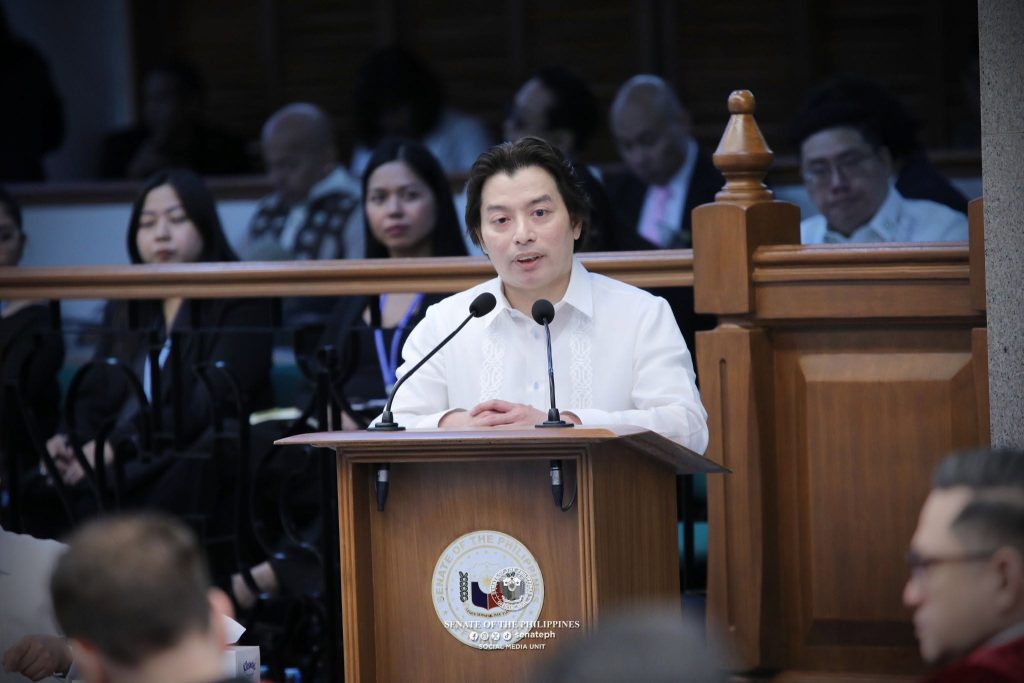
- In his rebuttal, Rep. Diokno rejected the defense’s claim that issuing subpoenas would violate due process. He argued the proceedings are still at the stage of compelling the production of documents, not yet at the stage of formally offering evidence.
Diokno: “The defense will have every opportunity to make objections if and when particular exhibits or documents are identified by a witness and offered in evidence.”
Diokno also argued that the Duterte v. House of Representatives involved a different mode of impeachment, one initiated by at least one-third of House members.
He added that the Supreme Court in that case expressly said it was “speaking of due process in relation to how these proceedings reached the Senate as an Impeachment Court.”
On the defense’s claims of a “fishing expedition,” Diokno cited the Supreme Court’s 2022 ruling in Republic v. Rabusa, an unexplained wealth case where bank record subpoenas were likewise challenged.
Quoting the ruling, Diokno said, “This court cannot agree with the Court of Appeals’ supposition that the examination of the respondents’ bank accounts was but a mere fishing expedition.”
On the defense’s statement blocking the request for the issuance of a subpoena against Vice President Duterte’s bank and tax records, Diokno said: “Madaling sabihin na confidential ang ilang impormasyon at dokumento, madaling magturo ng batas. Pero ang hinahanap ng Impeachment Court ngayon, at sa mga susunod na araw, linggo, at buwan, ay ang katotohanan, at ang layunin ay makamit ang pananagutan.
Confidentiality should not be the prevailing principle in this proceeding. Hindi confidential ang katotohanan.”
- In his rebuttal, Poa stressed that due process “must be observed in every stage of the proceedings” and respects the protections afforded by law on the respondent.
He added that the defense is not saying that the Vice President cannot be punished if she committed a wrongdoing, as cases can be filed against her—but emphasized that in terms of impeachment, cases filed should be limited to impeachable offenses.
Poa: “No one is above the law, but no one should also be deprived of the protection given by law.”
- After a recess, Presiding Officer Francis Escudero announced that senator-judges have agreed in caucus to decide on the motion to subpoena VP Duterte’s bank and tax records on Monday, July 20.
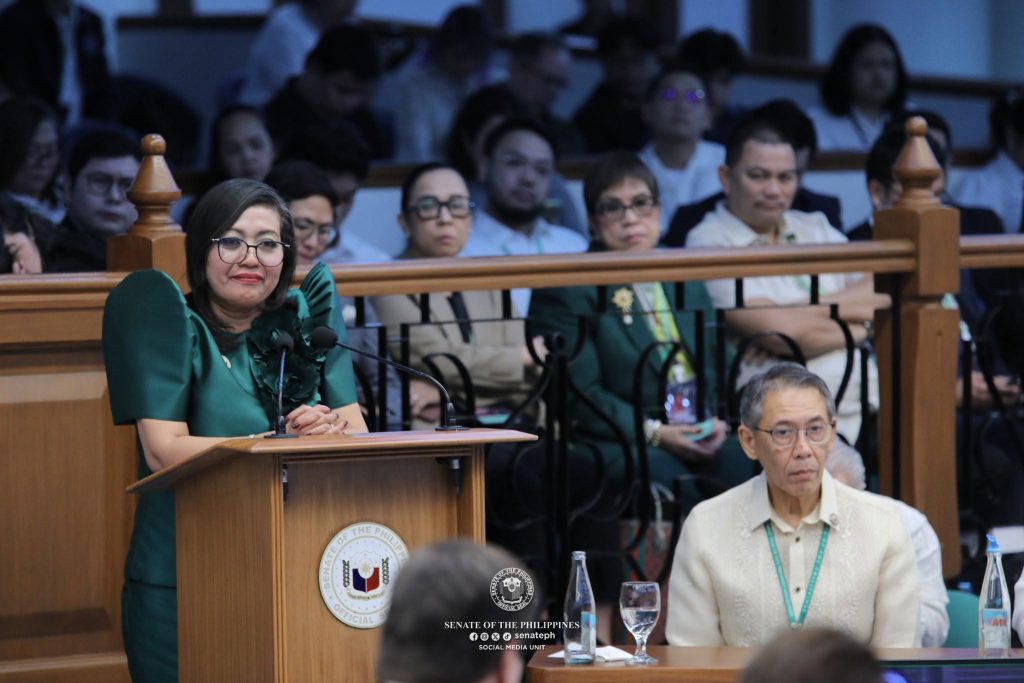
- House Lead Prosecutor Rep. Gerville Luistro confirmed the prosecution’s revised witness lineup for Article IV, along with the following:
- A representative of the PNP Firearms and Explosives Office
- Journalists Mikhail Flores and Bonz Magsambol who participated in the Nov. 23, 2024 press briefing
- Sheriff Abe Andres
- Family member of a “victim of threats”
- Psychiatrist who will testify on the respondent’s state of mind
- The House prosecution panel also designated National Bureau of Investigation (NBI) Director Melvin Matibag as its final witness for Article IV. He is scheduled to testify on Tuesday, July 21.
- On Wednesday, July 22, the prosecution is expected to begin presenting its first witnesses for Article I, covering the alleged misuse of confidential funds.”
- Marivic Pareja, Director of the House Legislative Archives
- Violeta Constantino, LandBank
- Nenita Camposano, LandBank
The impeachment trial resumes on July 21 with presentation of the prosecution’s final witness for Article IV before it proceeds to Article I on July 22.
-av

