

By Dean Aubrey Caratiquet
As fuel prices continue to rise, calls for the suspension of excise taxes on petroleum products continue to remain relevant in discussions on ways to alleviate the burden on key sectors.
But what are these levies all about, and what role does it play amid the backdrop of motorists reeling from expensive fuels?
The excise taxes that add to domestic pump prices originated from the Republic Act No. 10963, which came into effect in 2018.
Also known as the Tax Reform for Acceleration and Inclusion (TRAIN) Law, this legislation amends multiple sections of the National Internal Revenue Code (NIRC) of 1997 and formed part of the government’s comprehensive taxation policy changes under the Duterte administration.
Of notable importance in the discussion is Section 43, which amends Section 148 of the NIRC, and calls for the imposition of the following excise tax rates on petroleum products per liter or kilogram:
- P10.00
- Lubricating oils and greases (L)
- Processed gas (L or kg)
- Waxes and petrolatum (kg)
- Denatured alcohol (L)
- Asphalt (kg)
- Naphtha, regular gasoline, pyrolysis gasoline and other similar products of distillation (L)
- Unleaded premium gasoline (L)
- P6.00
- Diesel fuel oil, and on similar fuel oils having more or less the same generating power (L)
- Liquefied petroleum gas used for motive power (kg)
- Bunker fuel oil, and on similar oils having more or less the same generating power (L)
- P5.00
- Kerosene (L)
- P4.00
- Aviation turbo jet fuel, aviation gas (L)
- Kerosene when used as aviation fuel (L)
- P3.00
- Liquefied petroleum gas (kg)
These figures show the added cost imposed on various petroleum products that took effect on January 1, 2020, and continues to be adhered to by both big and small oil industry players.
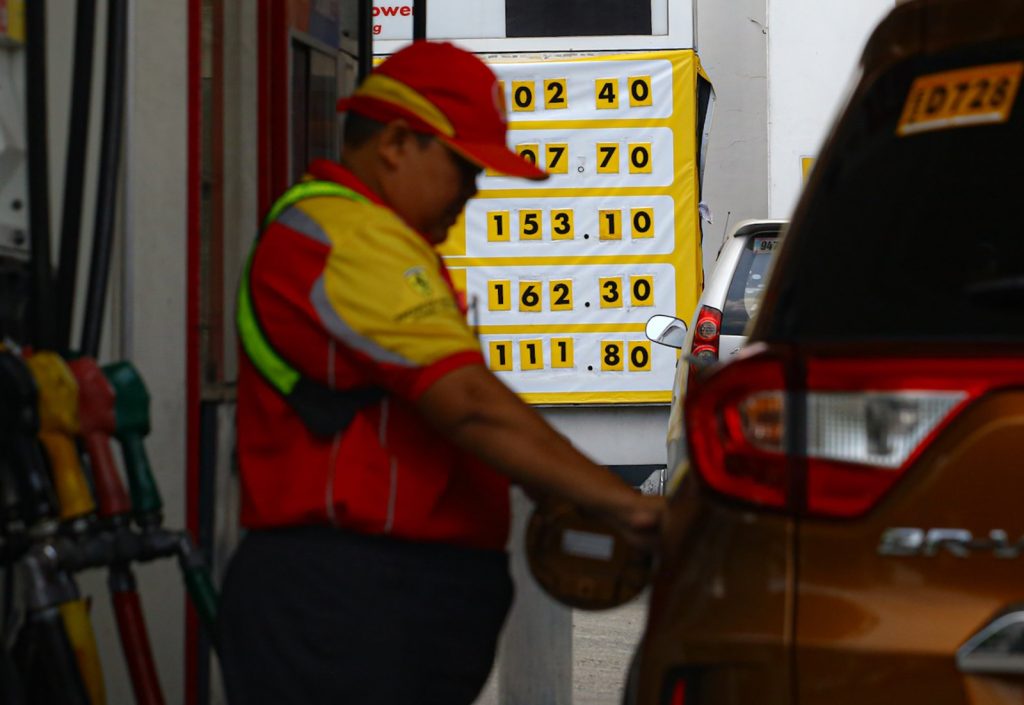
The big picture
While the additional excise tax does add a minute but noticeable difference in how far a certain budget allocation can stretch to accommodate fuel expenses, every peso counts and becomes a major consideration, especially in the advent of oil price shocks brought about by the geopolitical developments in the Middle East.
These tensions continue to disrupt the global energy market, with U.S. military strikes against Iranian assets and an ongoing blockade against Iran choking off the Strait of Hormuz—a crucial waterway for transporting petroleum products from Middle Eastern nations to the rest of the world.
This is reflected in the average price of Dubai crude oil from Aug. 13 to Sept. 11, 2026, which stood at USD99.41 per barrel, according to the Department of Energy (DOE).
The latter figure in particular has already surpassed the USD80 threshold required under Republic Act No. 12316, which authorizes the President to either suspend or reduce excise tax on petroleum products.
This crucial decision by the Chief Executive rests upon the recommendation of the Development Budget Coordination Committee (DBCC), a government body that manages macroeconomic assumptions vis-a-vis economic priorities, comprised of the following agencies:
- Department of Budget and Management (DBM)
- Department of Finance (DOF)
- Department of Economy Planning and Development (DEPDev), formerly NEDA
- Office of the President (OP)
- Bangko Sentral ng Pilipinas (BSP)
Also factored into the equation is the selling price of gasoline and diesel in every pricing cycle, as determined by local players using the Mean of Platts Singapore (MOPS).
But with unpredictability at the core of Middle East tensions, a possible suspension or removal of excise taxes imposed on petroleum products remains a feasible option, but not a complete solution to the repercussions of a situation that is beyond Philippine control and jurisdiction.
Among other possible interventions to alleviate the burden of volatile oil prices on the common folk and in particular, the transportation sector, involves possible amendments to the Downstream Oil Industry Deregulation Act of 1998.
jpv

