
TACLOBAN CITY — The Department of the Interior and Local Government (DILG) has solicited the commitment of 42 national government agencies, local governments, academic institutions, media, and faith-based organizations to unify capacity development initiatives for local governments.
Representatives of government agencies and non-governmental organizations signed on Friday a memorandum of agreement expressing their renewed commitment as members of the multi-stakeholder advisory council (MSAC).
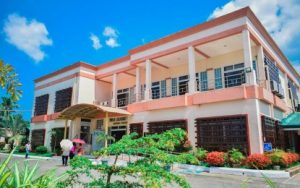
The re-organization and commitment building ceremony held at the Leyte Park Hotel here, aims to rekindle the commitments of partners to help raise the capacity of local governments.
“The council is the primary source of direction for capacity development in this region. We are a special region because we are confronted with the many challenges to lives and communities, such as natural hazards. Therefore, this would call for strong local governments that would make their communities resilient to hazards,” said Marivel Sacendoncillo, DILG assistant secretary and concurrent regional director for Eastern Visayas.
Among the council’s tasks is to provide general direction and guidance to the local government regional resource center (LGRRC) programs, formulate policies and guidelines in the operationalization of the LGRRC, contribute local governance relevant knowledge products to the center, mobilize resources to support programs and plans, and contribute to the development of best practices in local governance and its replication.
Members are invited to attend quarterly meetings to assess the operations and ensure the dynamism of the LGRRC’s five facilities – multimedia knowledge and information, capacity development, public education on good governance, linkage, and institutional support.
“Everyone acknowledges that local governance is everybody’s business. Each one of us belongs to a barangay (village), municipality, city, and province. Whatever happens in the local government, we are all affected,” Sacendoncillo told MSAC members.
“Whatever we contribute to enhance the quality of governance in this region is something that will redound also to our own benefits,” she added.
Among the MSAC members are the Commission on Population, Civil Service Commission, Office of Civil Defense, departments of budget, social welfare, tourism, agriculture, trade, health, labor, environment, and agriculture.
Other members are the Philippine Information Agency, National Economic and Development Authority, Eastern Visayas State University, Visayas State University, Southern Leyte State University, League of Municipalities of the Philippines, Philippine Daily Inquirer, Philippine News Agency, Kapisanan ng mga Brodkaster ng Pilipinas, Radio Mindanao Network, Roman Catholic Archdiocese of Palo, and the departments of information and communication technology, and education.
The DILG regional office organized MSAC in 2012, but the council has been inactive as stakeholders shifted their focus to rehabilitation after Super Typhoon Yolanda struck in 2013. (/PNA)

