
by Steve Baragona/Voice of America
BALTIMORE — “Nature sometimes isn’t pretty,” said University of Maryland environmental scientist Peter May, grabbing a clump of slimy green-brown gunk.
That gunk lines the bottom of what’s called an algal turf scrubber at the Port of Baltimore. The meter-wide, shallow channel runs the length of a football field alongside one of the port’s giant parking lots.
“Actually, it’s always pretty,” May corrected himself. Even the gunk. Because that gunk is removing pollution from the Chesapeake Bay. Plus, May’s colleagues are turning it into clean, renewable electricity.
The Chesapeake needs the help.
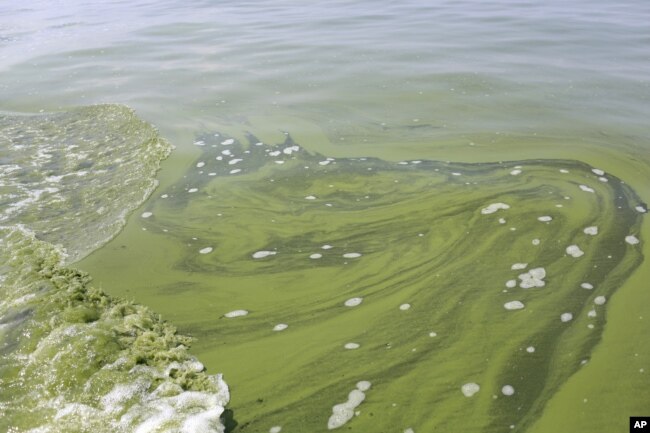
Like many waterways around the world, the bay is polluted with excess nutrients from farm fertilizer runoff, city wastewater and other sources. Algae feast on those nutrients, triggering massive growth that chokes out other aquatic life. Last summer, algal growth left an average of 4.6 cubic kilometers of the bay without oxygen.
A third of the pollution reaching the bay literally falls out of the sky.
Fossil fuels burned in power plants, cars and elsewhere create nitrogen oxide air pollution, which ultimately ends up in the bay, either attached to airborne particles or dissolved in rainwater.
Forests would soak up that pollution. But like many urban areas, the Port of Baltimore has a pavement problem. There’s not a tree to be found at the entire 230-hectare Dundalk Marine Terminal, where the algae scrubber is located.
So regulators require the port to remove as much pollution from the bay as its parking lots allow in. That’s where the algal turf scrubber comes in.
Putting algae to work
The scrubber is like “a controlled algal bloom on land,” May said, “which puts the algae to work pulling nutrients out of the water.”
The city of Durham, N.C., is planning to build another scrubber to clean up a local reservoir. A pilot study found it would cost about half as much as typical pollution control measures, such as constructed wetlands, and much less than retrofitting existing systems. Others are up and running in Florida.
The algal turf scrubber creates one big challenge, May said.
“What do we do with that algae? You have to have an end use or else you’re going to pile that algae up very quickly,” he said.
It’s high in protein and omega-3 fatty acids. It’s been turned into animal feed. It can be fermented into biofuels. Some of May’s colleagues have used it to launch a fertilizer business.
But here at the Port of Baltimore, they’re turning it into electricity.
Digesting for power
May works with University of Maryland colleague Stephanie Lansing, an expert in a process called anaerobic digestion. It’s not much different from our own digestion.
“You have bacteria in your gut that break down food. We’re doing that same process in an anaerobic digester,” Lansing said. “We’re breaking down the material, and we’re producing energy in the process.”
In this case, the microbes digesting the algae produce methane biogas. The biogas runs a fuel cell.
“The fuel cell is actually a very efficient way to use the energy,” she said. This small, pilot system produces a modest amount of electricity.
“You can use it to charge batteries. You can use it for lights. You can use it for fans,” she added.
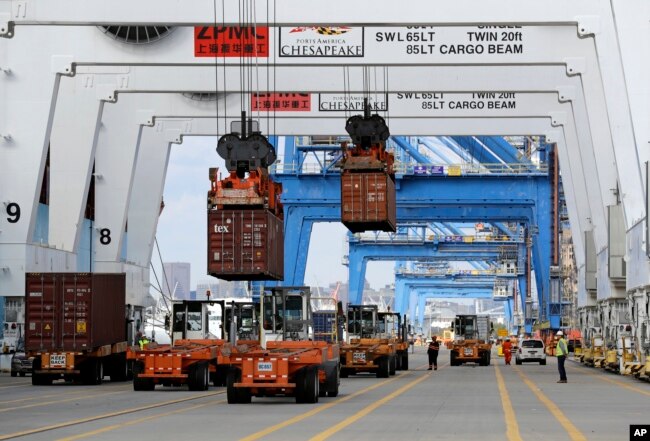
The Port of Baltimore plans to build a larger system that will cover about a third of a hectare, which could produce a few hundred kilowatts — still modest, but not bad, when you start with just polluted water and algae.
“It’s an entire cycle where you’re dealing with not only a water pollution problem, but an air pollution issue,” Lansing said.

