
Agence France-Presse
Bangladesh raised the minimum monthly pay for the country’s four million garment workers by 56.25% on Tuesday, a decision immediately rejected by unions seeking a near-tripling of the figure.
The South Asian country’s 3,500 garment factories account for around 85% of its $55 billion in annual exports, supplying many of the world’s top fashion names including Levi’s, Zara and H&M.
But conditions are dire for many of the sector’s four million workers, the vast majority of whom are women whose monthly pay starts at 8,300 taka ($75).
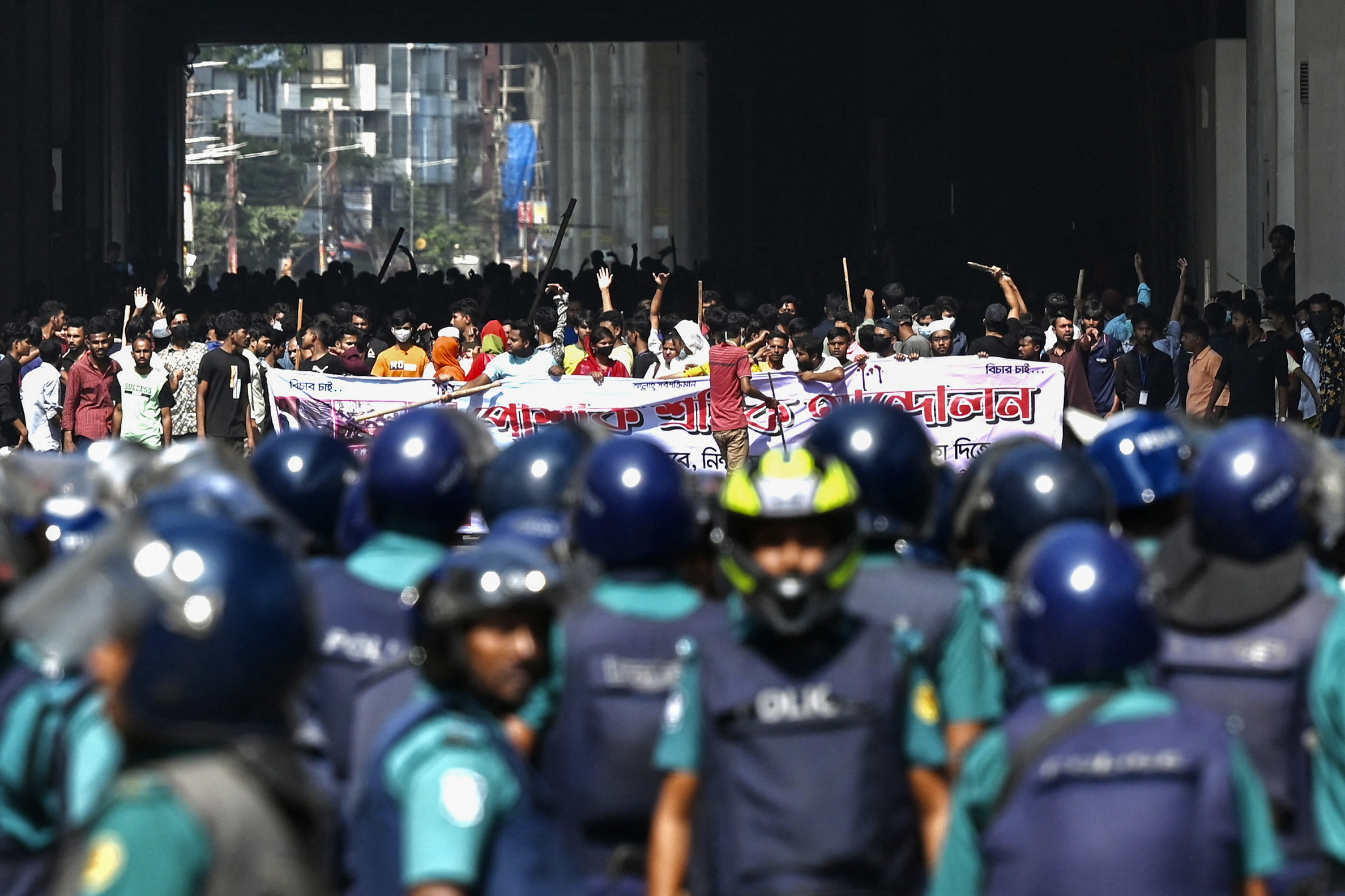
Workers have gone on strike to demand a near-tripling of their wages, with violent scenes in recent days, while employers offered 25%.
The minimum wage is fixed by a state-appointed board that includes representatives from the manufacturers, unions and wage experts.
“The new minimum monthly wage for garment factory workers has been fixed at 12,500 taka ($113),” Raisha Afroz, the board secretary, told AFP.
The figure was immediately rejected by unions, which have been demanding a 23,000 taka minimum.
Unions say their members have been hard hit by persistent inflation, which in October reached nearly 10 percent, and a cost of living crisis partly triggered by the taka depreciating about 30 percent against the U.S. dollar since early last year.
“This is unacceptable. This is below our expectations,” said Kalpona Akter, head of the Bangladesh Garment and Industrial Workers Federation.
The panel normally sits every five years and in 2018 raised the basic minimum from 5,000 taka to 8,000. Garment workers also get at least 300 taka per month as an attendance fee.
Earlier Tuesday, police fired tear gas at thousands of workers who set a bus on fire outside Dhaka, as tensions rose ahead of the announcement.
Police said violence broke out in the industrial city of Gazipur as about 6,000 workers walked out of their plants and staged protests.
“They torched a bus. We fired tear gas to disperse them,” Gazipur industrial police unit chief Sarwar Alam told AFP.
Police said around 600 factories that make clothing for many major Western brands were shuttered last week and scores were ransacked as the worst wage protest in a decade hit major industrial areas and a suburb of the capital.
Four factories were torched and at least two workers were killed in the violence, with tens of thousands of workers blocking highways and attacking factories.
The protests have coincided with separate violent demonstrations by opposition parties demanding the resignation of Prime Minister Sheikh Hasina ahead of elections due in January.

