By Dean Aubrey Caratiquet
Bataan has fallen.
Three simple words—yet they carry so much emotional weight and an imagery of Filipino and American forces hitting rock bottom as they relinquish control of the peninsula and hand it over to the hands of the Japanese.
In the decades that have passed since this unfortunate circumstance took place, Filipinos and Americans alike continue to revisit what many consider as one of the most horrifying atrocities committed during World War II.
The events that culminated in the surrender of Bataan to the conquering forces all began in 1941, when the Philippine Scouts underwent rigorous training as they were honed to play an important role in the defense of the Pacific during the onset of WWII.
During that same year, the United States Forces in the Philippines (USFIP) [formerly known as United States Army Forces in the Far East or USAFFE], composed of approximately 100,000 Filipino troops and 20,000 American soldiers was created to push back against the Japanese forces and delay their actions at the mouth of Manila Bay.
This, after the United States was dragged into the Pacific battlefront in response to the bombing of Pearl Harbor in Hawaii on December 8.
Leading the Philippine-American contingent was Major General Edward King, who commanded the 120,000-strong battalion during the Battle of Bataan—which saw Filipino and American soldiers up in arms against the encroachment of enemies onto their positions within the peninsula.
Under constant bombardment and gunfire, as well as dwindling supplies, health, and morale, the USFIP and Philippine Scouts continued to hold their ground despite the Japanese Imperial Army taking full control of the skies and seas around them—with the enemy troops beginning to surround the combatants.
However, on April 3, 1942, the enemy forces began an intensive campaign that eventually brought the worn-down platoon to its knees under the leadership of Lieutenant General Masaharu Homma.
Realizing that they were outnumbered and outgunned by the Japanese, Maj. Gen. King made the difficult decision to surrender his troops in a meeting with General Nagano Kamaechiro and Colonel Nakayama Matoo on 12:30 p.m., April 9, 1942.
A dark chapter unfolds
That fateful meeting marked the end of a 93-day campaign to defend the peninsula from the invading Japanese forces, with King eventually cascading this development to all troops of the armistice as they were ordered to march to the East Road and await further instructions.
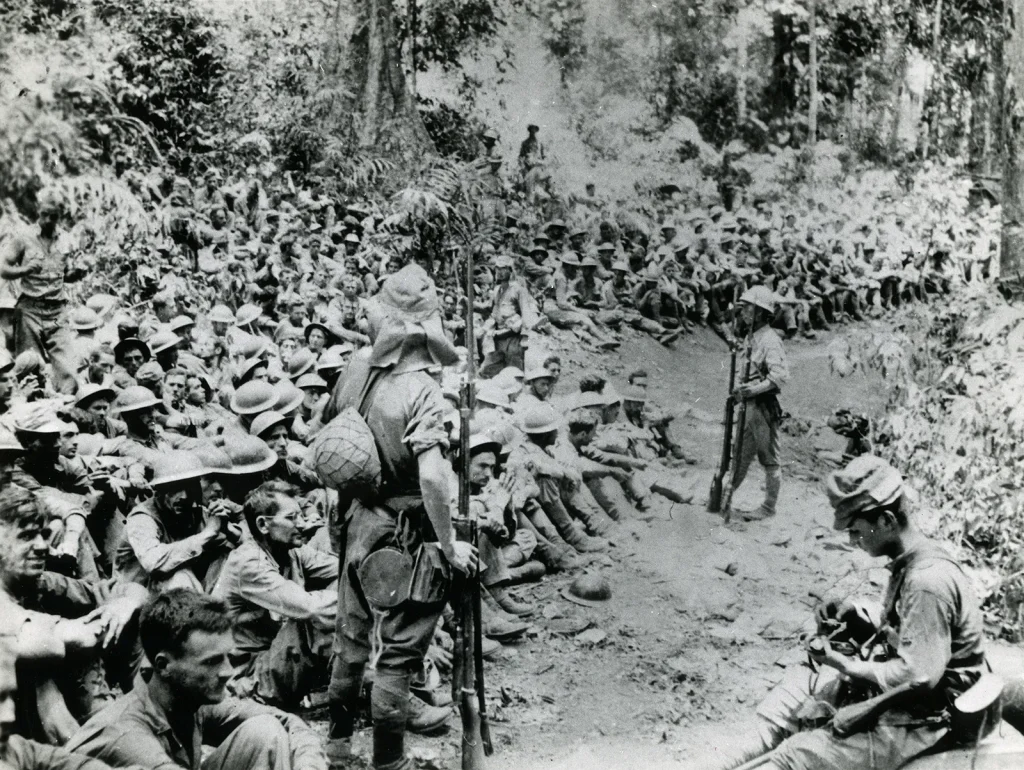
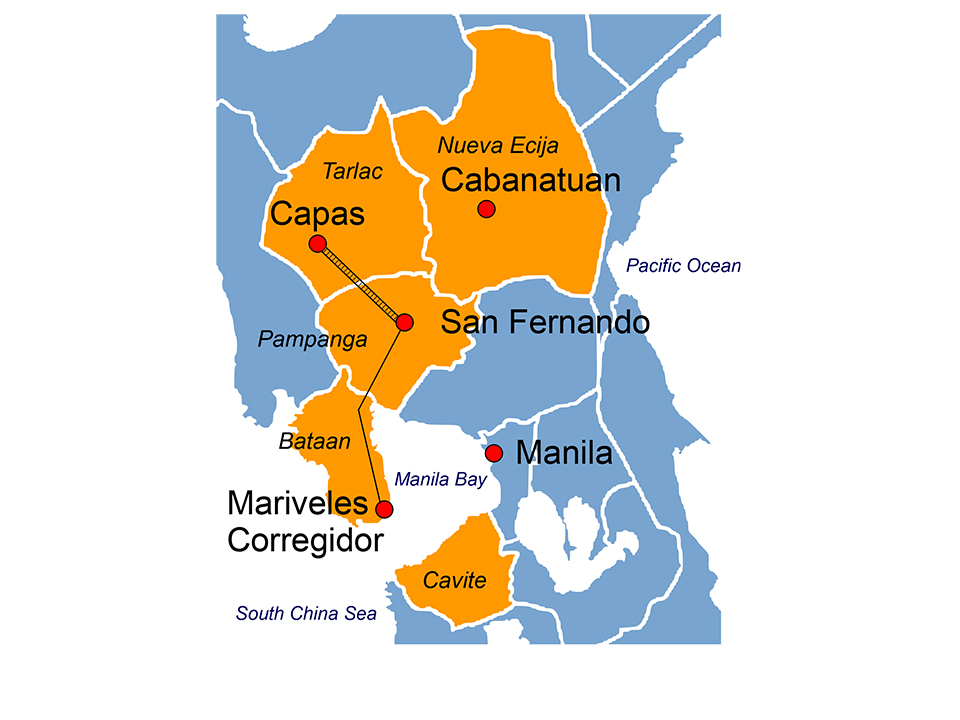
With the Battle of Bataan coming to a bitter end, approximately 70,000-80,000 soldiers (~66,000 Filipinos and ~12,000 Americans) were forced to march from the municipalities of Bagac and Mariveles to the rail head in San Fernando, Pampanga.
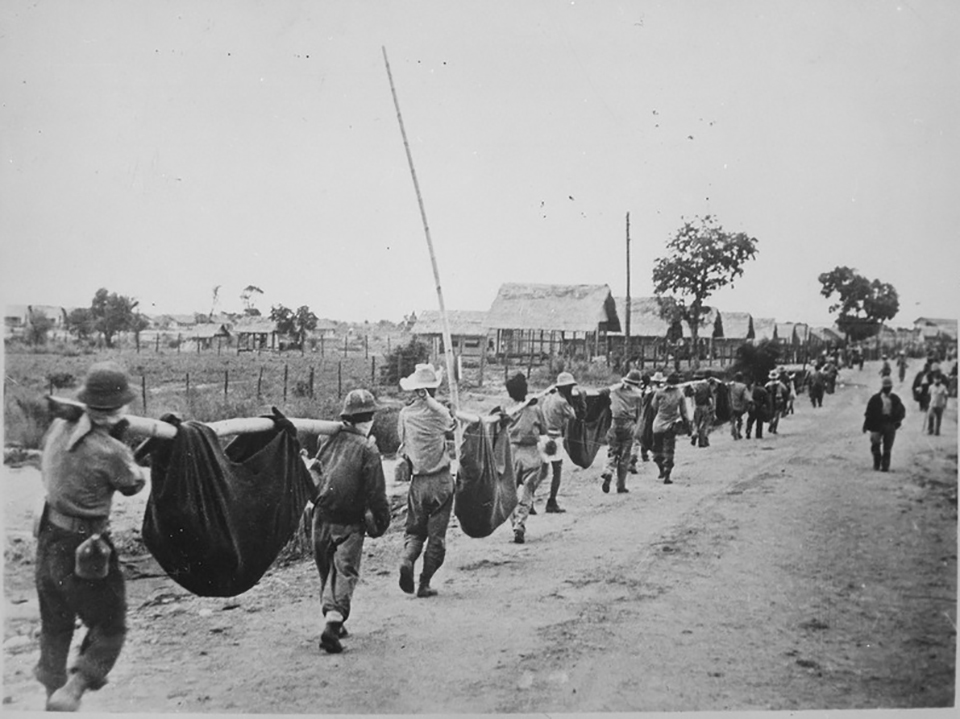
After laying up their arms, the Philippine-American contingent faced the sweltering tropical heat, humidity, diseases, cold nights, and beatings from the Japanese as they conquered the 104.6 kilometer (65 miles) route on foot.
It was during the 5-10 day ordeal that approximately 20,000 soldiers worn down from months of fighting eventually perished due to the brutal conditions further aggravated by the enemy’s penchant for shooting, decapitating, and bayoneting those who fail to keep up with the pace of march or attempt to escape from the clutches of the Japanese.
Once the captives reached San Fernando, they were crammed into unsanitary boxcars towed by a locomotive headed for Capas Station in Tarlac. From there, they were forced to walk the final 14 kilometers (8.7 miles) to Camp O’Donnell in Capas, Tarlac—a Philippine army training facility prior to the onset of the Second World War.
Casualties mounted in the following days after the troops were dropped off at the Camp, with starvation, disease, and forced labor claiming the lives of approximately 28,000 soldiers (~26,000 Filipinos and ~1,500 Americans), making this one of the most heinous war crimes committed by the Japanese.
While this grim moment in Philippine and American war history ended on a somber note, the combined efforts of the USFIP, Philippine Scouts, and other troops were not put in vain as they were able to fend off the enemy’s advance into Manila for 99 days, crushing Japan’s goal of 50 days—providing ample time to replenish supplies and build up new troops that would eventually break the stronghold of the Japanese Imperial Army, thus ending World War II.
On that note, may this painful memory live on as a reminder of the ultimate sacrifice made by Filipinos that paved the way for the freedom being enjoyed by the citizenry today, and may everyone continue to imbibe in them the ideals and lessons learned from the Bataan Death March.
By virtue of Republic Act No. 3022 signed on April 6, 1961 by former President Carlos Garcia, April 9 of every year is proclaimed as “Bataan Day” (eventually renamed to “Araw ng Kagitingan” or Day of Valor) to commemorate the unwavering patriotism of Filipino fighters and a homage to the fallen soldiers of both nations.
avds