

By Dean Aubrey Caratiquet
Cognizant of rising fuel prices and its repercussions on the common folk, the Department of Education (DepEd) has called for public schools to hold simple graduation ceremonies as Academic Year 2025-2026 draws to a close.
In a memorandum issued on Monday, DepEd called for this initiative in adherence to President Ferdinand R. Marcos Jr.’s instruction to help Filipinos navigate these challenging circumstances while preserving the essence of this notable milestone in students’ education.
Memorandum No. 015 series of 2026 said, “Graduation and Moving-Up Ceremonies shall be simple yet meaningful. While these rites mark a milestone in learners’ lives, they shall be conducted without excessive spending, extravagant attire, or extraordinary venues.”
DepEd Secretary Sonny Angara said, warning against using non-academic activities like field trips and prom nights as a graduation requirement, “Our schools must prioritize the welfare of learners by keeping these ceremonies simple, meaningful, and entirely free of unnecessary expenses.”
He also reminded heads of educational institutions to refrain from seeking any form of contribution to make a student eligible for graduation, as well as encouraged schools to utilize simple venues like covered courts to hold their respective commencement ceremonies.
Approximately 1.9 million Grade 6 pupils and 1.8 million Grade 12 learners are expected to receive their diplomas nationwide this March 30-31.
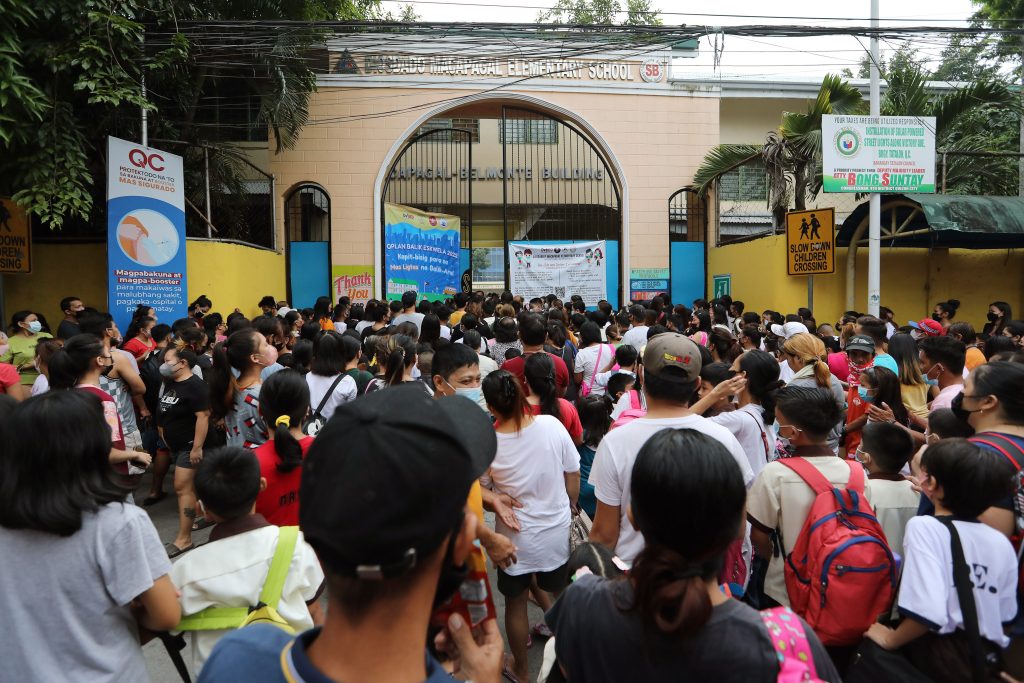
3-term school calendar to begin for A.Y. 2026-2027
Meanwhile, President Marcos Jr. also approved the adoption of a three-term school calendar for public educational institutions, with implementation expected to begin in Academic Year 2026-2027.
This, at the conclusion of high-level talks between the President and the Economic and Development (ED) Council, which prompts a shift from four grading periods or quarters down to three terms, each with dedicated instructional and assessment periods.
The plan aims to minimize disruptions in the learning periods of students brought about by class suspensions arising from national calamities and overlapping major events, while paving the way for a streamlined pace of instruction for learners.
For teachers, the shift would remove one full grading cycle, introduce dedicated consolidation periods, embed up to 32 hours of professional development, and provide scheduled wellness intervals to reduce recurring workload pressures.
The first term will have 54 instructional days and a 10-day assessment period, including a five-day opening block. The second term will include 55 instructional days and a 10-day assessment period, while the third term will have 61 instructional days and a shorter six-day assessment period.
DepEd moreover said that it has conducted consultations with various educational institutions, and is working with them as of press time to ensure the seamless transition and implementation of the revised school calendar.
avds

