
By Lisa Schlein/VOA News
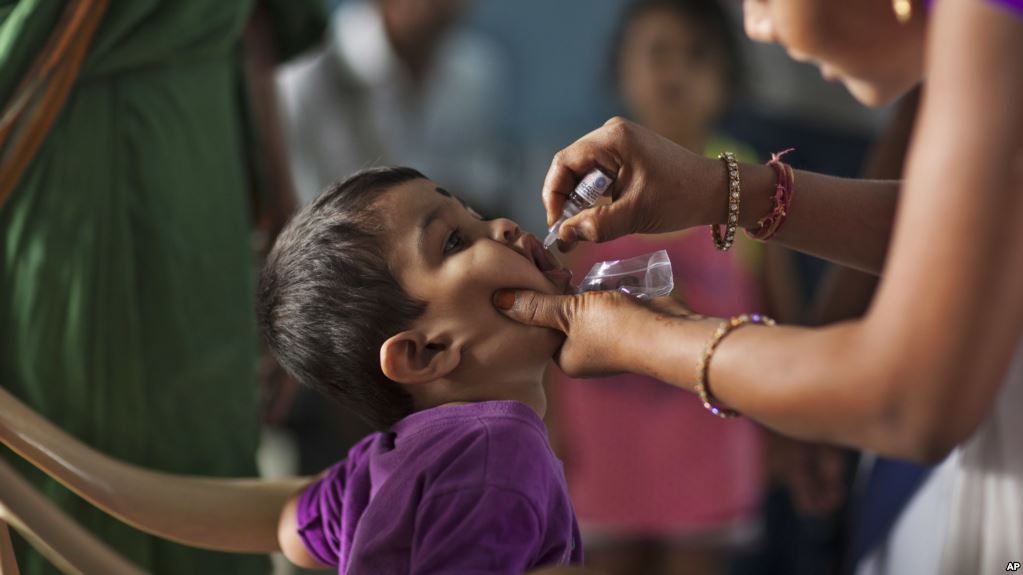
GENEVA — The World Health Organization says that on March 27, India’s 1.3 billion people and the entire WHO Southeast Asia region will celebrate five years of being polio-free.
Twelve years ago, the WHO said, India alone was responsible for almost 70 percent of all polio cases around the world. It called India’s success against polio one of the most significant achievements in public health.
WHO officials said India’s accomplishment proved the crippling disease could be eliminated in even the most challenging circumstances with a strong political commitment.
Worldwide, the number of cases due to wild poliovirus has decreased from an estimated 350,000 a year in 1988, when the WHO launched its global eradication campaign, to 33 in 2018.
Trouble spots
WHO spokesman Christian Lindemeier told VOA that polio remained endemic in only three countries in two of the organization’s six regions: Nigeria in the African region and Pakistan and Afghanistan in the eastern Mediterranean region.
“There has been no wild polio virus detected in Africa since 2016, and we are cautiously optimistic that AFRO, our African region, is on the path to certification as well,” Lindemeier said. “EMRO, our eastern Mediterranean region, has only those two countries, which have never stopped polio, unfortunately — Afghanistan, Pakistan.”
Lindemeier said the countries are considered a joint reservoir of the virus. Therefore, he said, both are getting most of the focus and support from the WHO’s polio eradication program. He said tailored and innovative tactics were being put in place to deal with the challenges in each country.
The strategies include identifying, tracking and vaccinating migrant and hard-to-reach populations. Lindemeier said community workers would be trained to go door to door to find children who haven’t been vaccinated and immunize them against polio.
The WHO said the polio virus does not respect borders. It said polio would not be eradicated until every last child was protected.

