
By Patrick de Jesus | PTV News
The harassment against the Philippines in the West Philippine Sea would be much worse without its defense partnerships with other countries, particularly the United States, Japan, and Australia.
During a panel discussion with 13 journalists, including PTV News, selected for the 2026–2027 Southeast Asia Maritime Media Fellowship (SMMF) held in Sydney and Canberra, Australia last week, the Australian National University Strategic and Defence Studies Centre Honorary Professor Leszek Buszynski observed that the Philippines’ defense ties with partner nations have a “deterrent” effect on China.
“The Chinese take note of the activities of these countries, and they complain about it, but it has a deterrent effect on Chinese behaviour,” Buszynski noted.
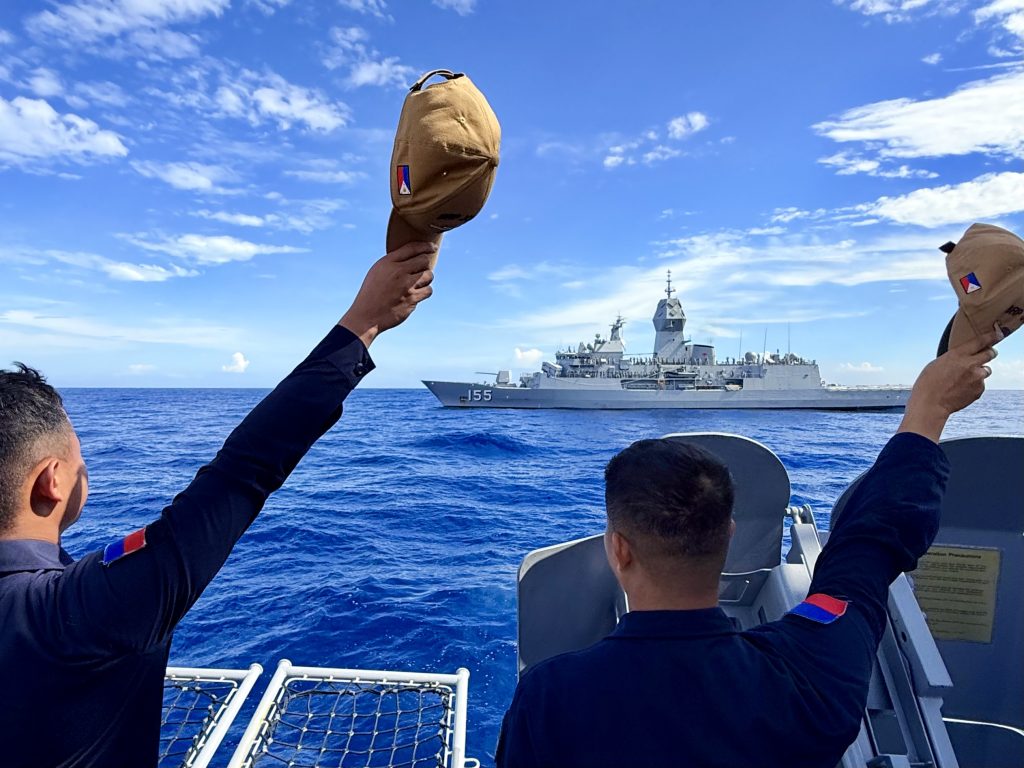
Despite persistent aggression at sea from Chinese maritime forces, including the China Coast Guard and the People’s Liberation Army (PLA) Navy, the Armed Forces of the Philippines (AFP) has continued to conduct bilateral and multilateral maritime cooperative activities with various partner countries.
No untoward incidents were recorded during these exercises, although Chinese warships were seen observing from afar.
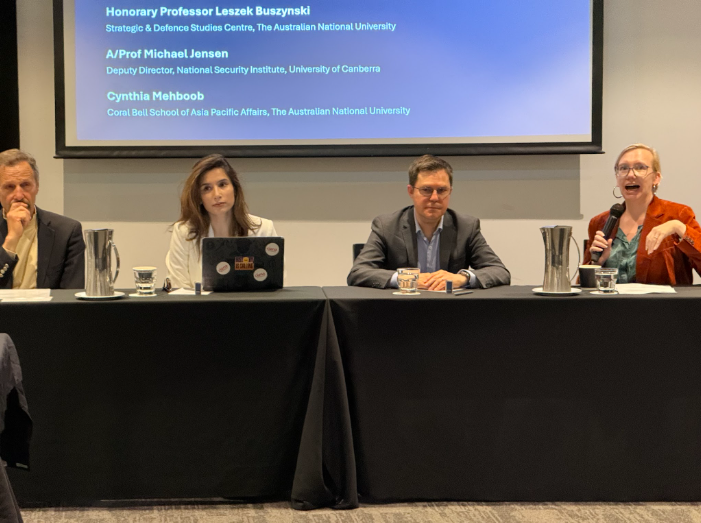
Meanwhile, Prof. Douglas Guilfoyle said during another panel discussion that the Philippines may have more to lose than to gain when asked about his views on calls by some individuals for another arbitration case against China.
“I would say, in some ways, if one wanted to build legal pressure against China, then, it would be better if a case came from another state in the region,” said Guilfoyle, who serves as Professor in International Law and Security at UNSW Canberra.
China has never recognized the 2016 Arbitral Award in favor of the Philippines and has even called it illegal. The award invalidated China’s claims to historic rights within the nine-dash line insofar as they exceeded the maritime entitlements allowed under the United Nations Convention on the Law of the Sea (UNCLOS).
Former Supreme Court Senior Associate Justice Antonio Carpio has repeatedly urged the Philippine government to pursue another arbitration case.
SCS Code of Conduct: Managing tensions, not resolving disputes
The Philippines has been gearing up for its hosting of the 49th ASEAN Summit and Related Summits from November 16 to 18, 2026. Among the much-awaited developments is whether ASEAN member states and China will finalize a code of conduct in the South China Sea.
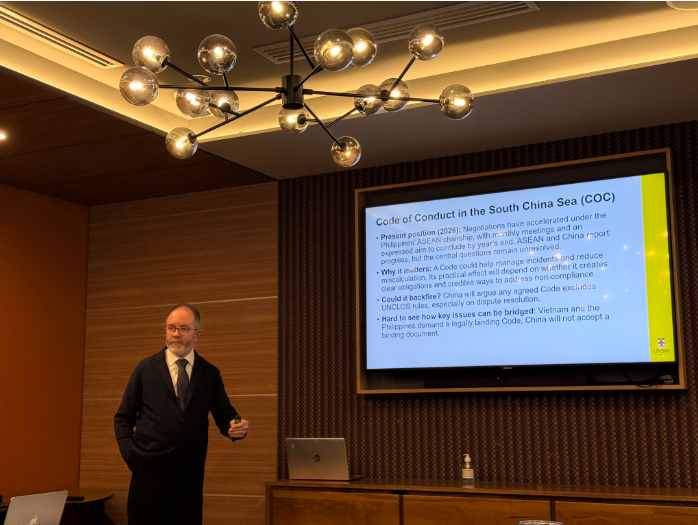
For Guilfoyle, a code of conduct will not resolve any maritime disputes but may help manage tensions.
“The function of the code of conduct is to keep talking about a code of conduct. So you’re trying to keep the dispute at a manageable level, and not actually push it to resolution, because the resolution might take place in a way you don’t like,” Guifoyle added.
While not directly involved in the negotiations, Australia, as an ASEAN partner, has reiterated that any agreed code of conduct must not undermine the rights of any country involved.
During an on-background briefing with some members of Australia’s Department of Foreign Affairs and Trade (DFAT), which was also attended by fellows of the 2026–2027 SMMF, they reiterated their country’s commitment to freedom of navigation and overflight in the South China Sea.
Australian Foreign Minister Penny Wong has also previously made clear Australia’s position on the code of conduct negotiations.
“We think that parties should abide by the UN Convention on the Law of the Sea, and we have consistently said we would not want to see any code of conduct that diminished any rights under that convention, whether for claimant states or third parties,” Wong said in a doorstop interview on July 22, 2026, during her visit to Manila.
-dac/jpv

