
By Dean Aubrey Caratiquet
Before engaging with other state heads at the 18th BRICS Summit, President Ferdinand R. Marcos Jr. led multiple business engagements during his India visit from Sept. 12-13.
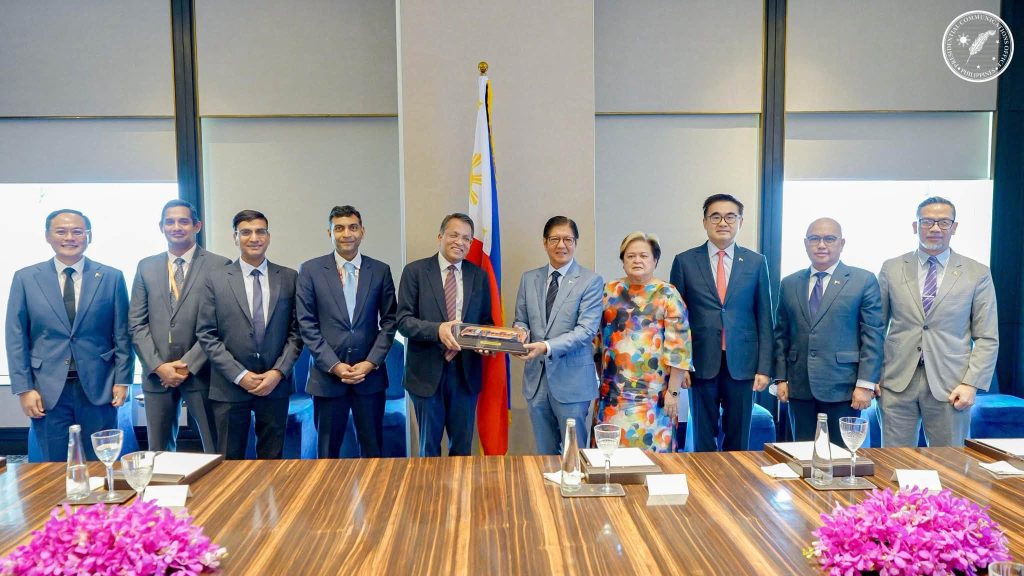
He began by meeting with Rail India Technical and Economic Service Ltd. (RITES) representatives to explore possible cooperation on at least three railway projects in the Philippines.
These include the Mindanao Railway Project, the Philippine National Railways (PNR) system expansion from its current terminus in Tutuban, and a mass rail system in Cebu.
Presidential Communications Office (PCO) Secretary Dave Gomez added that RITES could participate in the projects as a consultant or through a public-private partnership (PPP), while also helping the Philippines explore official development assistance (ODA).
The President also met with Indian Space Research Organisation (ISRO) officials to discuss enhanced cooperation with the Philippine Space Agency (PhilSA).
This, as the Philippines seeks to advance its capabilities in space technology and remain on equal footing with other countries in terms of using satellites for various purposes.
Sec. Gomez explained, “Importante talaga na magkaroon din tayo ng sarili nating satellite dahil maraming gamit, maraming tulong ‘yan from communications to weather forecasting because of climate change, kailangan natin ‘yan to defense and security.”
Other notable expansion commitments
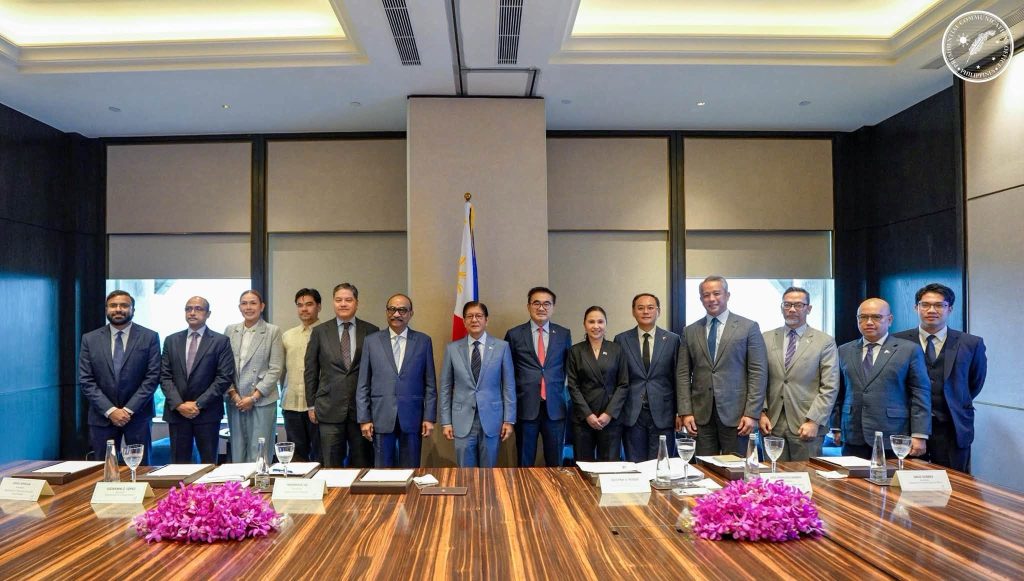
Moving on with his jam-packed schedule, President Marcos Jr. also met with iSON Group, a New Delhi-based conglomerate with businesses in agrotechnology, healthcare, telecommunications, information technology, renewable energy, business process outsourcing (BPO), and insurance.
During the meeting, iSON Group pledged USD75 million in investments that are expected to yield around 2,000 jobs. These investments also include a proposed USD50 million agro-solar project, healthcare, and 24/7 teleconsultation services.
The latter would entail a P65/month service that would enable patients to consult doctors at any time, which would make healthcare more accessible to far-flung communities.
The President also met with NPCI International Limited in support of the country’s potential adoption of a national digital payment system, akin to India’s Unified Payments Interface (UPI).
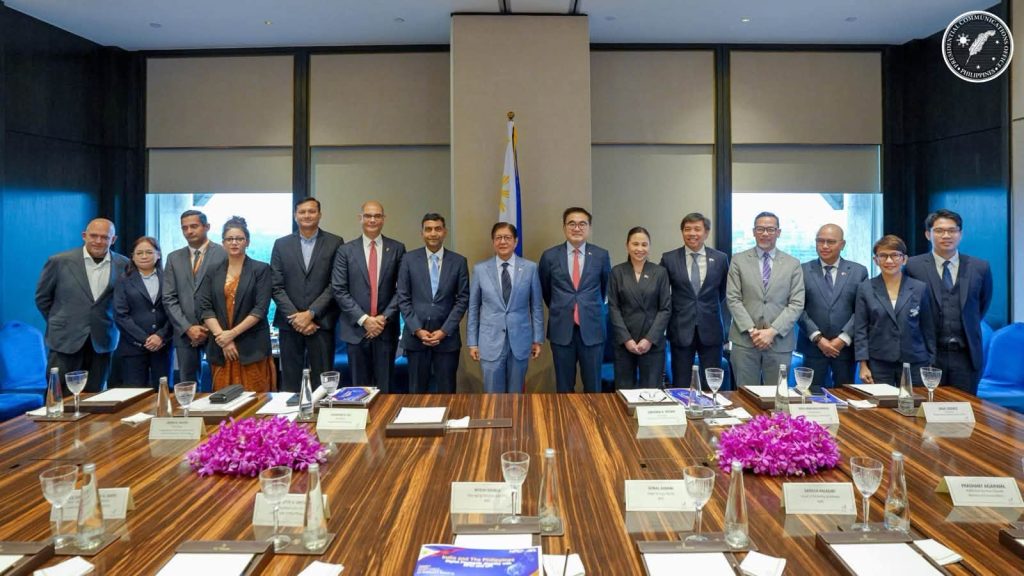
Through a partnership with LandBank, the proposed payment gateway would benefit overseas Filipino workers, businesses, small and medium enterprises, and the common folk through streamlined government payments and faster cross-border transactions.
On the aspect of infrastructure, President Marcos Jr. met with executives of GMR Group and representatives of Cavitex Holdings, Inc. to advance the development of the Sangley Point International Airport (SPIA) project.
The SPIA project is an air travel hub that aims to decongest the Ninoy Aquino International Airport and bring travel, tourism, and trade beyond the confines of the National Capital Region and into adjacent provinces.
Bringing technology into the spotlight, the President also led a roundtable discussion with executives of Cognizant, VVDN Technologies, Hinduja Group, and HCLTech.
His dialogue with these four companies forms part of the administration’s push towards digitalization, AI, telecommunications, and other technology-driven industries, which would help position the Philippines as an attractive destination for trade and investment.
av

