
By Brian Campued
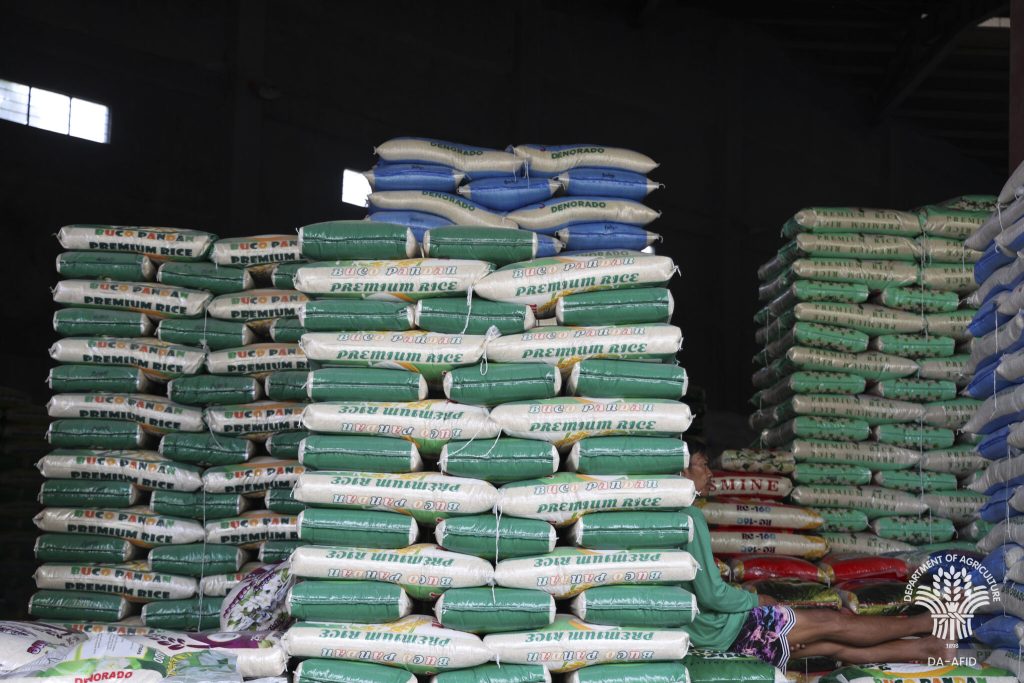
President Ferdinand R. Marcos Jr. has ordered the implementation of a price cap on imported rice to address unjustified price increases and market abuse.
According to the Executive Order (EO) No. 118 signed by Executive Secretary Ralph Recto, on behalf of the President, on Wednesday, a mandated price ceiling of P50 per kilo on imported rice with 5% broken content shall be implemented for 30 days.
The price cap may also be lifted earlier by the Chief Executive upon recommendation of the National Price Coordinating Council (NPCC).
In issuing the new EO, Marcos stressed the need for “urgent measures” to protect consumers from profiteering and other abusive market practices that affect the supply and pricing of essential goods, including rice.
The EO cited Republic Act (RA) 7581, or the Price Act, which allows the President to set price ceilings on basic necessities and prime commodities under certain conditions, such as the existence of an emergency, prevalence of illegal price manipulation, and unreasonable price increases.
The order also cited RA 12022, or the Anti-Agricultural Economic Sabotage Act of 2024, which penalizes hoarding, profiteering, cartelization, and other forms of market manipulation involving agricultural commodities.
To ensure the effective implementation of the EO, the Department of Trade and Industry (DTI) and the Department of Agriculture (DA) were directed to strictly enforce the price ceiling and monitor abnormal price movements.
The Bureau of Customs was also ordered to conduct inspections and enforcement operations against hoarding, smuggling, and illegal importation of rice, including the confiscation or seizure of smuggled rice when warranted.
The Philippine Competition Commission, in coordination with the DTI and DA, was likewise tasked to take appropriate action against cartelization, abuse of dominance, and other anti-competitive practices to ensure fair market competition and protect consumer welfare.
Meanwhile, the Philippine National Police and other law enforcement agencies were directed to provide the necessary support to ensure the immediate and effective enforcement of the order.
EO 118 takes effect immediately upon publication in the Official Gazette or a newspaper of general circulation.
The President’s latest directive forms part of government efforts to cushion the impact of rising fuel costs caused by the conflict in the Middle East on transport and logistics expenses, resulting in higher retail prices for basic commodities including rice.
Agriculture Secretary Francisco Tiu Laurel Jr. had previously underscored the importance of imposing a temporary price cap on the country’s most essential food staple—which is to deliver “immediate relief” to consumers without undermining market stability.
Marcos created the Unified Package for Livelihoods, Industry, Food, and Transport (UPLIFT) Committee in March through EO 110 to ensure a coordinated and whole-of-government response in mitigating the impact of the Middle East crisis.
Malacañang earlier said that the UPLIFT Committee is set to reconvene on May 19 to assess the measures currently being implemented, such as those aimed at sustaining public transportation operations nationwide, and identify possible programs as the country continues to pull through the energy emergency. (with report from Kenneth Paciente / PTV News)

