
By Brian Jules Campued
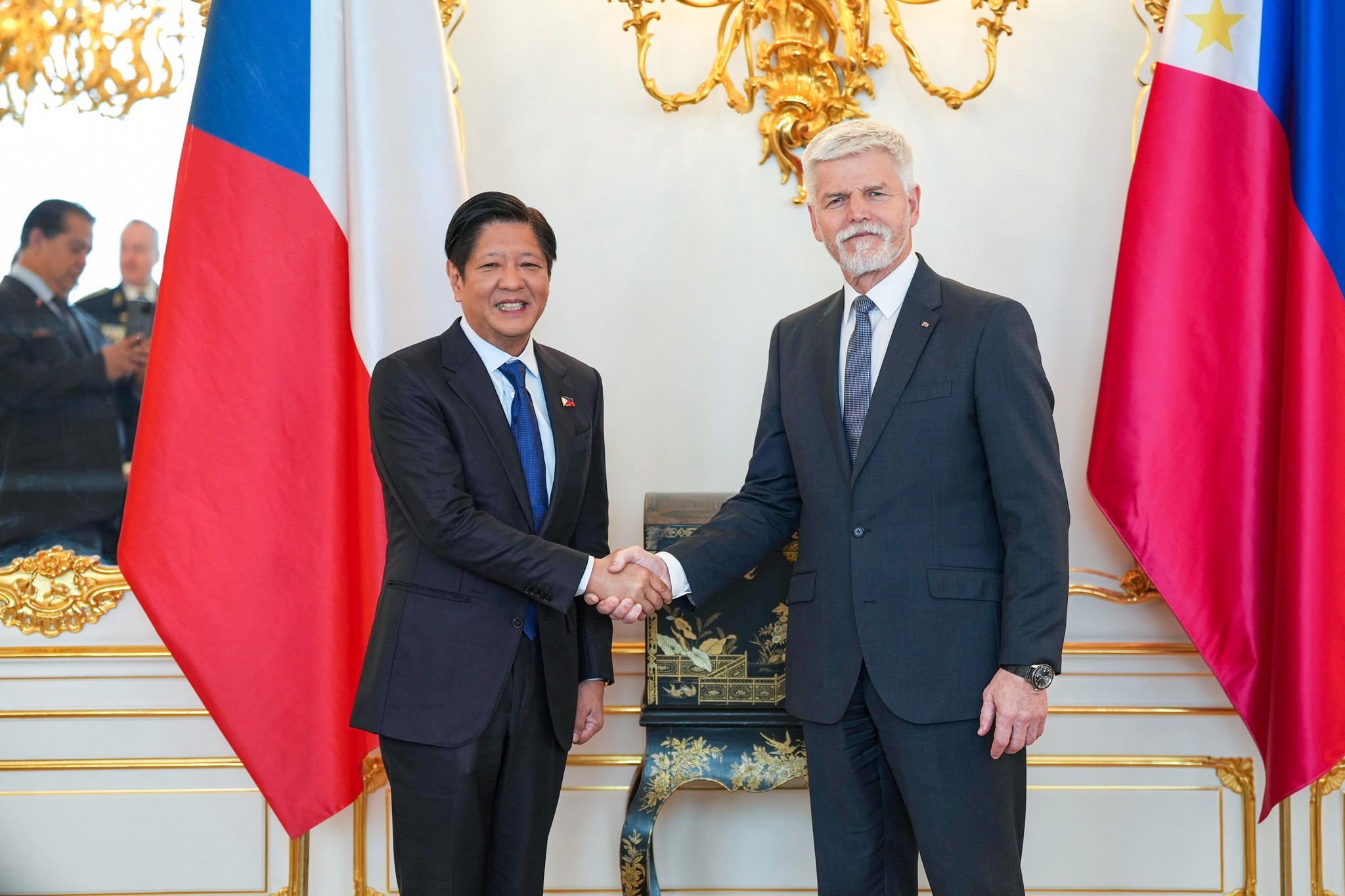
President Ferdinand R. Marcos Jr. and Czech President Petr Pavel have agreed that a free and open South China Sea (SCS) is in every nation’s interest, noting the region’s importance in global trade.
In a joint statement on Thursday in Prague, Marcos thanked the Czech Republic’s support in upholding peace, stability, and respect of the rules-based international order in the contested waters as the Philippines continue to engage other nations through diplomacy and dialogue.
“We shared with President Pavel the latest development on the West Philippine and South China Sea. And I understand that the Philippines’ position on the South China Sea remains consistent, and clear, and firmly anchored in the 92 UNCLOS (1992 United Nations Convention on the Law of the Sea),” he said.
Marcos added that adherence to international law is an important issue being addressed by countries in the Indo-Pacific region such as the ASEAN member states.
“Also, because this is a safe navigation and passage of the South China Sea is important to international trade, as 60 percent of international trade goes to that channel and we hope to continue these discussions,” he stated.
Pavel, for his part, said both countries could explore further collaborations in various areas such as defense, cybersecurity, as well as the use and development of modern technologies.
He conveyed Czech Republic’s support for the Philippines’ call for free movement of goods in the SCS to ensure global and regional stability.
“And to us South China Sea may seem to be far, far away, but if you take into account the percentage of share of world or global trade passes through this area, any disruption of these routes would have an adverse impact on Europe, not only in the form of shortage of goods but also soaring prices, which is why we have to pay attention to this topic,” Pavel added.
Meanwhile, Marcos also welcomed the Czech Republic’s efforts in supporting the modernization program of the Armed Forces of the Philippines (AFP) particularly in terms of technology transfer and defense investment initiatives.
According to him, part of the AFP modernization program is the procurement of additional ships, aircraft, and radar systems to improve the military’s archipelagic defense capabilities.
“We invite the Czech defense companies, defense industry for them to submit proposals, and to once again participate…to supply the Philippines future defense capability requirement,” Marcos added, noting that the Central European country has been active in providing equipment to the Philippines. – avds

