
By Abigael Macapagal | PTV Public Affairs Intern
The debate on granting Civil Service eligibility (CSE) to Sangguniang Kabataan (SK) officials highlights a delicate balance between recognizing youth leadership and upholding fair, consistent government standards.
While the SK serves as a platform for young people to lead programs and contribute to nation-building, the question remains: “Should completing a three-year term in good standing automatically qualify them for CSE?”
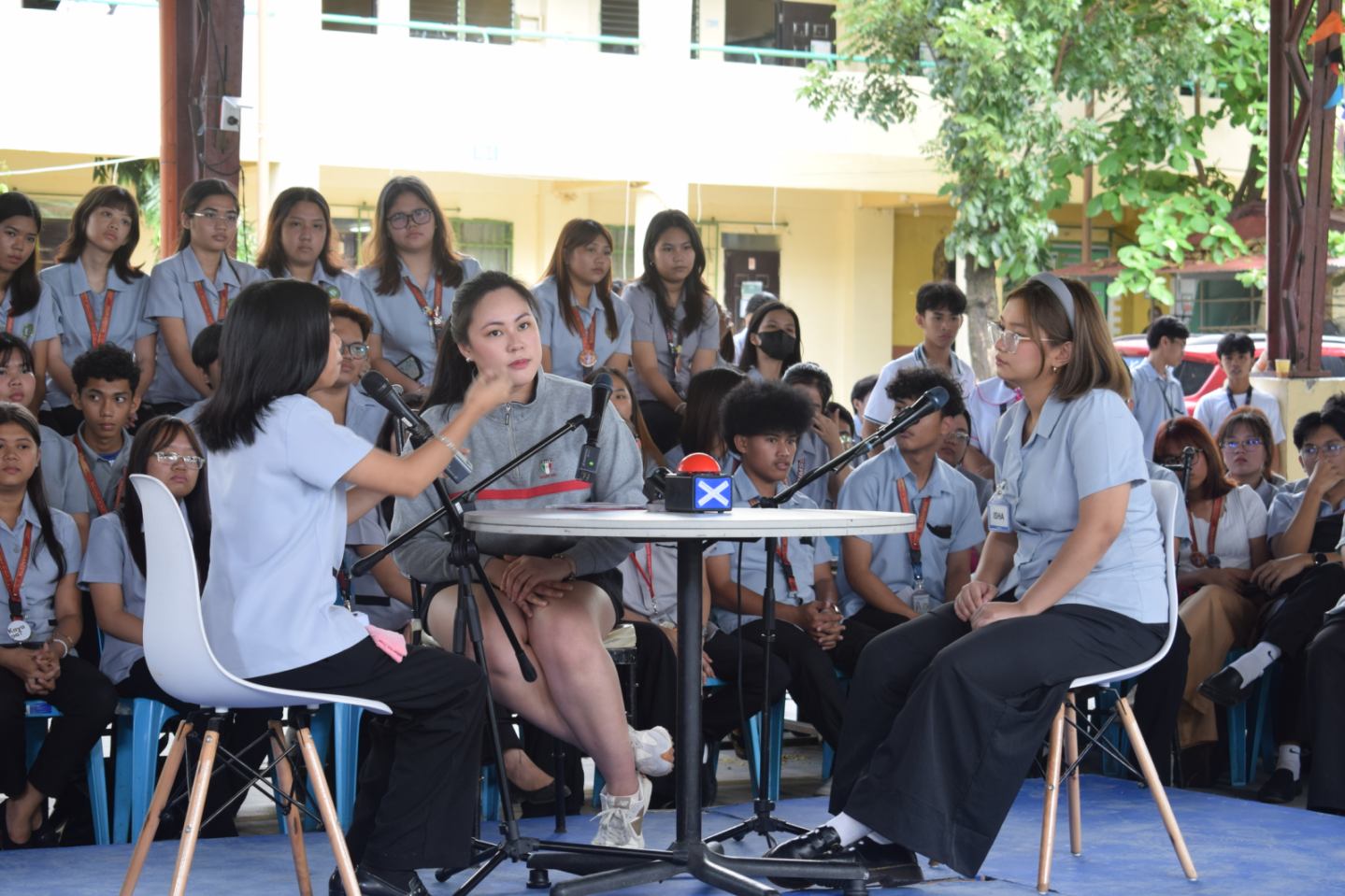
This issue took center stage during the debate held at Malabon City, where students from Malabon National High School engaged in a focused and thoughtful discussion on the merits and potential risks of the SK Eligibility pathway.
Representing the ‘pro’ side were Lyndsei, Rafsan, and Summer, who argued that the hands-on leadership, completed programs, and community service of SK officials justify granting eligibility—framing it not as a shortcut, but as recognition for their meaningful work.
Kalvs, Isha, and Georg, also from MNHS, represent the ‘cons’ side—emphasizing the importance of maintaining national standards. They argued that fairness can only be ensured when competence is measured consistently across all barangays.
The debate underscored the challenge of finding the balance between encouraging youth participation in governance and preserving merit-based systems—raising questions about potential compromises such as optional exams, strengthened performance evaluations, and clearer criteria for awarding eligibility.
Weighing experience vs. standardized testing for SK eligibility
The discussion commenced with a question: “Dapat ba talagang payagan ang SK officials na magkaroon ng automatic Civil Service eligibility matapos ang kanilang three-year term?”
Lyndsei argued that SK officials deserve recognition for their service and hands-on leadership, “Dapat magkaroon na sila ng CSC eligibility after the 3-year good standing term. For the SK, these are youth leaders in every barangay who lead and implement programs specifically for the youth in their communities.”
Isha disagreed, emphasizing fairness and national standards, “Hindi dapat magkaroon ng immediate Civil Service eligibility ang mga SK. The Civil Service is a standardized test—may standard siyang kinukuha. Even with resolutions like Sangguniang Kabataan Official Eligibility (SKOE), only proper evaluation is required, not automatic entitlement.”
The host then asked whether granting automatic eligibility would give SK officials a shortcut compared to other applicants.
Lyndsei replied, “Hindi siya shortcut because three years ‘yang pagdadaanan with good standing—walang kaso. At kailangan natin i-push yung SK further para mag-qualify sila sa standards, hindi lang ang barangay ang mai-improve kundi pati ang SK mismo.”
Isha however, maintained that leadership experience alone shouldn’t guarantee Civil Service eligibility: “Yes, SK officials gain valuable experience and lead programs, but formal testing is still needed to make sure they meet national standards and are truly qualified.”

Is experience enough for eligibility?
The tone of the debate intensified as the host raised a key question: “Paano ba natin masusukat kung sapat ang epekto ng mga proyekto ng SK para mabigyan sila ng Civil Service eligibility?”
Rafsan explained the value of experience and community service, emphasizing that SK officials spend three years leading programs, implementing projects, and serving their communities, which provides them with real-world skills and leadership experience.
He said, “Dapat magkaroon na sila ng CSC eligibility after the 3-year good standing term. Ang SK, mga youth leader sa barangay, ang nagle-lead at gumagawa ng programs specifically para sa kabataan.”
Kalvs however argued that standardized evaluation remains crucial, pointing out that hands-on experience alone cannot ensure fairness or uniform competence across all barangays, and that formal testing provides a consistent national benchmark.
He emphasized, “Hindi dapat magkaroon ng immediate Civil Service eligibility ang mga SK. Standardized test ang Civil Service, at kahit may SKOE resolution, evaluation pa rin ang kailangan.”
Rafsan clarified that automatic eligibility is not a shortcut, noting that SK officials undergo a full three-year term in good standing with accountability, and that the goal is to strengthen both the officials and their programs rather than bypass established standards.
Youth motivation or inventive-based leadership?
With that said, the discussion shifted to the question: “Nagbibigay ba talaga ng tamang insentibo ang automatic Civil Service eligibility sa SK officials, o nagiging shortcut lang ito sa public service?”
Summer emphasized that eligibility should reflect service, not incentives. She explained that SK officials work on action plans, implement programs, and serve their communities, so recognition should be based on actual performance rather than perks.
She said, “Hindi po siya nagiging basis para incentives. Sila ‘yong gumagawa ng action plans at nagpapatupad ng programs. Hindi natin puwedeng sabihing naghahabol lang sila ng benefits.”
Georg, on the other hand, argued that differences among barangays make it appear incentive-driven. He noted that varying resources and opportunities could make automatic eligibility seem like a reward system rather than a fair measure of competence.
He explained, “Iba’t ibang resources at circumstances [ang meron] sa bawat barangay. Kaya parang incentive—matapos ang term, granted ka na ng Civil Service eligibility.”
Summer clarified that funding issues are systemic, not the law’s fault. “Kung kulang ang budget, nasa system ng barangay ‘yon. Hindi dapat isisi sa SK officials.”
Georg countered that competency needs objective measures. “Kapag nag-take sila ng Civil Service exam at pumasa, validated sila—fit for the job.”

Should a minimum performance rating be required?
With that said, the host linked the discussion to the question, “Dapat ba talagang kailangan ng minimum performance rating bago bigyan ng Civil Service Commission (CSC) eligibility ang mga SK officials?”
Summer pointed out that completing their responsibilities and contributing to the community should matter, “Kung nagampanan nila ang work nila—naabot ang qualifications, walang kaso, nakagawa ng programs, at natapos ang 3-year term with good standing—then they deserve the merit.”
Georg however raised concerns about whether SK outputs truly measure competence, “Paulit-ulit ‘yong projects—mga liga, seminars. Paano [masasabing] sapat na ‘yan para mag-grant ng eligibility?”
Summer replied that improving the system—not abolishing the law—is the way to go, “Kaya nga gustong ayusin ‘yong system, ‘di ba? Hindi dapat i-eradicate agad ang law.”
Georg insisted that a single, standardized test would ensure fairness, “Kaya dapat iisa lang ang requirement: the CSC exam. Doon nasusukat ang technical skills.”
Summer stressed that experience and service should still be recognized, “Hindi porket nakapasa ka sa CSC, qualified ka na. Kung deserve nila ang merit—if they fulfilled their duties for three years—why not give it to them?”
How do we measure impact across different realities?
Tricia then asked a crucial question: “Kung iba-iba ang context ng SK officials—may aktibo, may hindi—paano natin masusukat kung sapat ang impact ng kanilang projects para karapat-dapat sa eligibility?”
Summer answered, “If both the SK and the higher-ups see na walang naging impact, of course, they wouldn’t give the merit.”
But Georg warned that barangay-based evaluation can be biased, “Barangay officials ang nag-evaluate. Puwedeng magkaroon ng bribery o political relations—talagang bias.”
Summer emphasized that such conflicts are prohibited under the SK Reform Law, “Under RA 11768, that is not allowed. You cannot have relations with incumbent LGU officers. Eligibility won’t be given kung may kamag-anak ka sa LGU.”
Georg clarified, “That applies to close relatives. Pero kapag political teams—that’s what I meant.”
Balancing youth experience and standardized testing in governance
The debate heated up as the host asked, “Nagiging inclusive ba ang hakbang na ito, or does it favor those with political access?”
Lyndsei argued that automatic Civil Service eligibility recognizes the hard work of SK officials during their three-year term.
She explained, noting that they still need to meet leadership and program standards, with the theoretical exam optional, “It’s not a shortcut. Hindi mo rin masasabing exclusive, because it’s given as recognition to the work SK officials put into their term.”
Isha however, countered that fairness and national standards must be considered. “Hindi natin pwedeng gawing national criteria ang local evaluation. Hindi pare-pareho ang bawat lungsod at barangay sa Pilipinas,” she said, adding that SK eligibility could be unfair to those who studied and passed the CSE exam.
Audience members also weighed in—some said SK officials should still take an exam to objectively measure competence, while others felt their three-year service and implemented programs already proved their capability.
By the end, the discussion showed the tension between valuing hands-on experience and upholding standardized evaluation. It was clear that balancing youth participation, merit, and fairness in governance remains a complex but necessary conversation.
-dac/jpv

