
By Brian Campued
During the 48th Association of Southeast Asian Nations (ASEAN) Summit, the situation in the Middle East and its impact on energy and food supply flow took center stage, with ASEAN leaders calling for peace and for involved parties to work on finding a lasting solution to the geopolitical issue.
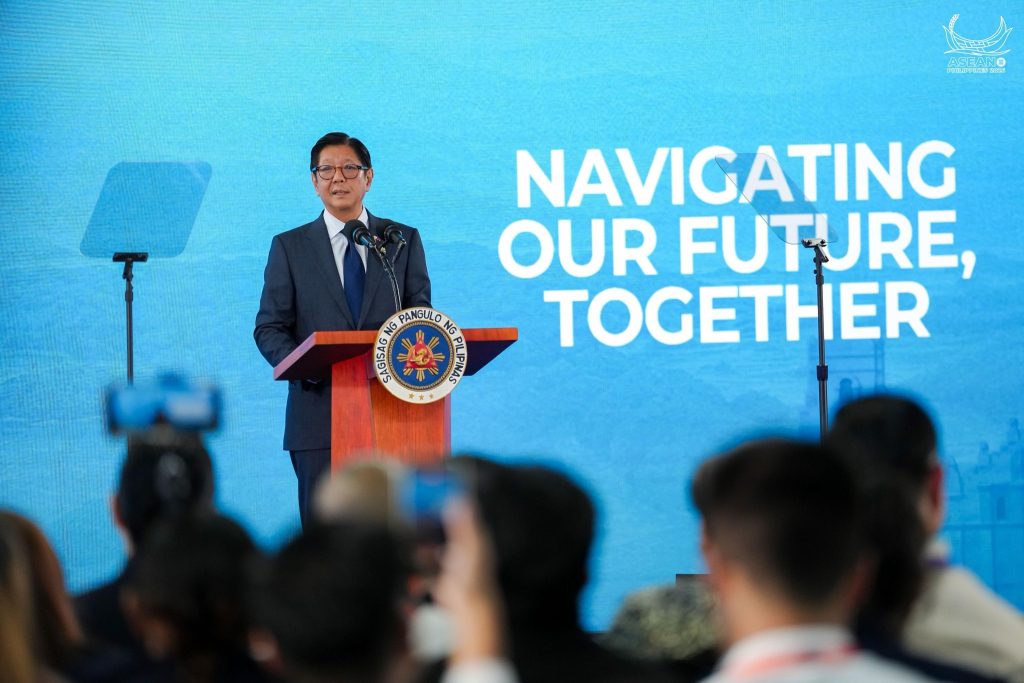
In a press conference in Cebu Friday, President Ferdinand R. Marcos Jr. said that he and his fellow ASEAN leaders have long expressed serious concern over the rapidly evolving situation in the Middle East.
“Peace. Peace. That is—it’s that simple. Peace. And we have made that position very clear,” he said, adding that the current situation is “very difficult” and nothing will be achieved until there is an immediate cessation of hostilities in the region.
The President also noted that ASEAN foreign ministers had already issued a statement urging all sides to stop the warfare, reopen the Strait of Hormuz, and pursue a lasting diplomatic solution involving the United States, Israel, and Iran.
“We now are in this limbo situation where we don’t know how long it’s going to last. We don’t know when the next encounter is going to be… It’s a very difficult situation,” he said.
“So again, until the fighting ends, until the bombings end, then it’s very difficult to put together any kind of solution… That is why the call, essentially, is peace now.”
Solutions to energy woes
With the ongoing geopolitical conflict affecting global energy markets, President Marcos Jr. said ASEAN leaders discussed the expedited ratification of the ASEAN Framework Agreement on Petroleum Security (APSA), which would ensure mutual support among member states during fuel supply shortages.
ASEAN leaders also pushed for the operationalization of the ASEAN Power Grid, aimed at connecting the electricity networks of all ASEAN member states to enable cross-border power trading, support renewable energy integration, and deliver more affordable electricity.
“Leaders agreed on the importance of stable and reliable energy supply chains, greater energy interconnectivity, and accelerated diversification toward renewable and alternative sources,” Marcos said.
Recognizing that a fuel-sharing pact is just “a short-term and immediate solution” to the energy woes in the region, the President underscored the need to reduce dependence on fossil fuels and pursue alternative energy sources, such as hydro, wind, solar, and nuclear power.
ASEAN leaders have also discussed the possibility of developing a fuel reserve mechanism to safeguard energy security during times of crisis.
“When something like this happens, a war happens, a trade route like the Strait of Hormuz is closed, and with all the attendant effects, we have somewhere to immediately run to for emergency supply,” Marcos said.
Bolstering food security
ASEAN leaders have likewise agreed to strengthen intra-ASEAN trade and reinforce regional food security mechanisms amid rising energy prices and disruptions in global shipping routes caused by the conflict in the Middle East.
The Chief Executive stressed that to address food security concerns, ASEAN leaders agreed to build more resilient supply chains, support agricultural micro, small, and medium enterprises (MSMEs) and smallholder farmers, promote climate-smart agriculture, and strengthen ASEAN-led food reserve systems.
They also called for the swift ratification of the Second Protocol to Amend the ASEAN Trade in Goods Agreement (ATIGA), which aims to modernize regional trade and remove non-tariff barriers.
“Critically, its crisis provisions ensure that essential goods continue to flow during emergencies,” Marcos said.
Safety of ASEAN nationals abroad
As millions of Southeast Asians live and work in or near conflict zones in the Middle East, ASEAN leaders reaffirmed that the safety and welfare of its peoples must be paramount.
“ASEAN agreed to work more closely together through faster coordination, accelerated information-sharing, stronger cooperation with host governments, and timely support for those ASEAN nationals who may need urgent assistance, evacuation, and/or repatriation,” Marcos said.
ASEAN leaders on Friday also issued a joint statement, outlining practical measures for the bloc’s collective response to the Middle East crisis and setting the foundations for a more coordinated regional response to future crises.
-jpv

