
By Marita Moaje | Philippine News Agency
The Department of Environment and Natural Resources (DENR) is pushing for long-term measures to prevent garbage from reaching waterways and strengthen deterrence against environmental violations.
In a news release Friday, Secretary Juan Miguel Cuna said the DENR continues clearing waste from rivers, creeks and drainage systems as it implements the Extended Producer Responsibility (EPR), to prevent and recover plastic waste at the source; and the Philippine Ecosystem and Natural Capital Accounting System (PENCAS) to better recognize the value of natural resources and ecosystem services when environmental damage occurs.
“While sustained cleanup is necessary to keep waterways clear and reduce the immediate risks posed by accumulated garbage, it cannot by itself solve the country’s recurring garbage problem,” Sec. Cuna said.
“Long-term solutions must also address the problem at its source and strengthen measures that can discourage repeated abuse of natural resources,” he added
Under Republic Act No. 11898 or the EPR Act, covered enterprises are required to establish programs to recover and divert plastic packaging wastes.
The law sets an 80-percent plastic waste diversion target by 2028.
“Dati ang solid waste management natin, puro local government lang ‘yan, sila ang may mandato diyan. Pero ngayon dito, pinaigting natin ‘yung private sector participation. Sila na ngayon ang nag-a-address ng mga plastic waste,” Sec. Cuna said.
While EPR focuses on preventing and recovering plastic waste, the DENR considers Republic Act 11995 (PENCAS) as a way to strengthen deterrence against repeated abuse of natural resources, and better account for their value and the ecosystem services they provide.
Sec. Cuna said that by improving how these resources and services are valued, the environmental costs of damage can be better recognized, giving habitual violators greater reason to think twice before repeating activities that harm waterways and other ecosystems.
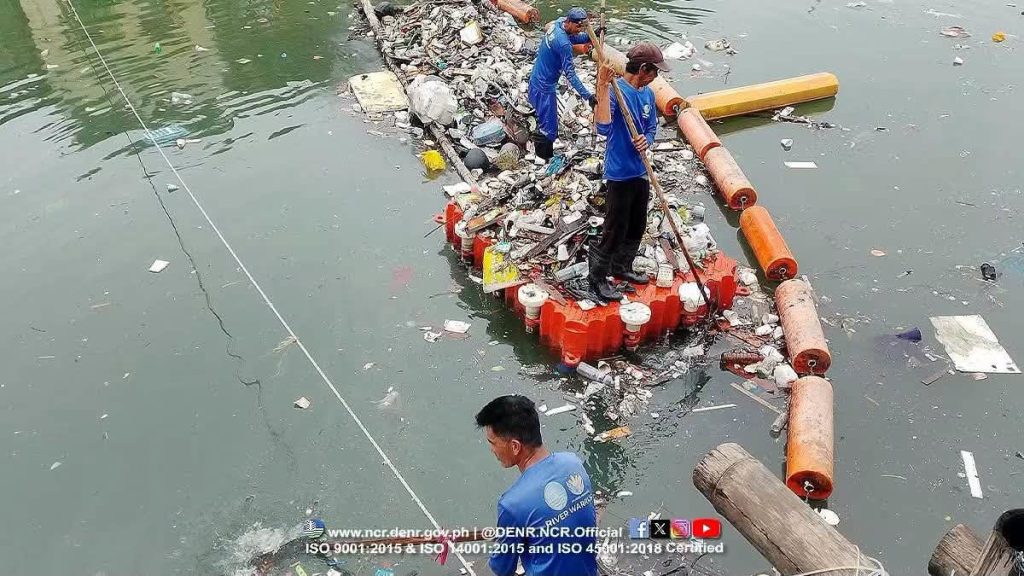
The DENR currently has 196 trash traps collecting floating and accumulated waste from waterways.
It has also mobilized 1,500 estero rangers and river warriors to monitor and clean creeks and rivers in the National Capital Region (NCR).
The Adopt-an-Estero Program also involves around 20 private companies, organizations, and government agency partners that have taken on designated esteros for cleanup, rehabilitation, and maintenance.
The DENR chief said recent cleanup operations highlighted the urgency of preventing waste from reaching waterways in the first place, and the need for everyone to do their part.
“With government, businesses, local governments and the public working together, the Department is working to shift the focus from repeatedly cleaning up garbage to preventing improper waste management from becoming a recurring threat to waterways, communities and the environment,” Sec. Cuna said.

