
By Brian Jules Campued
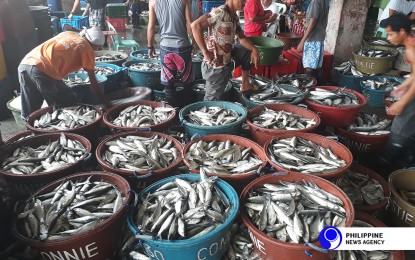
A study funded by the Department of Science and Technology-National Research Council of the Philippines (DOST-NRCP) revealed that 235 in 383 extracted particles from 30 milkfish, or locally known as “bangus”, from selected sampling sites in Mindanao were confirmed to have microplastics.
Researcher Marybeth Hope Banda explained that while microplastics may not be inherently toxic, its chemical nature attracts and accumulates other toxic substances in their surfaces, making it detrimental to health when consumed.
“When microplastics with attached toxic substances are ingested, they pose a potential threat to human health,” Banda added.
Additionally, the study also found that microplastics reduce the appetite of fish and prevent them from consuming sufficient nutrients for normal growth.
“Dietary exposure to microplastics cannot be estimated. Because particle toxicity data of microplastics are not yet available, an estimation of the potential risks of microplastic particles in food is not yet possible,” the agency said in a news release published by the DOST-Science and Information Institute (DOST-STII) on Jan. 28.
The research also cited past studies showing microplastics may damage fish intestine, liver, gills, and brain and affect metabolic balance, behavior, and fertility depending on the degree of exposure, particle sizes, and doses.
However, the researchers clarified that the impact of microplastics on humans has yet to be determined as its toxicity is relative to how much is ingested and some particles are small enough to penetrate human tissue.
NRCP lead researcher Dr. Rey Capangpangan, meanwhile, underscored the need to implement a standardized protocol regarding the toxicity level of microplastics that is harmful to humans.
“The Filipino people, living in an archipelagic country and relying on its fresh and marine water bodies, are at risk of ingesting microplastic-contaminated aquatic organisms. With this data, we can start to see the extent of microplastic pollution and start its mitigation”, Capangpangan added.
According to 2020 data from the Bureau of Fisheries and Aquatic Resources (BFAR), an estimated 17.9% of total fisheries production and about P43.5 billion of the Philippine Gross Domestic Product (GDP) were contributed by milkfish farming. – avds

