
By Joyce Ann Rocamora | Philippine News Agency
The judges of the International Criminal Court (ICC) Appeals Chamber on Wednesday affirmed the ICC’s jurisdiction to try former president Rodrigo Duterte for crimes against humanity.
The Appeals Chamber rejected all four arguments raised by Duterte’s camp, affirming the Oct. 28 decision of ICC Pre-Trial Chamber I and denying the defense’s challenge to the Court’s jurisdiction over the case.
The Appeals Chamber was composed of Carranza, Judge Tomoko Akane, Judge Solomy Balungi Bossa, Gocha Lordkipanidze, and Judge Erdenebalsuren Damdin.
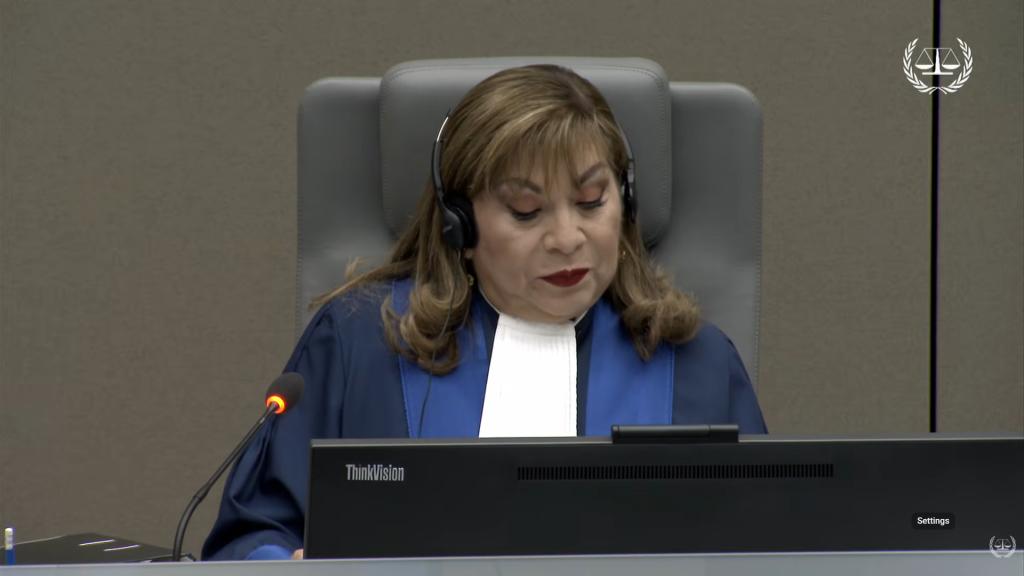
Presiding Judge Luz del Carmen Ibáñez Carranza said, “Having rejected the entire appeal, the Appeals Chamber considers that the defense request for the immediate and unconditional release of Mr. Duterte is moot.”
The ICC Appeals Chamber, by majority, dismissed the appeal in full, with one judge—Lordkipanidze—issuing a partial dissent on the second ground.
The judges of the International Criminal Court (ICC) Appeals Chamber on Wednesday affirmed the ICC’s jurisdiction to try former president Rodrigo Duterte for crimes against humanity.
The Appeals Chamber rejected all four arguments raised by Duterte’s camp, affirming the Oct. 28 decision of ICC Pre-Trial Chamber I and denying the defense’s challenge to the Court’s jurisdiction over the case.
The Appeals Chamber was composed of Carranza, Judge Tomoko Akane, Judge Solomy Balungi Bossa, Gocha Lordkipanidze, and Judge Erdenebalsuren Damdin.
Presiding Judge Luz del Carmen Ibáñez Carranza said, “Having rejected the entire appeal, the Appeals Chamber considers that the defense request for the immediate and unconditional release of Mr. Duterte is moot.”
The ICC Appeals Chamber, by majority, dismissed the appeal in full, with one judge—Lordkipanidze—issuing a partial dissent on the second ground.
Carranza, in reading the decision, said the Appeals Chamber found “no error” in the ICC Pre-Trial Chamber I’s interpretation of Articles 12 and 13 of the Rome Statute, which establish that a state must be a party to the statute at the time the ICC exercises its jurisdiction.
The Appeals Chamber held that these provisions must be interpreted alongside Article 127, which settles the legal regime applicable to situations of a state party withdrawal.
It noted that the Rome Statute must be interpreted in a “systemic manner” in line with its purpose—to put an end to impunity for the perpetrators of the most serious crimes of concern to the international community as a whole.
It ruled that it would be incompatible with the said purpose to allow a country to evade its responsibilities by depositing a withdrawal notice once it discovers that alleged crimes committed on its territory are being examined by the ICC Prosecution.
The judgment was delivered in open Court, with Duterte waiving his right to be present. He is represented by his Defense Counsel Nicholas Kaufman.
In a separate bulletin, the ICC said the ruling is separate from the decision on whether to confirm the charges in Duterte’s case, which is expected to be issued “not later than April 28.”
Ex-Pres. Duterte is suspected of crimes against humanity, for murder and attempted murder allegedly committed as part of the campaign against illegal drugs when he served as Davao City mayor, and later as the Philippine president.
The former chief executive was arrested on March 12, 2025, and has been in detention at the ICC. (PNA)

