
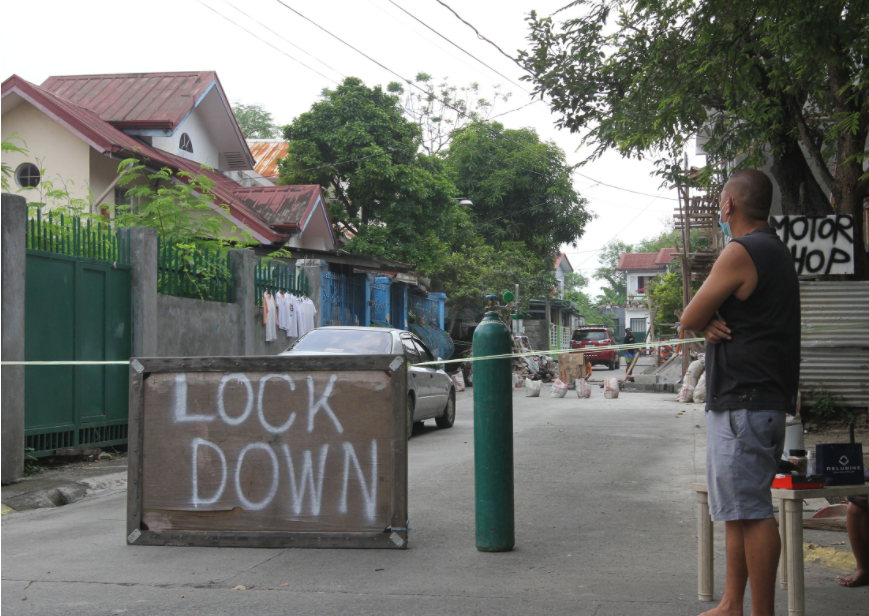
Exactly three years ago, the national government imposed the community quarantine in its bid to contain the rising number of coronavirus (COVID-19) cases in the country.
We asked netizens their experience during the declaration of community quarantines.
Most of them said they were at home when the government announced the imposition of enhanced community quarantine over Luzon on March 15, 2020.
“Grabe ang kasaysayan ng lockdown. Mula sa isang linggong lockdown..nag extend ng another week then extend ulit hanggang sa ilang liggo nang extension. Dito lang kami sa bahay,” netizen Imelda Chaur commented on Facebook.
Others shared they were still in their workplaces when the news came out, while the others hurriedly booked their flights back to their hometowns as soon as they learned about the news.
“Grabe [talaga dali-dali kami] umuwi [kasi] sasaraduhan lahat ng kanto sa daan, nagsisipaglagay [na sila] ng mga barriers sa lahat ng kanto [na pwede] likuan,” Vivian Dela Cruz shared.
This has since left the Filipinos unprepared as stringent home quarantine was immediately placed, imposing limited mobility for every household.
The lockdown did not only result in the suspension of face-to-face classes, but also impacted the workforce, as most companies opted to adopt work from home arrangements.
“Masaya kaming lahat sa opisina… Kaso nang dahil sa covid, nagkaproblema ang maliit na institution hanggang sa nagsara kaya lahat kami nawalan ng trabaho. Kanya kanyang uwi sa probinsya. Uwi silang [Bicol], uwi din ako ng Benguet. Resulta- STRESS,” a certain Nogchan Manuro commented.
“[Nasa] Paranaque ako [nang] biglang [mag-lockdown] at mahirap dahil [wala] masakyan [kaya] ang gamit ko bike na may sidecar at naranasan ko mula [Sucat] hanggang [Alabang] mamalengke kapagod mag padyak,” Jocelyn de Guzman said.
Some said they were forced to stay home amid the threat of COVID-19 virus spreading in their communities.
Meanwhile, some frontline workers said they had to walk for several hours to reach their destinations as authorities began to close major roads and restricted mass public transport.
Three years later, many Filipinos have already gotten used to living with the pandemic, while the economy continues to recover after the lockdowns.
Minimum public health protocols are still being implemented and the government’s COVID-19 vaccination campaign is still being promoted as an additional measure of protection for Filipinos. –Katrina Gracia Consebido-cf/ag

