
By Brian Campued
President Ferdinand R. Marcos Jr. on Thursday called on fellow leaders of the Brunei Darussalam-Indonesia-Malaysia-Philippines East ASEAN Growth Area (BIMP-EAGA) to turn plans into concrete and lasting results that would benefit communities in the region.
In his opening remarks for the Special BIMP-EAGA Summit in Cebu, Marcos noted that the presence of fellow leaders and delegates in the summit reaffirmed the member-states’ commitment to cooperation, partnership, and inclusive growth in the subregion.
The President also cited the BIMP-EAGA Vision 2035, a strategic and long-term framework adopted in May 2025 in Kuala Lumpur aimed at accelerating the development of the subregion, as a key tool to improve the daily lives of its people.
“As we gather today, we look forward with purpose, guided by the BIMP-EAGA Vision 2035 and its strong alignment with the broader aspirations of ASEAN,” Marcos said.
“This vision is not merely a roadmap for economic integration, it is a promise to our people that development will be meaningful, sustainable, and felt in their daily lives.”
During the summit, Marcos said discussions would focus on key programs and projects already benefiting communities through improved livelihoods, stronger connectivity, and expanded opportunities.
“These successes remind us that regional cooperation delivers its greatest value when it uplifts local communities,” he said.
He likewise expressed optimism that the summit will renew the subregional bloc’s resolve “to translate vision into action and plans into lasting impact.”
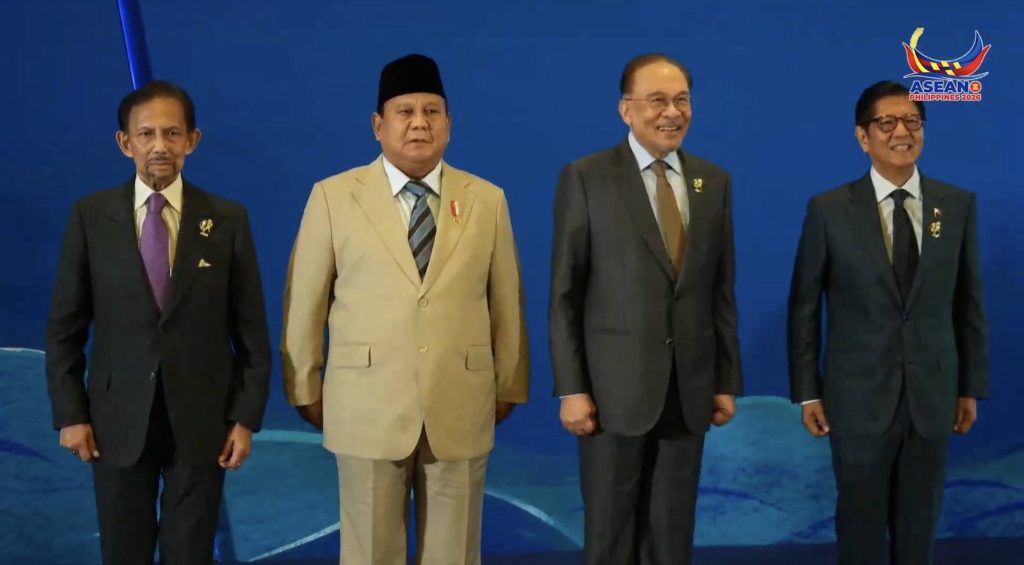
Aside from Marcos, the leaders present during the summit were Sultan of Brunei Darussalam, Hassanal Bolkiah, Indonesian President Prabowo Subianto, and Malaysian Prime Minister Anwar Ibrahim.
The BIMP-EAGA was established in 1994 to spur development in remote and less developed areas in the four participating Southeast Asian countries.
Cooperation initiatives include priority infrastructure projects (PIPs) to improve regional connectivity, paving way for better access to markets, delivery of reliable energy to rural communities, boosting trade in border areas, and enhancing tourist arrivals.
In the Philippines, the Mindanao Development Authority (MinDA) is pushing for the Bangsamoro Economic Corridor Initiative, which seeks to establish the Bangsamoro Autonomous Region in Muslim Mindanao (BARRM) as a central trade hub through port modernization, logistics expansion, and enhanced maritime connectivity.
-av

